


 English
 Español
 عربى
عربى
 中文简体
中文简体



+86-180 3665 1199
Content
Office sound proofing combines two distinct strategies — soundproofing (blocking sound transmission between spaces) and sound absorption (reducing echo and reverberation within a space). Acoustic panels are sound absorbing, not soundproofing — they genuinely work to reduce noise buildup inside a room but do not block sound from passing through walls. Effective office noise control requires both approaches applied together.
How to soundproof office walls
Soundproofing a wall means increasing its Sound Transmission Class (STC) rating — the higher the STC, the less sound passes through. A standard single-layer drywall partition has an STC of around 33–35, meaning loud speech is clearly audible on the other side. A well-constructed soundproof wall targets STC 50+, at which point loud speech is faint and largely unintelligible.
The four core principles of wall soundproofing are mass, decoupling, absorption, and damping (MDAD). Applying all four delivers the best results:
- Mass — heavier walls vibrate less. Adding a second layer of 15 mm drywall to an existing partition can raise STC by 5–8 points. Specialty products like QuietRock (damped drywall) add mass and damping simultaneously.
- Decoupling — separating the two wall faces so vibration cannot travel directly through the structure. Resilient channels, staggered stud walls, or double-stud walls with a 50–75 mm air gap are common methods. Decoupling alone can add 10–15 STC points.
- Absorption — filling the wall cavity with acoustic insulation (mineral wool or dense-pack cellulose, not standard fibreglass batts) absorbs mid-frequency sound energy that would otherwise resonate inside the cavity. Rockwool Safe'n'Sound at 89 mm thickness is a common specification.
- Damping — applying viscoelastic compounds (e.g., Green Glue) between drywall layers converts sound energy into heat. Two tubes per 2.4 × 1.2 m sheet is the manufacturer-recommended rate.
Practical wall soundproofing methods by budget
| Method | STC improvement | Relative cost | Best for |
| Seal gaps and penetrations with acoustic caulk | +3–6 (eliminates flanking) | Low | All offices — first step always |
| Add second drywall layer with Green Glue | +8–12 | Low–medium | Existing walls needing upgrade |
| Resilient channel + new drywall layer | +10–15 | Medium | Renovation projects with some access |
| Staggered stud wall with mineral wool cavity | +15–20 | Medium–high | New construction or full fit-out |
| Double-stud wall with 75 mm air gap + mineral wool | +20–25 | High | Recording studios, boardrooms, medical offices |
Don't overlook flanking paths
Even a perfectly built wall fails if sound travels around it. The most common flanking paths in offices are:
- Gaps around electrical outlets and light switches (seal with putty pads or acoustic boxes)
- Shared ceiling plenum above partition walls (extend walls to the structural deck, or use plenum barriers)
- HVAC ducts passing through walls without lined duct liners or acoustic baffles
- Doors — a standard hollow-core door has an STC of only 20–25. Replacing with a solid-core door and adding perimeter seals and an automatic door bottom raises this to STC 38–42.
- Back-to-back electrical boxes on opposite sides of the same wall (offset them by at least 600 mm)
What are the best sound absorbing panels?
The best sound absorbing panels for office use balance NRC (Noise Reduction Coefficient) performance, fire rating, aesthetics, and installation flexibility. NRC is scored from 0 to 1.00 — an NRC of 0.85 means the panel absorbs 85% of incident sound energy across test frequencies (250 Hz, 500 Hz, 1000 Hz, 2000 Hz averaged).
| Panel type | Typical NRC | Key advantage | Limitation |
| Fabric-wrapped fibreglass (e.g., 50 mm Owens Corning 703) | 0.90–1.00 | Highest absorption, customisable fabric finish | Requires professional installation for large areas |
| Fabric-wrapped mineral wool (e.g., Rockwool) | 0.85–0.95 | Fire resistant (A1/A2 rating), durable | Heavier than fibreglass panels |
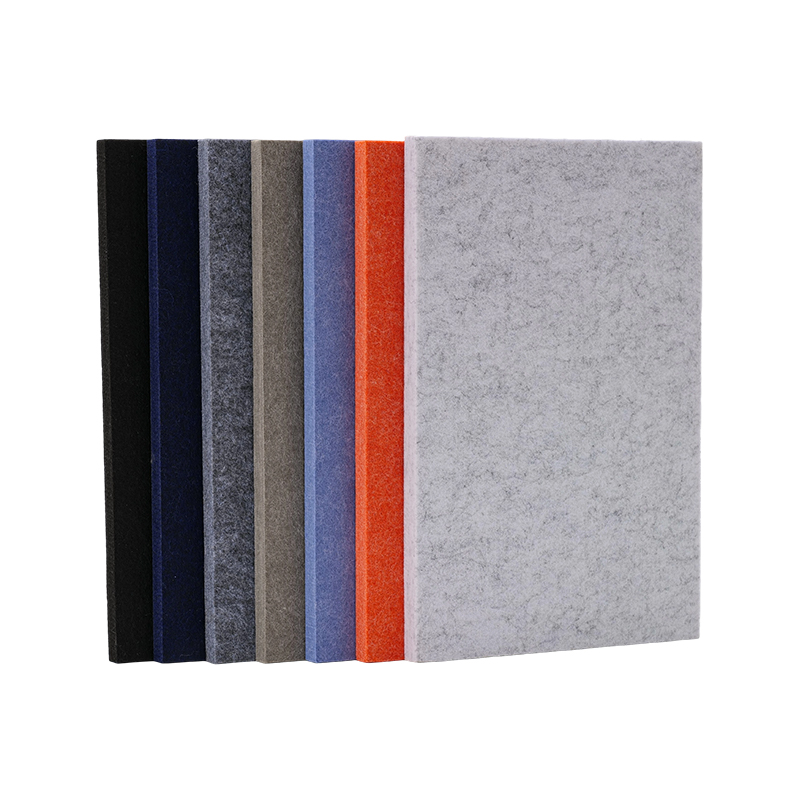
| Polyester fibre panels (PET foam) | 0.75–0.90 | Lightweight, impact resistant, recyclable | Lower low-frequency performance than fibreglass |
| Foam acoustic tiles (melamine foam) | 0.65–0.80 | Inexpensive, easy DIY installation | Poor fire rating, lower NRC, less durable |
| Wood wool (cement-bonded panels) | 0.60–0.75 | Highly durable, natural aesthetic, Class A fire | Lower NRC than fibreglass; heavier |
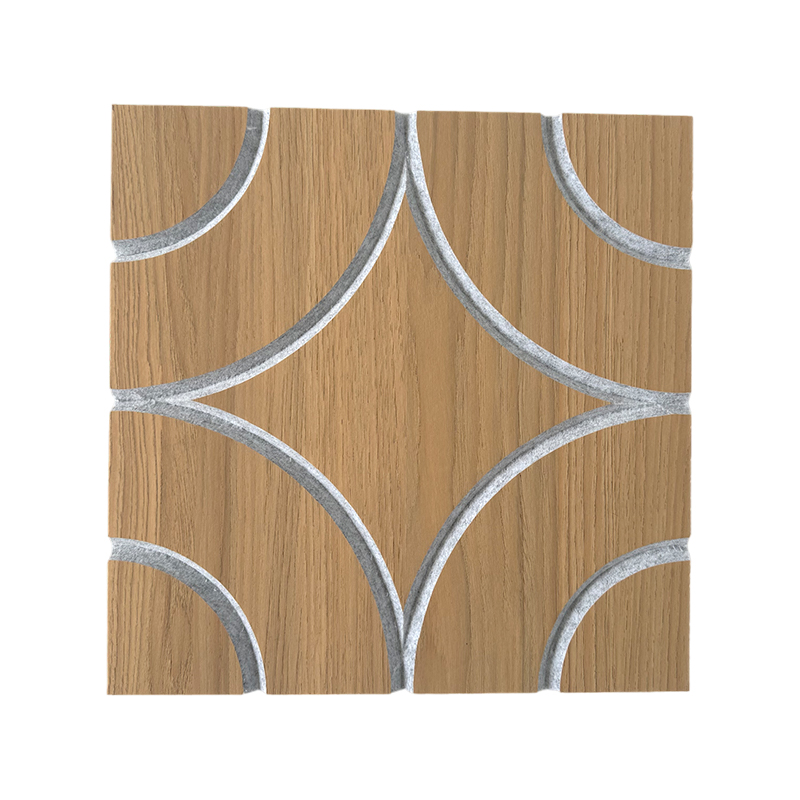
| Perforated timber or MDF with backing | 0.55–0.80 (design dependent) | Architectural finish, suits corporate interiors | NRC varies significantly with perforation pattern |
For most commercial offices, 50 mm fabric-wrapped fibreglass or mineral wool panels represent the best performance-to-cost ratio. At 25 mm thickness, the same panel types achieve NRC 0.65–0.75 — adequate for light treatment but insufficient for reverberant open-plan floors where 50 mm panels or ceiling baffles are needed.
Panel placement matters more than quantity
Covering every wall surface is neither necessary nor efficient. Acoustic consultants typically recommend treating 15–25% of total room surface area for speech-focused offices, placed strategically at:
- First-reflection points on side walls (identified by having a colleague hold a mirror flat against the wall while seated — wherever you can see a monitor or speaker from the mirror position is a first-reflection point)
- The wall directly opposite the primary noise source (e.g., the wall facing an open-plan desk bank)
- Ceiling clouds or baffles above collaborative zones and meeting tables
- Corner bass traps if low-frequency rumble (HVAC, traffic) is a problem — floor-to-ceiling corner panels absorb frequencies below 250 Hz that standard wall panels largely ignore
Are acoustic panels sound absorbing — and what do they actually do?
Yes, acoustic panels are sound absorbing — but they do not soundproof. This is one of the most common misunderstandings in office fit-outs, and confusing the two leads to expensive disappointments.
Here is what acoustic panels do and do not do:
| Acoustic panels do | Acoustic panels do not do |
| Reduce reverberation time (RT60) — how long sound lingers in a room | Block sound from passing through walls to adjacent rooms |
| Lower the overall ambient noise level inside a room by reducing reflections | Prevent noise from entering through windows, doors, or structural gaps |
| Improve speech intelligibility — make conversations clearer and less fatiguing | Replace the need for proper wall construction, sealing, or isolation |
| Reduce the "cocktail party effect" in open-plan offices | Eliminate impact noise (footsteps, dropped objects) from floors above |
Do sound absorbing panels really work?
Yes — when specified and installed correctly, the improvement is measurable and significant. Studies from the Finnish Institute of Occupational Health found that in open-plan offices, proper acoustic treatment reduced distraction from irrelevant speech by up to 30%, with corresponding improvements in concentration task performance. Research published in the Journal of the Acoustical Society of America found that reducing reverberation time from 0.8 s to 0.4 s in a typical open office measurably reduced perceived noise levels by 4–6 dB — which the human ear perceives as the sound source being roughly half as loud.
A reverberation time (RT60) of 0.4–0.6 seconds is the target range for most office environments per ISO 3382-3. Untreated open-plan offices with hard surfaces (glass, concrete, tile) typically measure RT60 of 0.8–1.2 seconds — noticeably echoey and fatiguing over a full workday.
Panels fail to deliver results when:
- They are too thin (12–25 mm foam tiles) to absorb mid and low frequencies effectively
- Coverage is too sparse — a single decorative panel on one wall of a large open floor has negligible measurable effect
- The primary problem is sound transmission, not reverberation — no amount of wall panels will stop a noisy neighbour from being heard through a partition
- They are placed only on one surface type (e.g., only the ceiling) while other highly reflective surfaces (glass walls, polished concrete floors) remain untreated
Building a complete office acoustic strategy
The most effective approach combines soundproofing (for privacy between spaces) with absorption (for comfort within spaces). A practical office acoustic strategy works through three layers:
- Structural layer — walls, floors, and ceilings built or upgraded to the required STC for the privacy level needed. Private offices typically require STC 45–50; boardrooms and HR offices STC 50–55; healthcare consultation rooms STC 55+.
- Sealing layer — all penetrations, gaps, doors, and HVAC paths treated with acoustic caulk, putty pads, door seals, and silencers. This step is inexpensive and frequently ignored, yet flanking through unsealed gaps can reduce an STC 50 wall to effective STC 35 performance.
- Absorption layer — wall panels, ceiling baffles, desk screens, soft furnishings, and carpet applied to bring RT60 within the 0.4–0.6 s target range. For open-plan areas, hanging ceiling baffles are often the single most impactful intervention because they treat the largest continuous reflective surface (the ceiling) without consuming floor space.
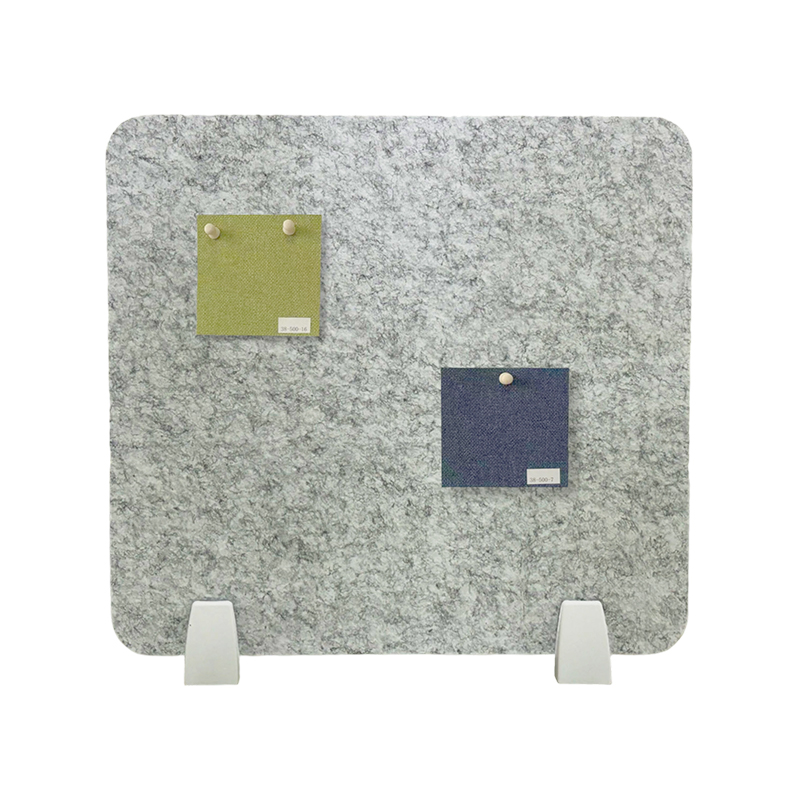
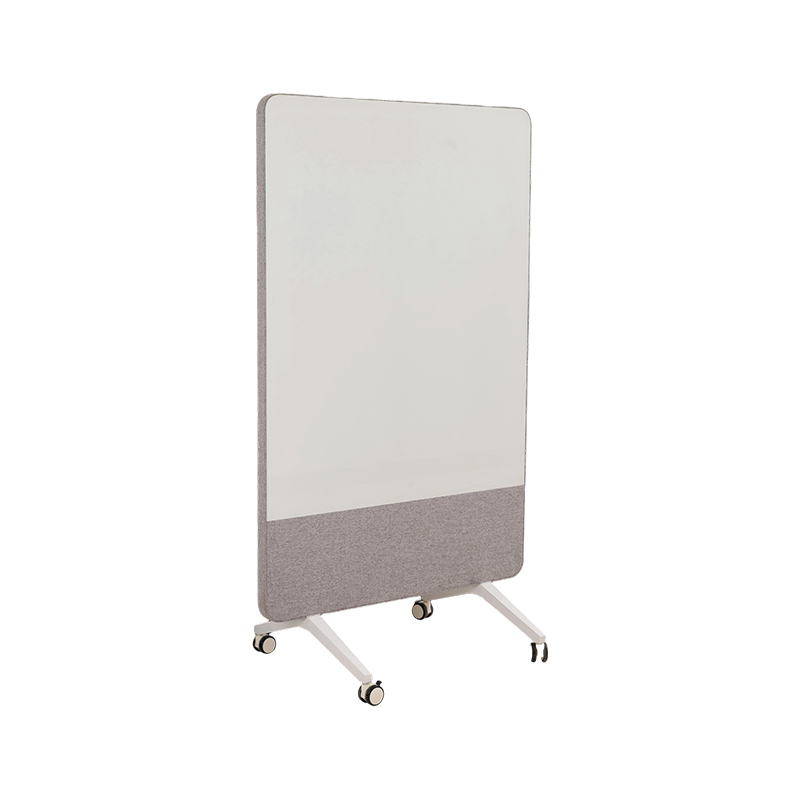
For open-plan offices where full wall construction is not possible, acoustic desk dividers and freestanding partition screens with NRC-rated absorptive surfaces provide a practical middle ground — they reduce line-of-sight noise propagation between workstations and add localised absorption exactly where workers need it most.


