


 English
 Español
 عربى
عربى
 中文简体
中文简体





+86-180 3665 1199
Content
The Core Solution
To achieve effective office sound proofing, you must deploy a dual strategy: sound isolation to block transmission through structures and sound absorption to control echoes within the room. While soundproofing a solid office wall requires decoupling mechanical vibrations (using resilient channels or mass-loaded vinyl) to boost STC ratings, modifying an open office space or cubicle requires adding heavy office sound proofing panels and acoustic baffles to absorb airborne human speech frequencies (typically 250 Hz to 4000 Hz) at the source.
How to Soundproof Office Walls: Structural Isolation
Standard commercial drywall walls typically have a Sound Transmission Class (STC) rating of 35 to 38. At this level, loud speech easily penetrates structural studs, compromising meeting confidentiality and employee focus. To isolate private offices or conference rooms, you must increase the wall assembly to at least STC 50, where loud speech becomes completely inaudible.
STC 35
Standard office wall (Normal speech is heard)
STC 50+
Target for executive offices & meeting rooms
1/4 Inch
Critical acoustic sealant gap required at joints
Upgrading an existing perimeter wall or constructing a new partition requires specific mechanical interventions to interrupt sound vibrations:
Add Dense Mass (Mass-Loaded Vinyl): Attaching a layer of 1 lb/sq.ft. Mass-Loaded Vinyl (MLV) directly to the wall studs before installing drywall adds necessary density without adding significant physical thickness. This blocks low-frequency vibrations like HVAC hums and deep voices.
Install Resilient Channels for Decoupling: Fastening horizontal metal resilient channels (RC-1) to the timber or steel studs breaks the direct mechanical bridge. When the drywall is screwed into the channel instead of the stud, sound waves lose energy moving through the trapped air space.
Fill Cavities with Mineral Wool Batt Insulation: Replacing standard fiberglass insulation with high-density mineral wool (such as 3 lb/cu.ft. density) significantly improves sound attenuation. Mineral wool converts airborne sound energy into minute amounts of thermal energy inside the wall cavity.
Seal Acoustical Flanking Paths: Even a tiny 1% air gap under a wall baseplate or around an electrical outlet box can leak up to 50% of the wall's overall sound-blocking capability. Apply non-hardening acoustical sealant beads along all floor, ceiling, and perimeter joints.
How to Soundproof Office Space: Treating Open Layouts
Open-plan layouts lack structural walls to block noise. Sound reflects off hard concrete floors, glass windows, and metal ceilings, creating a reverberant chamber that amplifies distractions. Managing noise across an entire open office floor plate relies heavily on the Noise Reduction Coefficient (NRC), which measures how much sound energy a material absorbs on a scale from 0.0 (total reflection) to 1.0 (total absorption).
To bring reverberation time (RT60) down to the recommended office standard of 0.6 seconds, large reflective surfaces must be covered with materials boasting a minimum rating of 0.75 NRC. Suspended acoustic ceiling baffles made from compressed polyethylene terephthalate (PET) felt capture rising sound waves, preventing them from bouncing horizontally across the room. On the floor, swapping out hard surfaces for cushion-backed acoustic carpet tiles reduces footstep impact noise by up to 30 decibels.
Acoustic Material Performance Metrics
When selecting materials to soundproof your workspace, matching the correct product to the specific type of noise issue is essential:
| Material Category | Primary Function | Typical Rating Metric | Best Workplace Application |
|---|---|---|---|
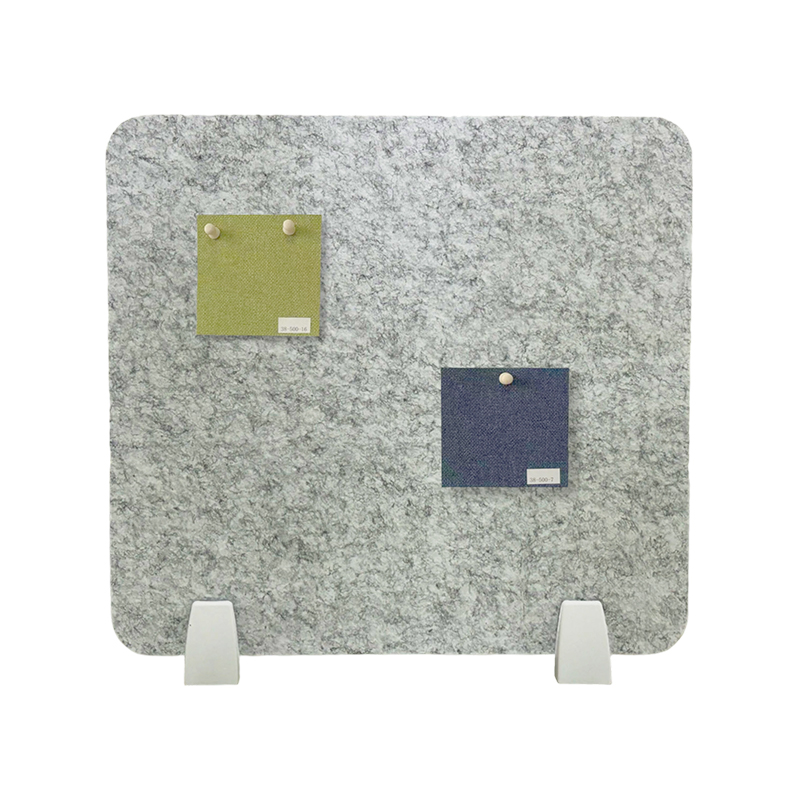
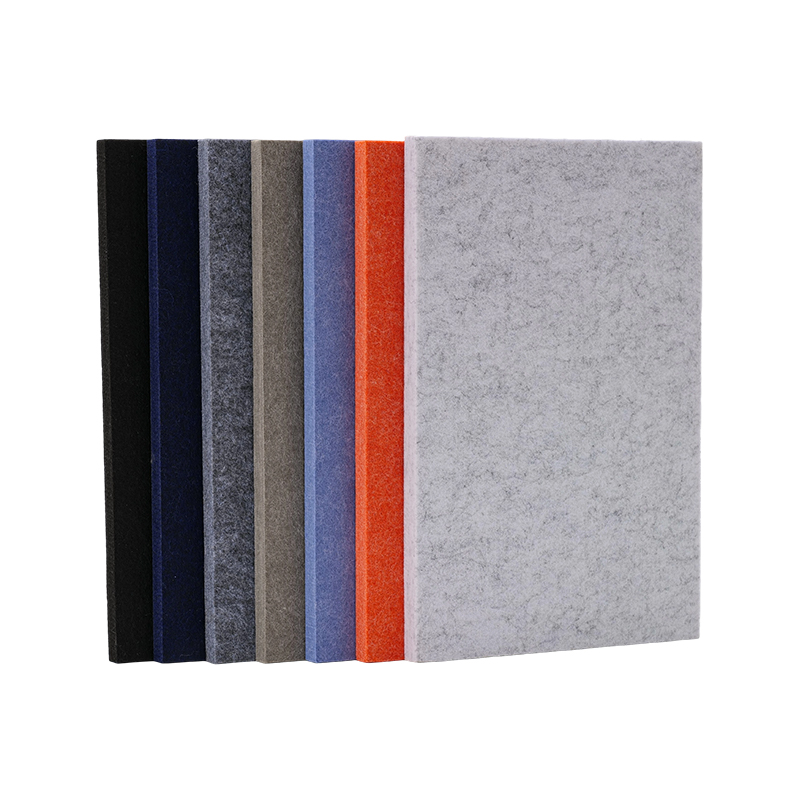
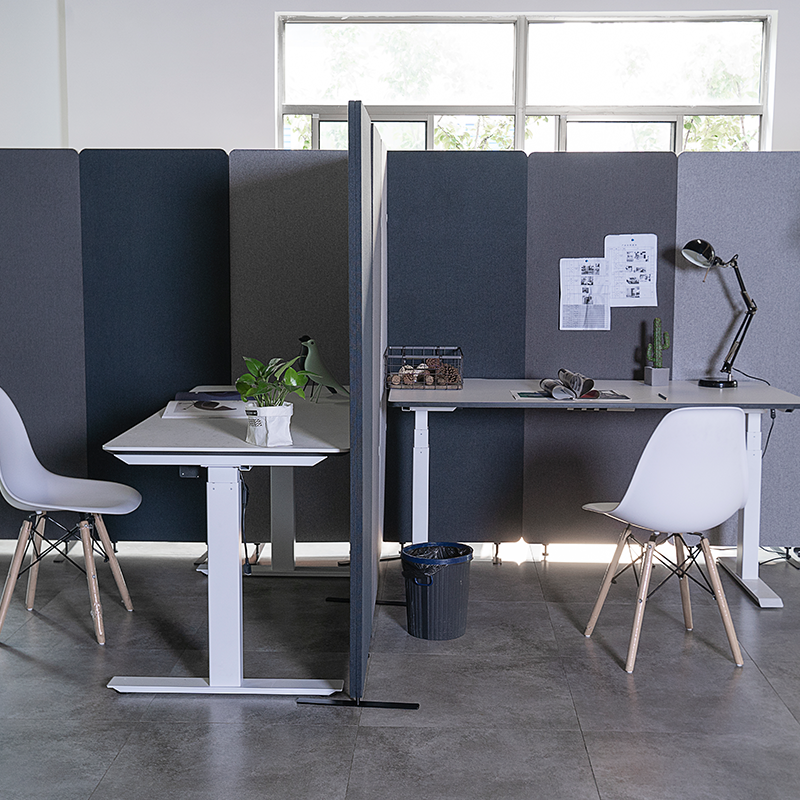
| Acoustic PET Wall Panels | Absorbs mid-to-high voice frequencies | 0.85 NRC | Conference rooms and shared desk boundaries |
| Mass-Loaded Vinyl (MLV) | Blocks sound transmission through boundaries | STC 26 (per layer) | Hidden inside drywall framing or mechanical rooms |
| Mineral Wool Insulation | Dampens interior wall cavity echo | STC 45 (in assembly) | Placed inside hollow partition framing stud bays |
| Acoustic Glass Partitions | Isolates executive rooms visually, not sonically | STC 32 to 40 | Double-glazed windows with PVB inner layers |
How to Soundproof Office Cubicles: Localized Mitigation
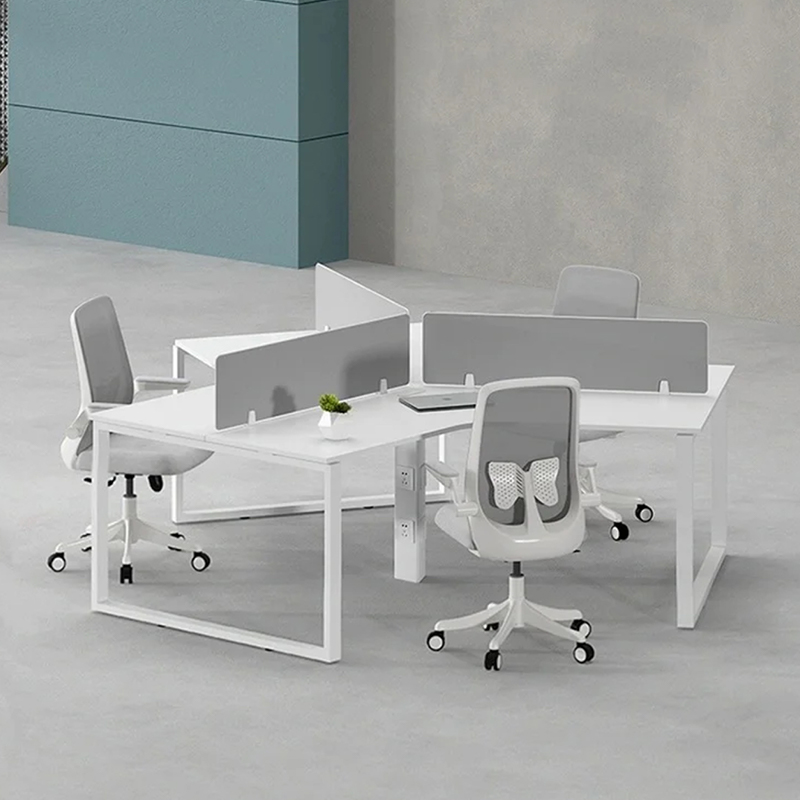
Because a cubicle lacks a ceiling and a sealed door, complete sound isolation is mathematically impossible. However, local speech clarity and distractions can be significantly mitigated by modifying line-of-sight acoustics and diffraction pathways.
Raise Partition Barrier Heights
Cubicle walls must stand at least 60 inches tall to block direct line-of-sight voice projection when an employee is seated. If partitions are lower, human speech paths travel unimpeded directly into neighboring workstations.
Replace Hard Core Dividers
Many old cubicles feature plastic-coated or laminate-surfaced dividers that bounce sound straight back toward the speaker. Retrofitting them with porous fabric-wrapped fiberglass or felt panels captures voice waves locally, shrinking the active radius of distraction.
Deploying Sound Masking to Complete the Space
Even with excellent acoustic partitions and isolated walls, a dead-silent room makes distant conversations sound much clearer and more distracting. This phenomenon is managed using commercial sound masking networks.
Sound masking systems use an array of small speakers hidden above the ceiling tiles to emit a continuous, engineered background spectrum resembling soft airflow. This ambient sound is calibrated to match the specific frequencies of human speech. By raising the baseline noise floor of the office from roughly 35 dBA up to a comfortable 45 dBA, the signal-to-noise ratio drops sharply. This makes conversations happening more than 15 feet away blend into the background, effectively shortening the distance over which speech remains clear and distracting.
Pre-Installation Workspace Audit
Before investing in expensive acoustic materials, review this diagnostic checklist to ensure you target the true source of your workspace noise leaks:
Inspect the ceiling plenum. If your drywall partitions stop at the drop-ceiling grid rather than extending all the way up to the structural concrete deck above, sound will easily bypass the wall and travel over the top grid.
Check HVAC ventilation pathways. Shared air ducts acting like acoustic pipes require internal sound-absorbing liners or silencer baffles to prevent sound from jumping between adjacent rooms.
Evaluate hollow-core doors. Replacing lightweight hollow wooden doors with heavy solid-core timber versions equipped with perimeter drop-seals instantly improves room isolation by up to 15 STC points.
Analyze parallel window spacing. Parallel bare glass sheets cause a rapid acoustic fluttering echo; treating the opposite drywalls with sound absorption panels balances sound waves efficiently.


