English
 Español
 عربى
عربى
 中文简体
中文简体
Sound absorbing panels are materials designed to capture and dissipate sound energy within a room, reducing echo, reverberation, and overall noise levels. They do not block sound from passing between rooms — that requires soundproofing — but they significantly improve acoustic clarity and comfort within a space. For most applications, panels 2 to 4 inches (50–100mm) thick provide effective mid-to-low frequency absorption, while 1-inch panels handle high frequencies adequately.
What Are Sound Absorbing Panels Used For?
Sound absorbing panels serve a wide range of practical environments where uncontrolled reverberation or echo degrades the quality of sound or communication. Their core function is to shorten the time sound energy bounces around a room — a measurement called RT60 (the time in seconds for sound to decay by 60 dB).
In an untreated concrete room, RT60 can exceed 3–5 seconds. A well-treated recording studio targets 0.3–0.5 seconds. Office spaces and classrooms aim for 0.6–0.8 seconds for clear speech intelligibility. The panels are the primary tool for achieving these targets.
- Recording studios and home theatersAbsorb flutter echo and standing waves, allowing accurate monitoring of audio without room coloration.
- Open-plan officesReduce the "cocktail party effect" where ambient noise compounds as more people speak simultaneously. Studies show noise above 65 dB in offices reduces cognitive performance by up to 66%.
- Classrooms and lecture hallsPoor acoustics are linked to reduced speech intelligibility — students miss up to 25–30% of spoken words in reverberant rooms. Panels bring RT60 into the recommended 0.6–0.8 second range.
- Restaurants and hospitality venuesControl noise levels that otherwise rise with occupancy; a 6 dB reduction in ambient noise is perceived as roughly half as loud.
- Home practice rooms and podcast studiosTighten the sound of recordings by eliminating room reflections that muddy vocal clarity and instrument separation.
- Industrial facilities and gymnasiumsProtect workers or occupants from prolonged high-decibel exposure; even 3 dB reduction halves the acoustic energy in a space.
Do Sound Absorbing Panels Actually Reduce Noise?
Yes — but with an important distinction. Sound absorbing panels reduce perceived noise within a room by controlling reverberation and echo. They do not provide significant reduction of sound transmission between rooms (that is the job of mass, decoupling, and air sealing — the four elements of soundproofing).
How Much Noise Reduction Can You Expect?
The effectiveness of absorbing panels is measured by the Noise Reduction Coefficient (NRC), a value between 0.00 and 1.00. An NRC of 1.00 means 100% of sound energy hitting the panel is absorbed. An NRC of 0.00 means none is absorbed (full reflection).
| Material / Panel Type | Typical NRC | Best Frequency Range |
|---|---|---|
| 1-inch fiberglass panel | 0.55 – 0.70 | High frequencies (1 kHz+) |
| 2-inch fiberglass or rockwool panel | 0.80 – 0.95 | Mid and high frequencies |
| 4-inch fiberglass panel | 0.95 – 1.00 | Full range, including low-mid |
| Foam acoustic tile (1 inch) | 0.30 – 0.55 | High frequencies only |
| Fabric-wrapped mineral wool | 0.85 – 1.00 | Mid and high frequencies |
| Bass trap (corner, 4+ inch) | 0.70 – 1.00 | Low frequencies (below 300 Hz) |
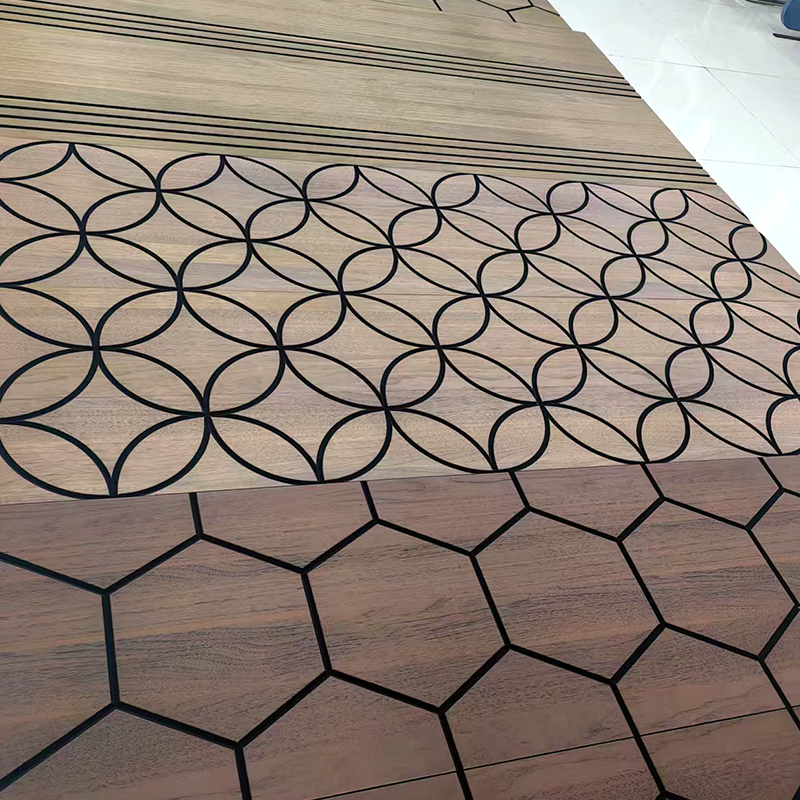
| Perforated wood acoustic panel | 0.50 – 0.75 | Mid frequencies |
A practical example: treating 25–30% of a 40 m² room's surface area with NRC 0.90 panels can reduce RT60 from 2.1 seconds to approximately 0.7 seconds — a dramatic improvement in speech clarity that most occupants perceive as the room becoming significantly quieter and less fatiguing.
The Difference Between Absorption and Soundproofing
This distinction prevents one of the most common and costly mistakes in acoustic treatment:
| Property | Sound Absorption | Soundproofing |
|---|---|---|
| Goal | Reduce echo and reverberation inside a room | Block sound from passing between rooms |
| Metric | NRC (Noise Reduction Coefficient) | STC (Sound Transmission Class) |
| How it works | Converts sound energy to heat via friction in fibrous material | Uses mass, decoupling, damping, and air sealing |
| Typical materials | Fiberglass, rockwool, foam, fabric panels | Mass-loaded vinyl, double drywall, resilient channels |
| Effect on neighbor noise | Minimal to none | Significant reduction possible |
How to Install Sound Absorbing Panels
Proper installation determines whether your panels perform at their rated NRC or fall significantly short. Placement strategy matters as much as the panels themselves.
Step 1 — Identify Primary Reflection Points
First reflection points are where sound bounces directly from the source to the listener after hitting a wall or ceiling. In a home studio or listening room, use a mirror: sit in the listening position and have a helper slide a mirror along the side wall. Wherever you can see a speaker in the mirror is a first reflection point. These are the highest-priority treatment locations.
Step 2 — Calculate Coverage Area
For speech and general acoustic comfort, covering 20–25% of total room surface area is a reliable starting target. For recording studios or critical listening rooms, 30–40% coverage is more appropriate. A 4m x 5m x 3m room has approximately 94 m² of surface area — meaning 19–24 m² of panel coverage for office use, or up to 38 m² for studio use.
Step 3 — Choose Your Mounting Method
- Direct adhesive mountingUse construction adhesive or acoustic panel adhesive clips. Panels sit flush to the wall. Effective but semi-permanent. Best for fixed installations in dedicated rooms.
- Impaling clips / Z-clipsMetal clips that allow panels to hang flat on the wall with a small air gap. The air gap (even 25mm) can improve low-frequency absorption by up to 30% compared to flush mounting.
- French cleat systemInterlocking wood strips allow panels to be repositioned easily. Ideal for flexible creative spaces. Load capacity is high — suitable for heavy fabric-wrapped panels up to 15 kg/m².
- Ceiling suspension cablesFor cloud panels suspended horizontally above a workspace or mixing position. Requires anchor bolts into joists — never drywall anchors alone for panels above 3 kg.
- Freestanding floor framesNo wall fixings required. Panels stand in timber or metal frames. Useful for rental spaces or rooms where wall drilling is not permitted.
Step 4 — Panel Placement Priority Order
Install in this sequence for maximum acoustic return per panel used:
| Priority | Location | Why It Matters |
|---|---|---|
| 1st | Side wall first reflection points | Eliminates comb filtering and imaging smear in stereo listening or recording |
| 2nd | Ceiling reflection point (cloud panel) | Reduces early reflections arriving at listener within 5–20 ms of direct sound |
| 3rd | Rear wall | Absorbs primary backwall reflection; use diffusers here if room is small |
| 4th | Corners (floor-to-ceiling bass traps) | Low-frequency energy accumulates in corners; bass traps reduce modal buildup |
| 5th | Remaining wall fill | Brings total coverage to target percentage for the room's intended use |
Step 5 — Avoid Over-Absorption
A common mistake, especially in home studios, is covering every surface with absorbing material. This produces a "dead" room with no natural ambience — an RT60 below 0.2 seconds feels acoustically unpleasant and unnatural. Balance absorption with some reflective surfaces or acoustic diffusers, particularly on the rear wall.
How Thick Should Sound Absorbing Panels Be?
Panel thickness is directly tied to the wavelengths of sound you need to absorb. Low-frequency sound has long wavelengths — a 100 Hz tone has a wavelength of approximately 3.4 meters — and requires significantly thicker material to absorb than high-frequency sound.
Thickness by Application
- 25mm (1 inch)Effective only above 1,000 Hz. Suitable for controlling high-frequency brightness and sibilance in voice recordings or reducing harsh echoes in tiled bathrooms. Not suitable as a primary treatment solution.
- 50mm (2 inches)The most common general-purpose thickness. Provides good absorption from approximately 500 Hz upward. NRC ratings of 0.80–0.95 are achievable. Recommended for offices, classrooms, podcasting rooms, and home theaters.
- 75mm (3 inches)Extends useful absorption down to approximately 250–300 Hz. A strong choice for music rehearsal spaces and project studios where mid-bass control is needed without dedicated corner bass traps.
- 100mm (4 inches) and aboveRequired for meaningful absorption below 250 Hz. Critical in recording studios, broadcast rooms, and any space where low-frequency resonance (room modes) is a primary concern. Corner-mounted 4-inch panels function as effective broadband bass traps.
The Air Gap Advantage
Mounting a 50mm panel with a 50mm air gap behind it performs comparably to a 100mm panel mounted flush to the wall at low frequencies. This is because the air gap effectively increases the acoustic depth of the treatment. When using Z-clips or hanging systems, a 50–75mm gap is a cost-effective way to improve low-frequency performance without purchasing thicker panels.
Thickness Reference Table
| Thickness | Effective Frequency Floor | Recommended Use Case |
|---|---|---|
| 25mm (1 in) | Above 1,000 Hz | Vocal booths, high-frequency brightness control |
| 50mm (2 in) | Above 500 Hz | Offices, classrooms, home theaters, podcasting |
| 75mm (3 in) | Above 300 Hz | Music rehearsal rooms, project studios |
| 100mm (4 in) | Above 125 Hz | Professional studios, broadcast rooms, critical listening |
| 100mm + air gap | Approaching 80–100 Hz | Corner bass traps, low-frequency modal control |
Choosing the Right Sound Absorbing Panel Material
Material selection affects performance, durability, aesthetics, and cost. The three dominant materials in professional and commercial applications each have clear use profiles:
- Rigid fiberglass (e.g. Owens Corning 703/705)Industry-standard for professional acoustic panels. High NRC (0.95–1.00 at 2 inches), dimensionally stable, will not sag. Itchy to handle — always encapsulate in acoustically transparent fabric. Cost-effective for large installations.
- Mineral wool / rockwool (e.g. Rockwool Safe'n'Sound)Similar performance to fiberglass. Denser, slightly heavier, and more fire-resistant. Preferred in commercial installations where fire ratings are required. Excellent for DIY panel builds.
- Melamine foamLightweight and open-cell. Good high-frequency absorption. Lower density means reduced low-frequency performance compared to fiberglass. Often used in automotive and appliance noise control.
- Acoustic foam tilesAffordable and easy to install. NRC typically 0.30–0.55 — significantly lower than rigid boards. Appropriate for budget home setups but not professional results. Degrades over time with UV and humidity exposure.
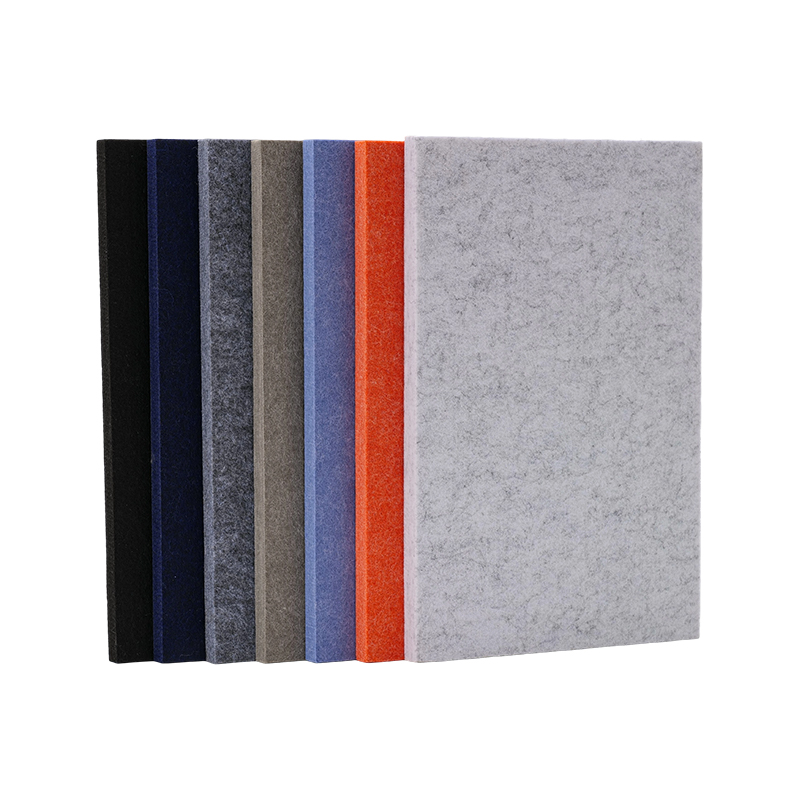
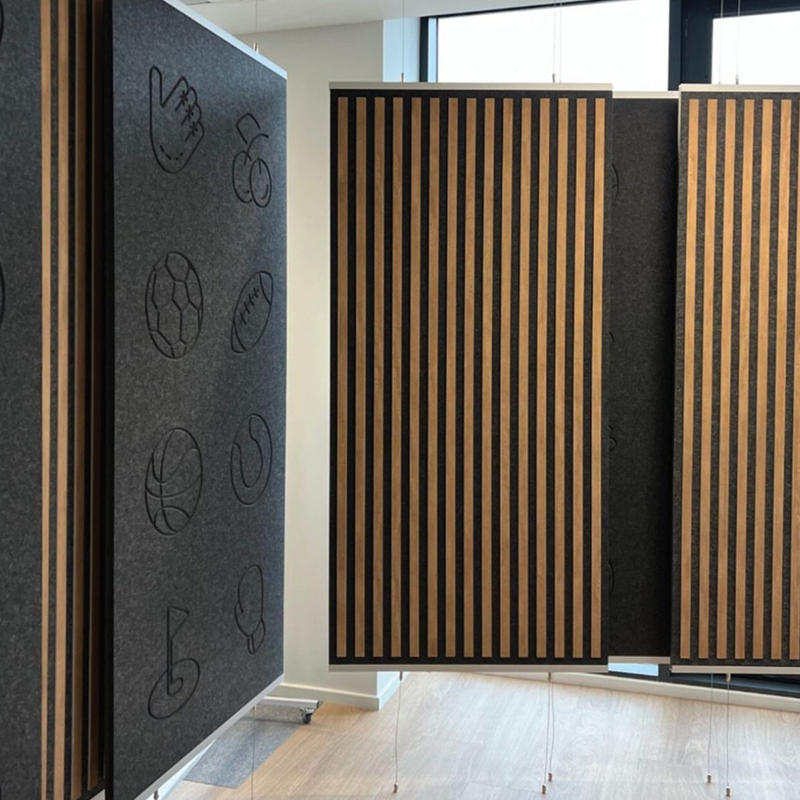
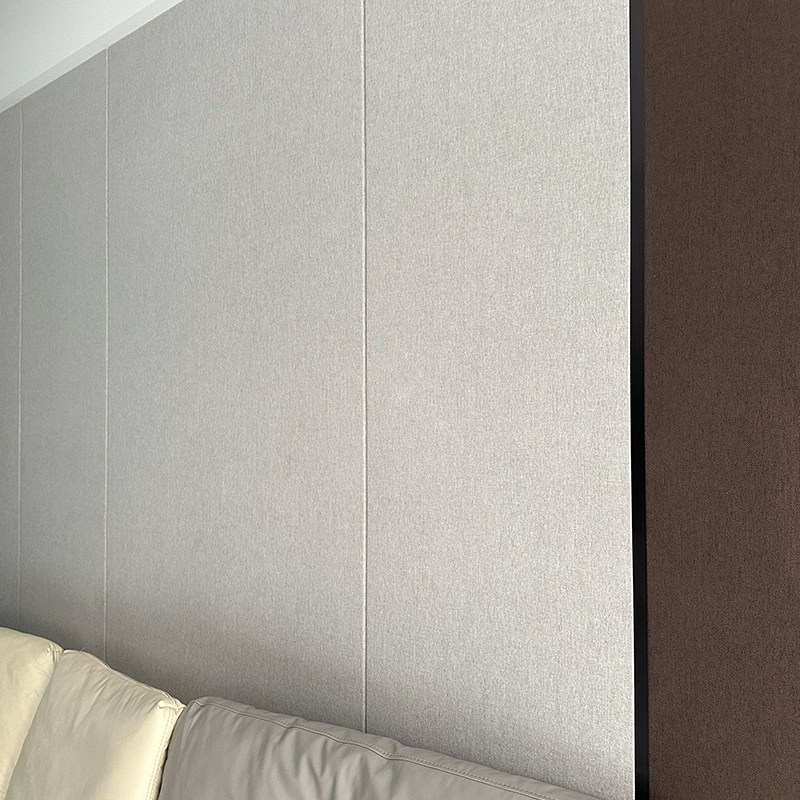
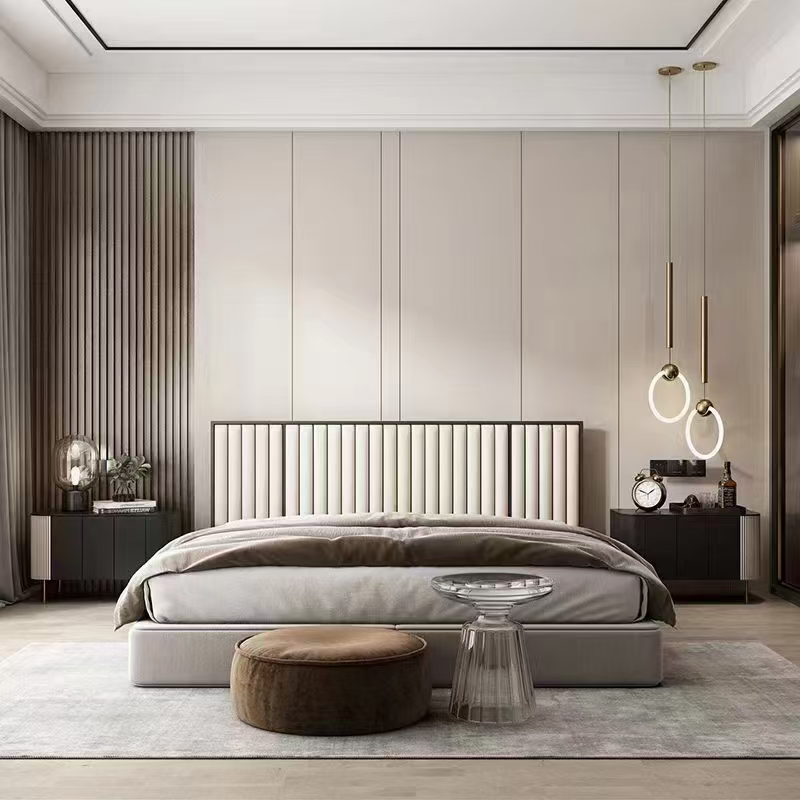
- Fabric-wrapped decorative panelsCombine acoustic performance (NRC 0.85–1.00 with quality infill) with interior design flexibility. Available in hundreds of fabric colors and custom sizes. The most common choice for sound absorbing panels in commercial and hospitality interiors.