


 English
 Español
 عربى
عربى
 中文简体
中文简体




+86-180 3665 1199
Content
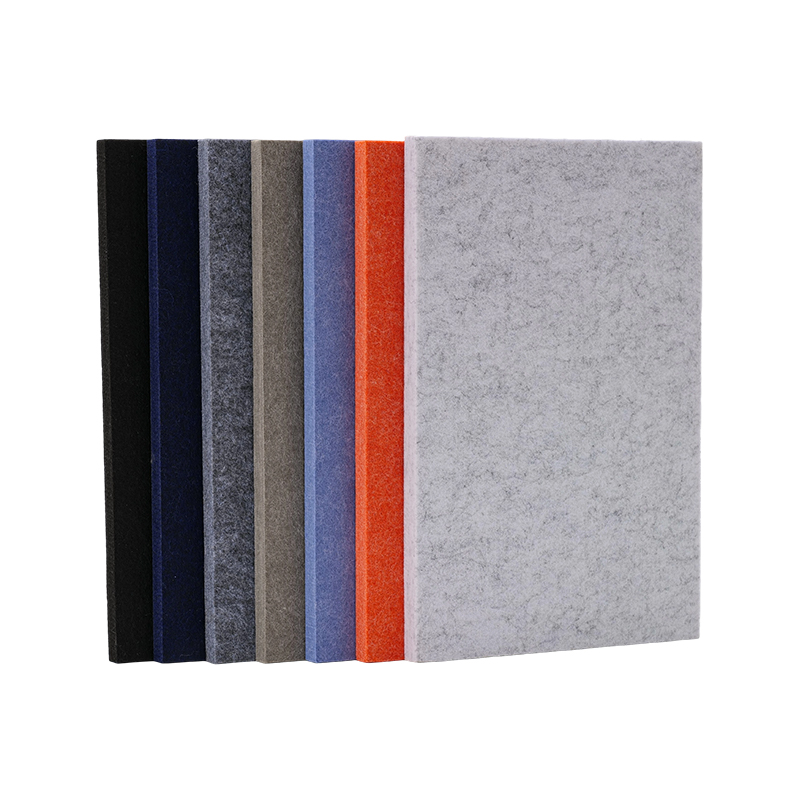
In the mechanical design of modern architectural acoustics, acoustic PET panels serve as a high-performance porous absorber. Unlike traditional fiberglass or mineral wool, polyester fiber (PET) utilizes needle-punched non-woven technology to create a structurally stable matrix. Understanding the expected service life of polyester acoustic panels requires an evaluation of the material's resistance to UV degradation, thermal oxidation, and mechanical fiber fatigue. This technical guide analyzes the durability of acoustic PET panels and provides best practices for cleaning PET acoustic surfaces to ensure the Noise Reduction Coefficient (NRC) remains consistent over decades of operational use.
Structural Integrity and Longevity Parameters
The mechanical properties of PET acoustic materials are defined by their high tensile strength and resistance to compression set. A key factor in why acoustic PET panels last over 20 years is the inherent stability of the polymer chains against moisture. Unlike organic absorbers, PET does not support fungal growth and maintains its Ra surface finish without shedding micro-fibers over time. For high-traffic environments, evaluating the impact resistance of PET sound panels is critical; high-density panels (typically 1900g/m2 to 2400g/m2) resist indentation and surface pilling, ensuring that the decorative PET panel finish remains aesthetically intact even in demanding commercial applications.
Yayin New Materials Jiangsu Co., Ltd. is headquartered in Lianyungang, Jiangsu Province, with two branch factories in Huzhou and Nanchang, covering over 30,000 square meters. Yayin specializes in the R&D and production of carbon-neutral, antibacterial sound-absorbing materials. By utilizing advanced needle-punched technology, we convert recyclable polyester into environmentally friendly panels that are sound-absorbing, flame-retardant, and heat-insulating. Our acoustic PET panels achieve an NRC of 0.85 and meet the ASTM E84 A-level and EN13501-1 B-level flame retardant standards. With ISO9001 and ISO14001 certifications, Yayin ensures E0-level formaldehyde emissions for superior indoor air quality.
| Performance Metric | Standard Reference | Engineering Value |
| Noise Reduction Coefficient (NRC) | ASTM C423 | 0.85 (24mm thickness) |
| Flame Spread Index | ASTM E84 | Class A (FSI 0-25) |
| Formaldehyde Emission | EN 717-1 | E0 Standard (Non-detectable) |
Cleaning Protocols and Fiber Protection Standards
Maintaining the sound absorption efficiency of PET panels requires keeping the interstitial pores free from particulate accumulation. How to clean acoustic PET panels without damaging fibers involves a tiered approach, starting with dry vacuuming using a soft brush attachment to prevent surface abrasion. For localized stains, removing spots from polyester acoustic felt should be performed using a pH-neutral detergent and a "blotting" technique; avoiding aggressive scrubbing on PET panels is mandatory to prevent fiber "fuzzing" which can alter the Ra surface finish and acoustic impedance. For deep sanitization, steam cleaning acoustic PET surfaces is permissible if the temperature is regulated below 100°C to avoid thermal deformation of the needle-punched matrix.
- Particulate Management: Regular vacuuming prevents pore clogging in acoustic absorbers, maintaining peak NRC performance at mid-to-high frequencies.
- Chemical Compatibility: Ensuring solvent-free cleaning for polyester panels to prevent the breakdown of flame-retardant additives.
- Anti-microbial Maintenance: Leveraging the antibacterial properties of Yayin PET materials to reduce the frequency of chemical disinfection in medical and educational facilities.
What is the impact of UV exposure on PET panel lifespan?
While PET is naturally resilient, preventing UV discoloration in acoustic panels is essential for maintaining aesthetic uniformity. High-quality acoustic PET panels incorporate UV-stabilized pigments during the fiber extrusion phase. Comparing UV-stable vs standard polyester felt, engineered panels exhibit a Grey Scale rating of 4-5 after 200 hours of Xenon-arc exposure. This ensures that the long-term colorfastness of acoustic PET is preserved even in spaces with significant solar gain through glazing, supporting a maintenance-free lifecycle in sustainable building designs.
Advanced Flame Retardancy and Environmental Compliance
The safety profile of acoustic PET panels is defined by their combustion characteristics. Achieving UL723-2018 A-level fire performance ensures that the material does not contribute to rapid flame spread or excessive smoke density. Furthermore, the recyclability of PET acoustic materials supports circular economy goals, as the panels can be re-processed into new fiber at the end of their service life. Yayin's commitment to carbon-neutral PET production ensures that the lifecycle analysis (LCA) of the panels aligns with LEED and BREEAM certifications, providing a heat-insulating acoustic solution that reduces the energy load of HVAC systems.
| Material Property | Testing Method | Compliance Level |
| Surface Burning | UL 723-2018 | A Level |
| Smoke Developed Index | ASTM E84 | Less than 450 |
| Mold Resistance | ASTM C1338 | Pass (No growth) |
Why choose needle-punched PET over traditional foam?
Comparing PET panels vs acoustic foam reveals that needle-punched polyester is significantly more durable and does not "crumble" due to oxidation. The density of Yayin acoustic panels (up to 200kg/m3) provides better low-frequency absorption and superior impact resistance for gymnasiums. By selecting ISO14001 certified acoustic suppliers, project managers ensure that the low-VOC acoustic PET panels delivered to the site will not off-gas, maintaining the E0 formaldehyde emission standard throughout the building's operational phase.
Technical FAQ
Can PET panels be used in high-humidity areas?
Yes. PET fibers are hydrophobic and do not absorb moisture from the air. This prevents the panels from sagging or losing their acoustic properties in humid environments like indoor pools or spas.
Do acoustic PET panels lose their NRC over time?
As long as the pores are not completely blocked by paint or heavy dust, the NRC remains stable. The physical structure of the fiber does not degrade under normal indoor environmental conditions.
Is it possible to paint PET panels to change their color?
While possible, painting can significantly reduce the NRC by sealing the surface pores. If aesthetic changes are required, it is recommended to use specialized acoustic-transparent dyes rather than standard latex paint.
What is the maximum temperature PET panels can withstand?
PET has a melting point around 250°C, but it begins to soften at 80-100°C. For architectural applications, they are stable in all standard HVAC temperature ranges.
How are these panels installed for maximum lifespan?
Mechanical fastening or high-strength water-based adhesives are recommended. Ensuring a flat substrate and consistent pressure during bonding prevents edge-lifting and mechanical stress on the fibers.
Technical References
- ASTM E84: Standard Test Method for Surface Burning Characteristics of Building Materials.
- EN 13501-1: Fire classification of construction products and building elements.
- ISO 9001/14001: Quality and Environmental Management System Standards.


