


 English
 Español
 عربى
عربى
 中文简体
中文简体



+86-180 3665 1199
Content
- 1 1. Understanding the Physics of Sound Absorption and NRC
- 2 2. Fire Safety and Environmental Standards in Residential Workspaces
- 3 3. Strategic Placement and Aesthetic Integration
- 4 Conclusion: The Impact of Professional Acoustics
- 4.1 Frequently Asked Questions (FAQ)
- 4.1.1 1. Do Acoustic Wall Panels block noise from my neighbors?
- 4.1.2 2. What is the best thickness for acoustic wall panels in a home office?
- 4.1.3 3. Are eco-friendly acoustic panels for home use easy to install?
- 4.1.4 4. How many acoustic panels for a small office (approx. 10sqm) do I need?
- 4.1.5 5. Can I use decorative acoustic wall panels for office as a pinboard?
- 4.2 Industry References
- 4.1 Frequently Asked Questions (FAQ)
As the professional landscape shifts toward remote work, the home office has transitioned from a temporary setup to a critical hub for high-stakes communication. However, residential rooms are rarely designed for acoustics, often suffering from excessive reverberation and flutter echoes that compromise voice clarity during virtual meetings. Acoustic Wall Panels serve as the primary engineering solution to these auditory challenges. Yayin New Materials Jiangsu Co., Ltd., a leader in carbon-neutral polyester fiber antibacterial sound-absorbing materials, utilizes needle-punched non-woven technology to create high-performance solutions. Operating from a 30,000-square-meter manufacturing base, we produce Acoustic Wall Panels that combine sound absorption with flame-retardant and heat-insulating properties. By integrating polyester fiber acoustic panels into your workspace, you can achieve professional-grade audio fidelity without structural renovations.
1. Understanding the Physics of Sound Absorption and NRC
The effectiveness of an acoustic treatment is quantified by its Noise Reduction Coefficient NRC. This scalar representation indicates the amount of sound energy absorbed by a surface rather than reflected back into the room. Traditional drywall reflects nearly 95% of sound, whereas high-quality Acoustic Wall Panels act as a porous trap. When comparing sound absorption vs soundproofing, it is vital to note that absorption (NRC) focuses on internal room clarity, while soundproofing (STC) focuses on blocking external noise. For a home office, achieving an NRC rating for home office acoustic panels of 0.85 or higher ensures that vocal frequencies are captured, preventing the "hollow" sound often heard on conference calls. Yayin panels achieve this high efficiency through dense needle-punching, ensuring the best thickness for acoustic wall panels is maintained for optimal low-to-mid frequency control.
Acoustical Performance Comparison
- Absorption Efficiency: High-density polyester transforms kinetic sound energy into microscopic thermal energy through friction within the fiber matrix.
- Vocal Clarity: Reducing early reflections improves the Speech Transmission Index (STI), making your voice sound "dry" and professional.
| Surface Material | NRC Rating (Typical) | Acoustic Effect |
| Standard Drywall | 0.05 | Highly reflective; promotes echo |
| Plywood/Timber | 0.10 - 0.15 | Hard surface; minimal absorption |
| Yayin Polyester Fiber Panel | 0.85 | High absorption; eliminates reverberation |
2. Fire Safety and Environmental Standards in Residential Workspaces
Engineering a workspace requires strict adherence to safety protocols, particularly fire retardancy. For Acoustic Wall Panels used in a home setting, they must meet global standards to prevent rapid flame spread. Yayin materials achieve the ASTM E84 Class A fire rating in the US and EN13501-1 Class B in the EU. Furthermore, indoor air quality is paramount; our panels reach the E0 formaldehyde emission level, ensuring that eco-friendly acoustic panels for home use are safe for long-term exposure. When evaluating acoustic panels vs foam tiles, polyester panels offer significantly better durability and fire safety compared to polyurethane foam, which can degrade and release toxic fumes during combustion. Choosing carbon neutral acoustic materials also aligns with modern sustainability goals, as our panels are fully recyclable.
Safety and Material Sequence
- Raw Material Sourcing: Utilization of recyclable polyester fibers for carbon neutrality.
- Needle-Punched Processing: Mechanical interlocking of fibers without harmful chemical adhesives.
- Certification: Rigorous testing for UL723-2018 and ISO9001 compliance.
3. Strategic Placement and Aesthetic Integration
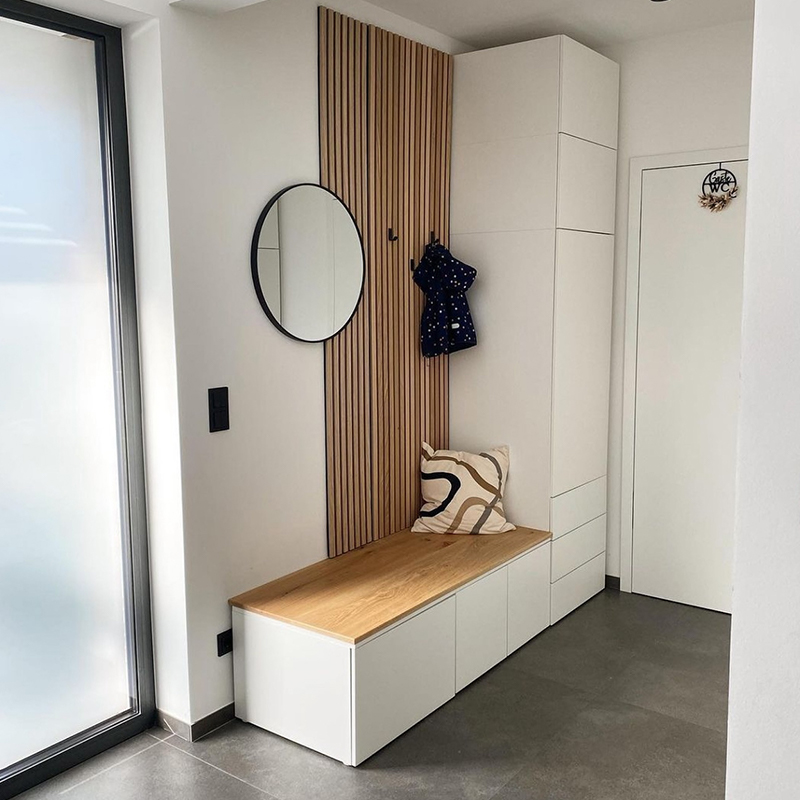
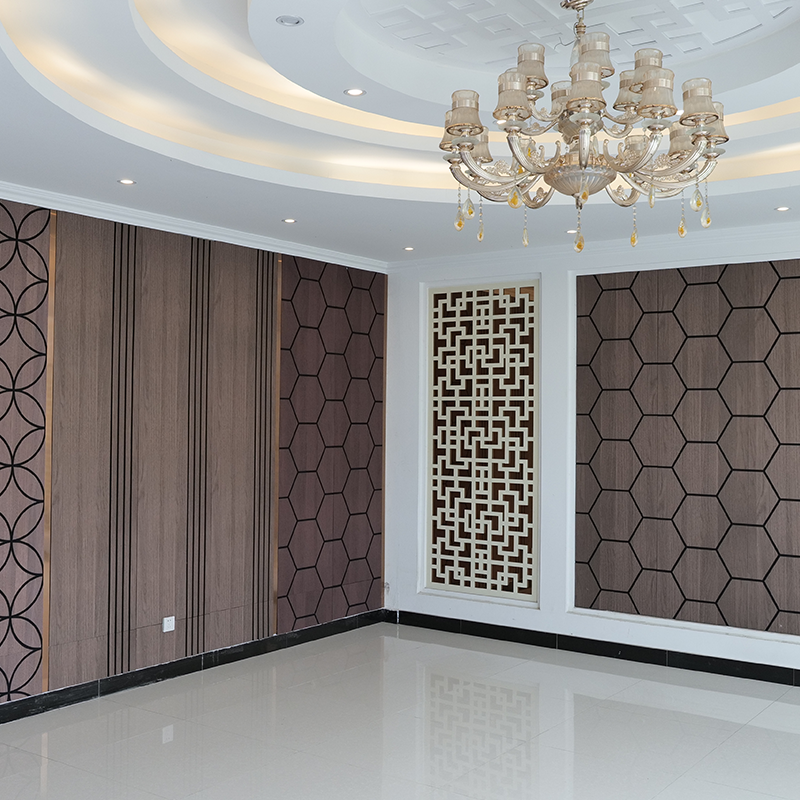
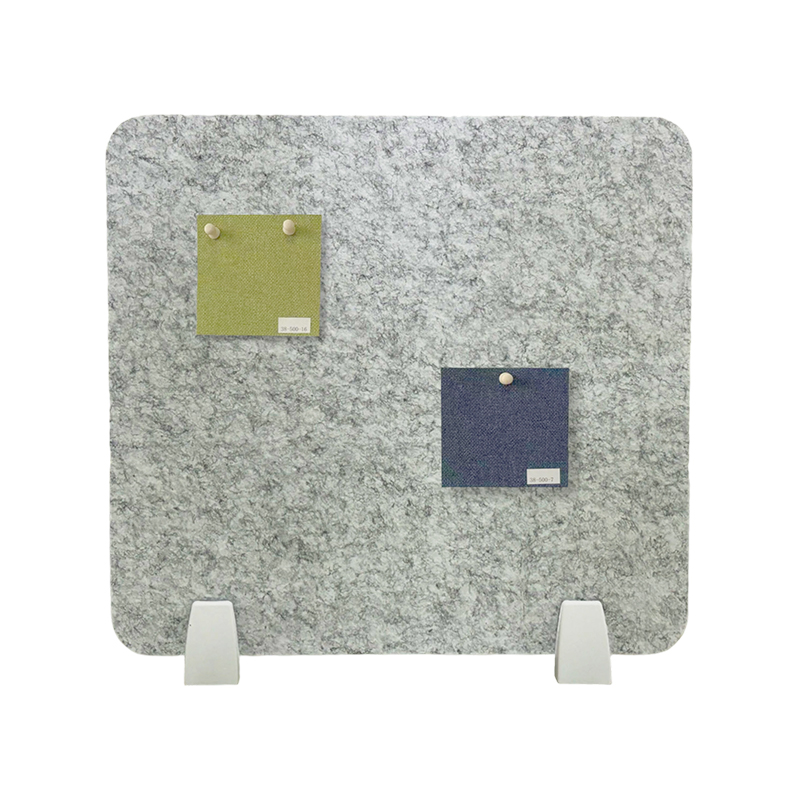
The improvement of sound quality is not just about the material but also the placement of acoustic panels for best sound. In a home office, "first reflection points" on the side walls and the wall behind the monitor are critical. Utilizing decorative acoustic wall panels for office settings allows these technical tools to blend into the interior design. If a wall installation is not feasible, using acoustic desk screens can provide localized "acoustic shadows," protecting your microphone from picking up peripheral noise. For those wondering how many acoustic panels for a small office are needed, a general engineering rule is to cover 20% to 30% of the wall surface area to achieve a significant reduction in decay time (RT60).
| Installation Type | Primary Benefit | Typical Coverage |
| Wall-Mounted Panels | Broad-spectrum reverberation control | 25% of wall area |
| Acoustic Desk Screens | Localized vocal clarity/privacy | Immediate workspace perimeter |
| Ceiling Clouds | Eliminates vertical flutter echo | Directly above the desk |
Conclusion: The Impact of Professional Acoustics
Ultimately, Acoustic Wall Panels transform a home office from a standard room into a high-performance studio. By utilizing polyester fiber acoustic panels with high NRC ratings and E0-level safety profiles, you protect both your auditory clarity and your health. Yayin New Materials Jiangsu Co., Ltd. remains dedicated to providing innovative, sustainable, and flame-retardant solutions that meet the highest international standards. Investing in the right Acoustic Wall Panels ensures that your professional communication is never hindered by the limitations of your physical environment.
Frequently Asked Questions (FAQ)
1. Do Acoustic Wall Panels block noise from my neighbors?
No, Acoustic Wall Panels are designed for sound absorption to improve internal room quality. To block external noise (soundproofing), you would need high-mass materials with a high STC rating, though absorption does help reduce the perceived noise level by lowering reflections.
2. What is the best thickness for acoustic wall panels in a home office?
For vocal frequencies (human speech), a thickness of 9mm to 12mm is generally sufficient. If you also use the space for music production, thicker panels (24mm or 50mm) may be required to absorb lower frequencies.
3. Are eco-friendly acoustic panels for home use easy to install?
Yes. Polyester panels are lightweight and can be easily installed using spray adhesive or 3M command strips, making them a "non-destructive" option for renters or home offices.
4. How many acoustic panels for a small office (approx. 10sqm) do I need?
For a standard 10sqm office, installing approximately 8 to 10 panels (each 60cm x 60cm) at eye level will significantly improve speech clarity for video calls.
5. Can I use decorative acoustic wall panels for office as a pinboard?
Yes! One of the practical benefits of polyester fiber acoustic panels is that they are tackable, allowing them to function as both a high-performance acoustic treatment and a functional bulletin board.
Industry References
- ASTM E84: Standard Test Method for Surface Burning Characteristics of Building Materials.
- EN 13501-1: Fire classification of construction products and building elements.
- ISO 9001 & ISO 14001: Quality and Environmental Management System Standards.
- UL 723-2018: Standard for Test for Surface Burning Characteristics of Building Materials.


