


 English
 Español
 عربى
عربى
 中文简体
中文简体



+86-180 3665 1199
Content
A 12 mm polyester fiber panel looks the same as a 50 mm panel from across the room. Mounted in a quiet bedroom, it may be enough. Place the same 12 mm panel in a conference room with an HVAC hum at 125 Hz, and the space will sound hollow and muddy. The difference is not the finish or the fabric color. It is panel thickness and internal structure.
Thickness Sets the Frequency Range
Thicker panels absorb lower frequencies. For porous absorbers such as recycled polyester felt, the absorption coefficient at low frequencies is directly proportional to the physical thickness of the panel. A 12 mm panel barely touches the 125 Hz octave. A 24 mm panel starts to work at 250 Hz. A 50 mm panel absorbs 125 Hz and below effectively.
Absorption coefficient at 125 Hz
12 mm 0.20
24 mm 0.45
50 mm 0.75
These values are typical measured results for PET felt panels under the ASTM C423 standard. The chart shows why thin panels fail in rooms dominated by low-frequency voices, air-conditioning rumble, or bass-heavy audio.
9 mm: targets high-frequency hiss and speech consonants; suitable for open offices and classrooms with low noise floors.
24 mm: covers the speech range (250-2000 Hz); the standard choice for conference rooms and recording booths.
50 mm: extends down to 80-125 Hz; required for home theaters, KTV rooms, and spaces with HVAC or traffic noise.
When a mounting cavity is available, you can solve the low-frequency problem without going to 50 mm. But when the panel is glued directly to a hard wall, respect the thickness rule: more thickness equals more bass absorption.
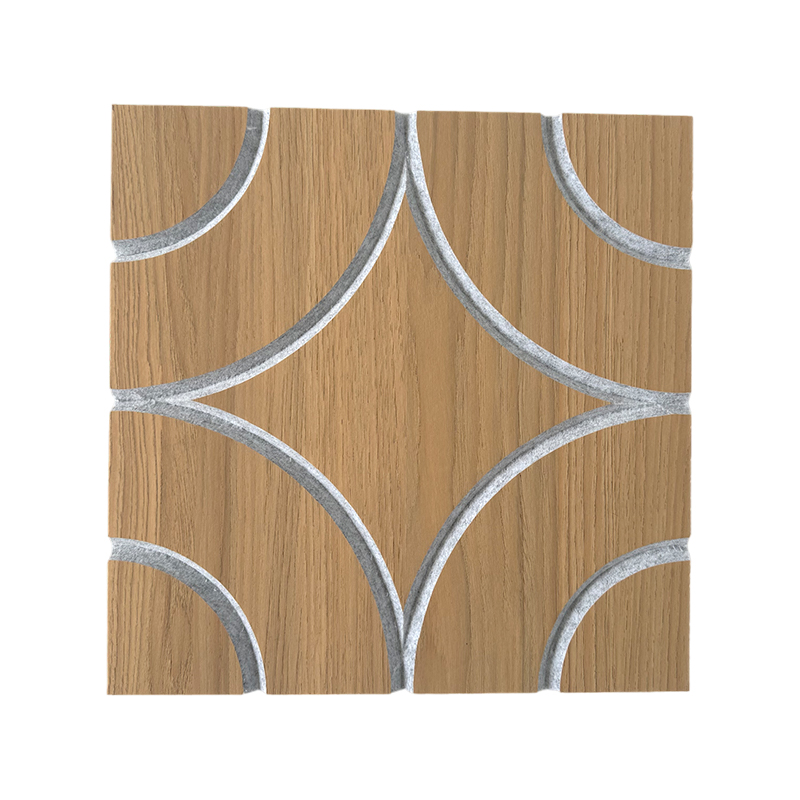
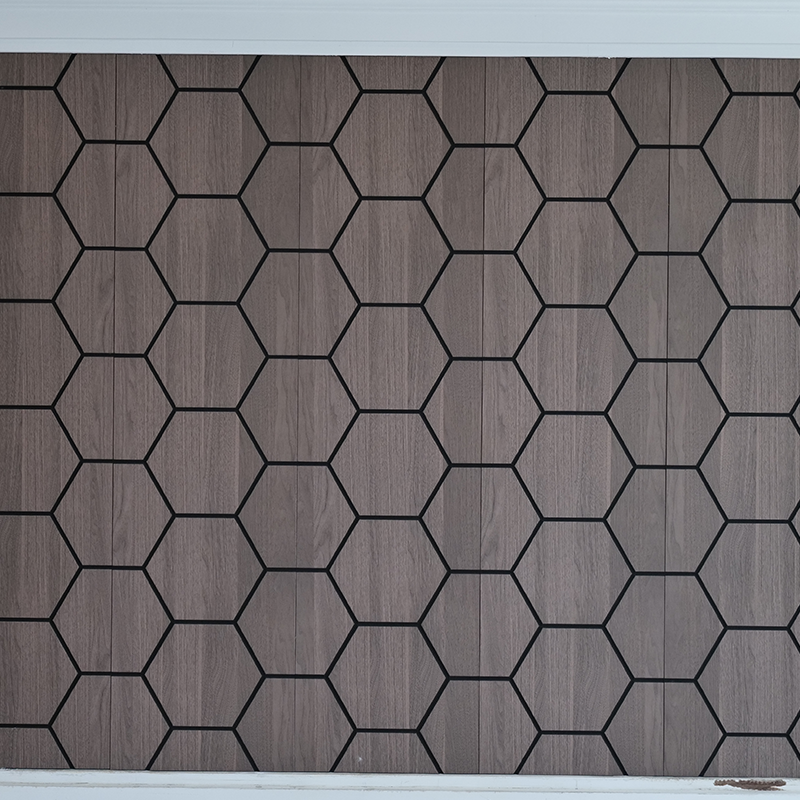
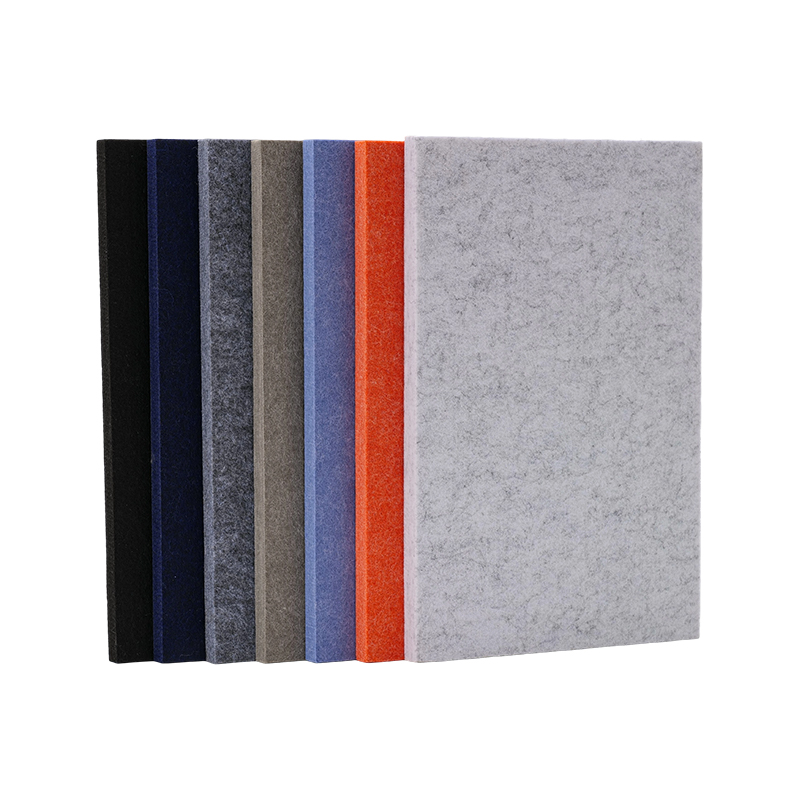 High-Density Polyester Fiber Acoustic Panels for WallsThese 9mm or 12mm polyester fiber boards effectively absorb mid-high frequency noise. When mounted with an air cavity, they achieve deep bass absorption comparable to thicker panels, making them a cost-effective acoustic upgrade for rooms with existing wall cavities.View Product →
Density and Air Cavity Change the Equation
Density sets the absorption ceiling, and an air cavity extends the low-frequency bandwidth. A 9 mm panel with a 50 mm air gap can perform close to a 24 mm panel without a gap. This is the most cost-effective acoustic upgrade because it uses the existing wall cavity instead of thicker panels.
Direct-mounted 24 mm
NRC 0.65
Absorption range 500-4000 Hz
Best for speech clarity
9 mm + 50 mm air gap
NRC 0.70
Absorption range 250-4000 Hz
Uses existing stud spacing
50 mm direct-mounted
NRC 0.85
Absorption range 100-4000 Hz
Best for bass-heavy rooms
The 50 mm air gap is the most cost-effective acoustic upgrade in any remodel because it uses the existing wall cavity instead of thicker panels.
In our own factory tests, a 9 mm high-density PET panel with a 50 mm batten cavity reaches a similar 250 Hz absorption coefficient as a 24 mm panel glued to the wall. This works because the air gap acts as a coupled resonator for low-frequency energy.
Structure and Surface Geometry
The physical structure of the panel changes the surface area exposed to sound. Grooves, slats, and perforations shift the effective absorption band without changing the core material. A flat panel is the baseline; an engineered surface is a tool for tuning the acoustical response.
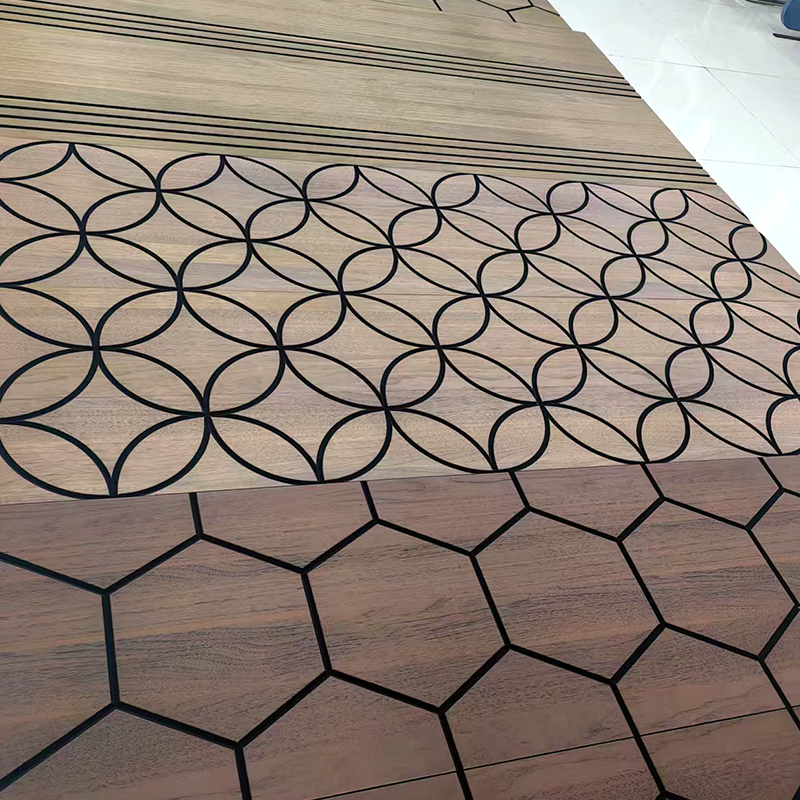
Grooved boards: the grooves add up to 20 percent more surface area in a standard 2440 x 1220 mm board, which increases mid-frequency absorption.
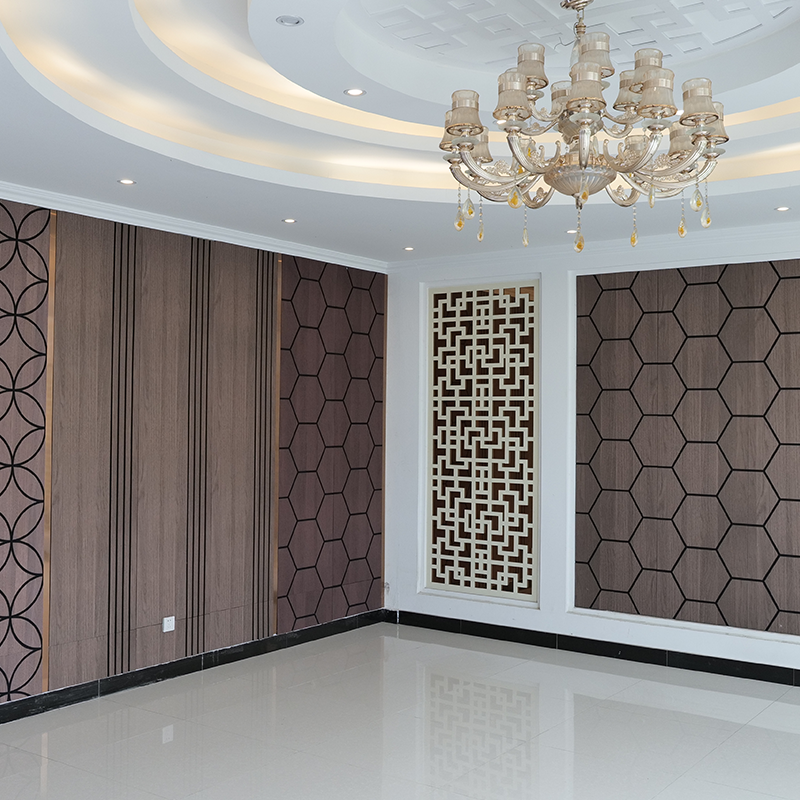
Wood-slat akupanels: the rigid slats create a diffusion effect; the PET felt behind them still absorbs low frequencies.
Fabric-wrapped panels: the fabric adds friction for high-frequency absorption while hiding the dense PET core.
Perforated or PVC-faced boards: the surface has a specific open-area ratio that controls the balance between absorption and reflection.
The structure also affects installation. A grooved board is more rigid and can be mounted with screws or adhesive in a ceiling grid. A fabric-wrapped panel needs a clean wall base because the fabric can mark more easily. Before specifying thick composite panels, review our polyester fiber safety and performance characteristics.
 Fire-Resistant Grooved Polyester Fiber Sound-Absorbing BoardDesigned for cinema or KTV acoustic treatment, these grooved boards offer rigid structure and easy installation. They are suitable for ceiling grids or wall mounting, providing effective sound absorption in spaces requiring robust acoustic control.View Product →
Specifying Panels by Room Type
Match the thickness and structure to the dominant frequency problem in the room. A room that suffers from echo in the 500-2000 Hz range needs a 24 mm flat or fabric-wrapped panel. A room that has bass buildup below 250 Hz needs a 50 mm panel or a 24 mm panel with a large air cavity.
| Room Type | Dominant Frequency | Recommended Thickness | Structure |
| Home Theater | 80-250 Hz | 50 mm or 24 mm with 50 mm air gap | Grooved or wood-slat |
| Conference Room | 250-1000 Hz | 24 mm | Fabric-wrapped |
| Open Office | 500-4000 Hz | 16-24 mm | High-density PET |
| KTV / Club | 80-500 Hz | 50 mm | Grooved or perforated |
NRC 0.85
for 24 mm PET felt panels
E0
formaldehyde emission
Class A
ASTM E84 fire rating
Our 100% recycled PET felt panels combine full-band absorption with a stable surface for painting, laminating, or wood veneer. The felt structure is what produces the absorption, not a chemical coating.
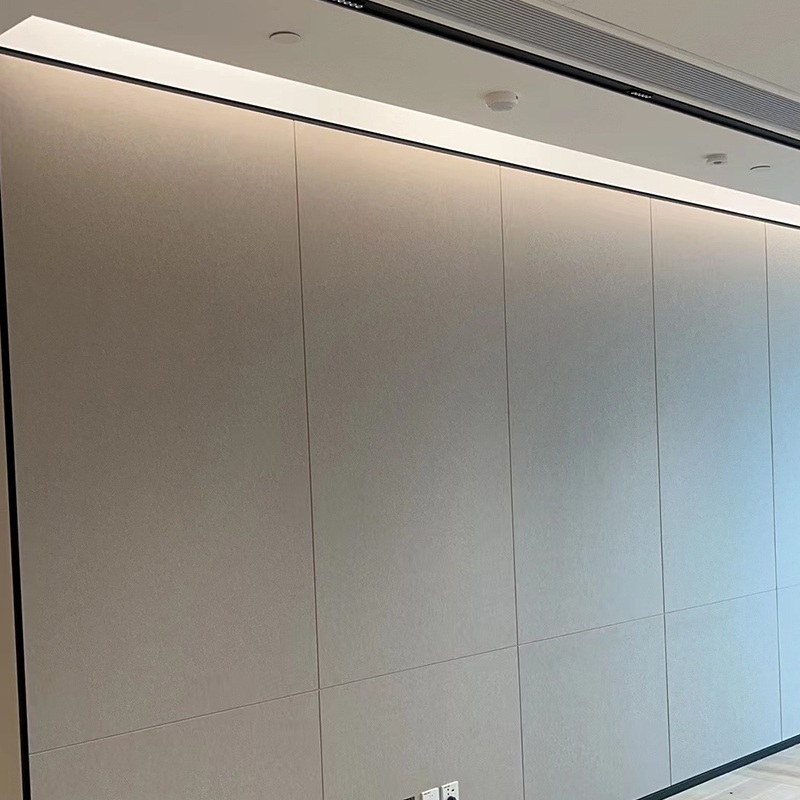 Recycled PET Felt Acoustic Panel with Custom CuttingMade from 100% recycled PET, these panels provide full-band absorption with a stable surface for finishing. Available with precision straight or V-knife cuts, they allow for customized decorative elements while enhancing room acoustics.View Product →
How to Verify Real Absorption Data
The NRC rating printed on a brochure is not enough. Ask for the full absorption coefficient table. The NRC is a weighted average of 250, 500, 1000, and 2000 Hz. A panel with a high NRC can still fail at 125 Hz if the low-frequency coefficients are poor.
Noise Reduction Coefficient (NRC) is a single number averaged from the absorption coefficients at 250, 500, 1000, and 2000 Hz. It does not describe performance below 250 Hz.
For any critical room, request the measured coefficient at 125, 250, 500, 1000, 2000, and 4000 Hz. That is the only way to know whether the panel will handle the specific problem in your room. For a step-by-step checklist, read our NRC rating verification guide.
Frequently Asked Questions
Does thickness matter more than material density?
Thickness controls the lowest frequency that can be absorbed. Density controls the maximum absorption coefficient across the band. For low-frequency issues, thickness matters more. For mid-band efficiency, density is the first parameter to check.
What thickness is best for a home theater?
For bass-heavy film audio, use 50 mm panels or a 24 mm panel with a 50 mm air cavity. If the wall cannot accept deep panels, mount the 24 mm panel on battens to create a cavity.
Can a 9 mm panel with an air gap replace a 50 mm panel?
In most cases, yes for the 125-250 Hz range, but not below 80 Hz. The air gap adds low-frequency absorption but does not improve the high-frequency performance of the 9 mm material.
Do wood slat panels absorb low frequencies?
Yes. The slats add diffusion and some high-frequency absorption, while the PET felt layer behind them continues to absorb low-frequency energy. The overall low-frequency absorption depends on the felt thickness and the air cavity.


