


 English
 Español
 عربى
عربى
 中文简体
中文简体


+86-180 3665 1199
Content
The Short Answer
A colleague's phone call five meters away, a keyboard clicking, a meeting in the corner: open offices collect noise from every direction. Acoustic office partitions are a common response, but they do not soundproof a room. They absorb sound energy and reduce the level of chatter and echo around you. How well they work depends on the material, density, placement, and the acoustic metric you look at.
What Acoustic Partitions Do to Sound
Acoustic office partitions work on the same principle as thick curtains and upholstered furniture: they soak up sound instead of bouncing it back. When a sound wave hits a porous panel, friction inside the material converts the acoustic energy into heat. What reaches your ear is a weaker reflection, so speech becomes less distinct and the overall noise level drops.
Partitions also create a visual barrier that changes how people speak. Workers tend to lower their voices when they cannot see the person they are talking to directly. This behavioral effect is one reason acoustic office partitions improve workplace productivity and privacy even when the measured noise reduction is modest.
A common misconception is that a partition acts like a wall, preventing sound from passing through. In practice, most freestanding screens are not sealed at the bottom and do not reach the ceiling. Sound travels over the top, around the sides, and through the gaps. This is why acoustic partitions are measured for sound absorption (NRC) rather than sound transmission loss (STC).
Absorption Versus Blocking
Acoustic absorption and soundproofing are two different jobs. A partition that absorbs sound reduces reflections in the same room. A partition that blocks sound stops it from entering an adjacent room. An open office partition is almost always an absorber, not a blocker. If you need to stop sound moving between two enclosed rooms, you need a full-height wall with mass and airtight seals, not a movable screen.
Why Sound Still Travels Around a Partition
Sound behaves like water: it finds the path of least resistance. In a typical open plan, a 1.5-meter-high screen leaves a large gap above. High-frequency speech is directional and will be partially blocked by the screen; low-frequency noise bends around the screen and continues almost unaffected. This is why a single screen can make a conversation harder to understand, but cannot make a noisy zone completely quiet.
Materials and Construction That Make Them Work
The most common material in modern commercial partitions is needle-punched polyester fiber, often made from recycled PET bottles. These panels have a random three-dimensional structure of fine fibers. The fibers create thousands of small air pockets, which act as frictional surfaces for sound waves. Low-frequency sounds need thicker and denser panels to absorb them, while high-frequency sounds are absorbed by even relatively thin material.
Some partitions use acoustic foam or mineral wool. Foam is lightweight and inexpensive but less durable and less reliable in fire testing. Mineral wool offers good absorption but irritates skin and lungs during handling, and it is harder to recycle. Polyester panels balance performance, safety, and sustainability.
Many partitions combine a porous core with a fabric finish. The fabric protects the core, adds color and texture, and its weave still allows sound to pass through. Some products add a dense septum layer in the middle to provide a little extra blocking, though this changes the absorption balance. When you see thick, soft panels wrapped in fabric, you are looking at an absorber designed for speech frequencies.
Density and Thickness
Density affects how a panel behaves at different frequencies. A 9 mm panel absorbs high frequencies efficiently but becomes transparent to low basses. A 25 mm panel has much deeper pores and will absorb lower mid-range sounds. A partition with a 28 mm core and a fabric face, for example, is a balanced choice for office speech noise. It is thick enough to handle the 500 and 1000 Hz bands where human voices sit.
Why Recycled PET Fiber Is a Practical Choice
Recycled PET fiber panels are stable, moisture-resistant, and can be manufactured with consistent density. They also meet the kind of compliance that project buyers need: fire ratings such as ASTM E84 Class A and EN13501-1 B, and low formaldehyde emission at E0 level. Those numbers matter in real offices because partitions sit close to people for years.
Key Performance Numbers to Check
When comparing partitions, the first number to look at is the Noise Reduction Coefficient (NRC). It is a single value that averages how much sound a panel absorbs in four mid-frequency bands. An NRC of 0.85 means the panel absorbs 85% of the sound energy that reaches it across those bands. That is a high level for a commercial partition.
NRC does not tell you how much sound passes through the panel. It only measures absorption. For acoustic office partitions, absorption is the relevant metric because the goal is to reduce reflected noise, not to seal a room. If a supplier quotes an STC rating, that is a different test used for walls, and it is largely irrelevant for a 1.6-meter screen.
| Metric | What it measures | Why it matters |
|---|---|---|
| NRC | Fraction of sound energy absorbed at 250-2000 Hz | Higher NRC means less echo and speech reflection; choose 0.85 or above |
| STC | Sound transmitted through a wall or barrier | Low relevance for open partitions because they do not seal the room |
| Fire class | Surface burning characteristics (ASTM E84, EN13501-1) | Required for commercial buildings; favors B-class or better |
| Formaldehyde emission | Indoor air quality level | E0 or similar gives low VOC exposure in occupied offices |
The NRC rating is an average. A partition with a high NRC can still let low-frequency noise through. For speech, look for absorption in the 500, 1000, and 2000 Hz bands. Some manufacturers publish a detailed absorption coefficient curve; that is more useful than a single number. You can see how NRC ratings relate to speech distraction for a practical explanation.
Types of Acoustic Office Partitions and Where They Help Most
The best product depends on the noise path you want to cut. If the problem is a permanent workstation, a heavy freestanding screen works best. If the problem is a meeting area used twice a day, a mobile partition is more cost-effective.
Freestanding Floor Screens
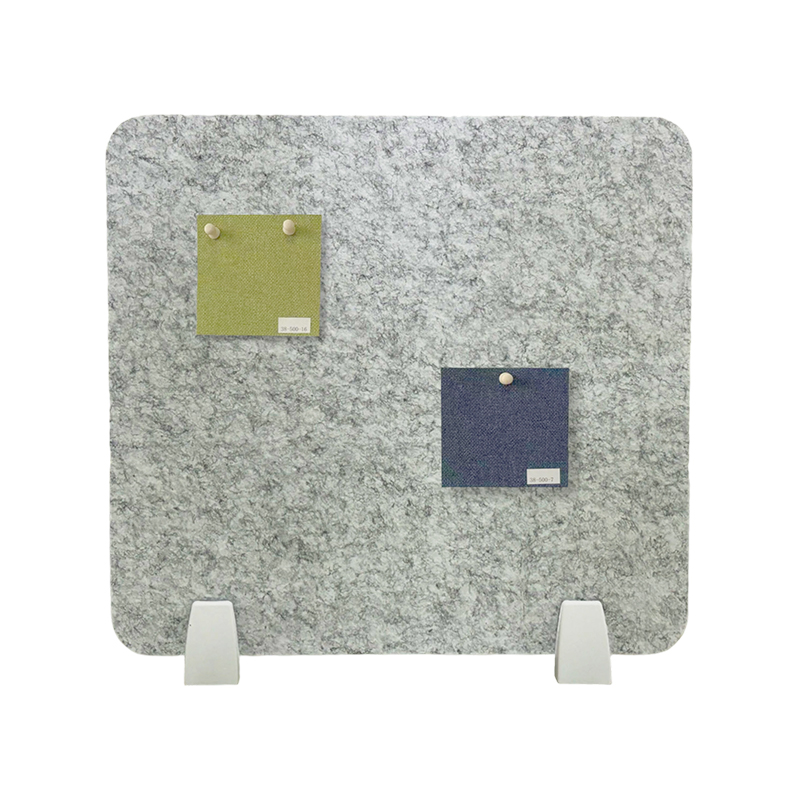
Freestanding screens stand on their own and are simple to position. They are the most flexible way to add acoustic and visual separation without touching walls or ceilings. Place them between workstations, near a shared printer, or around a huddle area. A well-chosen freestanding screen can cut direct line-of-sight and reduce speech reflections in a specific zone. For a typical office layout, 1650 x 600 x 28 mm freestanding acoustic office partitions offer a balanced core for speech absorption.
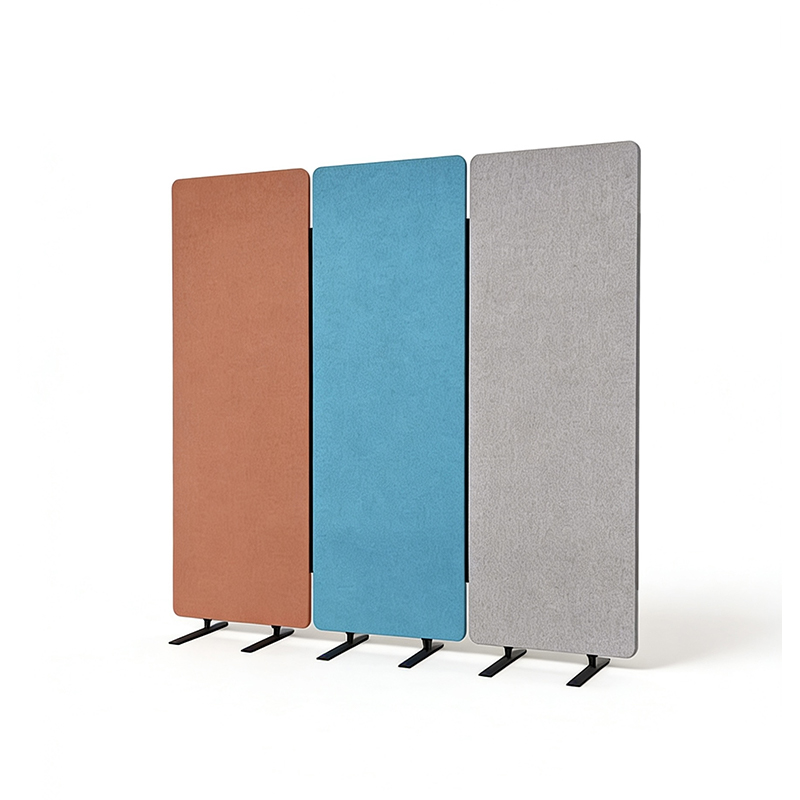 Wholesale 1650×600×28mm Office Acoustic Freestanding Partition Screen Suppliers,Yayin New Materials Jiangsu Co.,Ltd. Is China Wholesale 1650×600×28mm Office Acoustic Freestanding Partition Screen Suppliers, Factory an...View Product →
Desk-Mounted Screens
Desk-mounted screens clamp onto workstations and raise the barrier directly in front of you. They block the direct path of a colleague's voice and prevent peripheral visual distraction, but they do little for noise that travels over the top. They are best used as a first layer on dense workstations, often combined with freestanding panels between desks.
Mobile and Modular Partitions
Mobile partitions on casters can be moved in minutes, making them ideal for hybrid offices, training rooms, or spaces that change function through the week. For a more closed unit, casters and zippered office partitions combine a wheeled base with a zippered edge, so panels can be joined into a stronger enclosure. Even greater flexibility comes from modular systems with adjustable sizes, allowing you to match the partition to existing furniture and room dimensions. The customizable 1700 x 1200 x 28 mm sound-absorbing floor screen is a good example of dimensional flexibility.
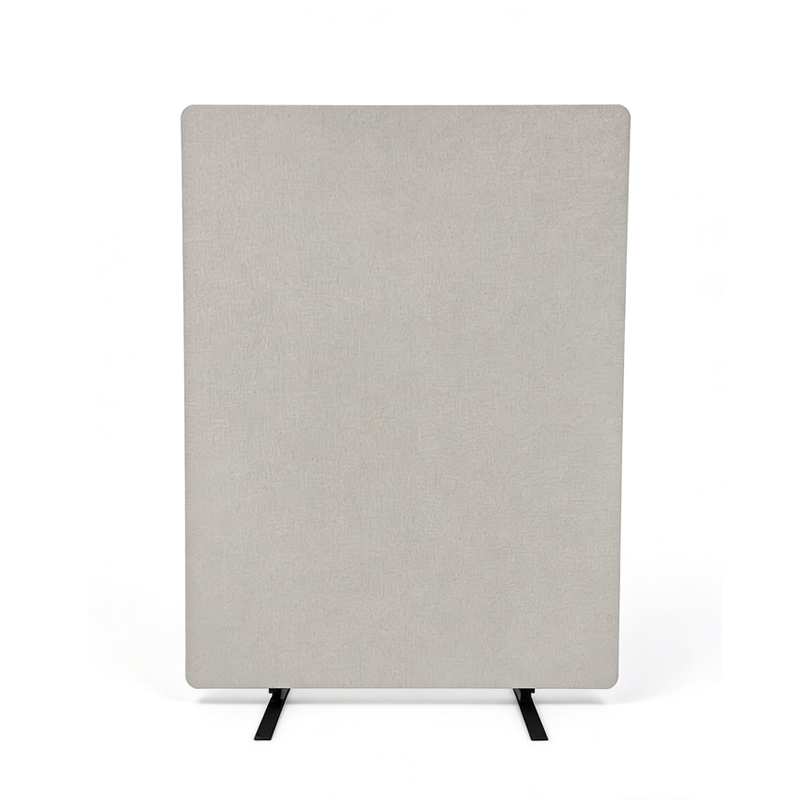 Wholesale Customizable sizes 1700×1200×28mm Sound Absorbing Screen, Acoustic FloYayin New Materials Jiangsu Co.,Ltd. Is China Wholesale Customizable sizes 1700×1200×28mm Sound Absorbing Screen, Acoustic Floor Divider ...View Product →
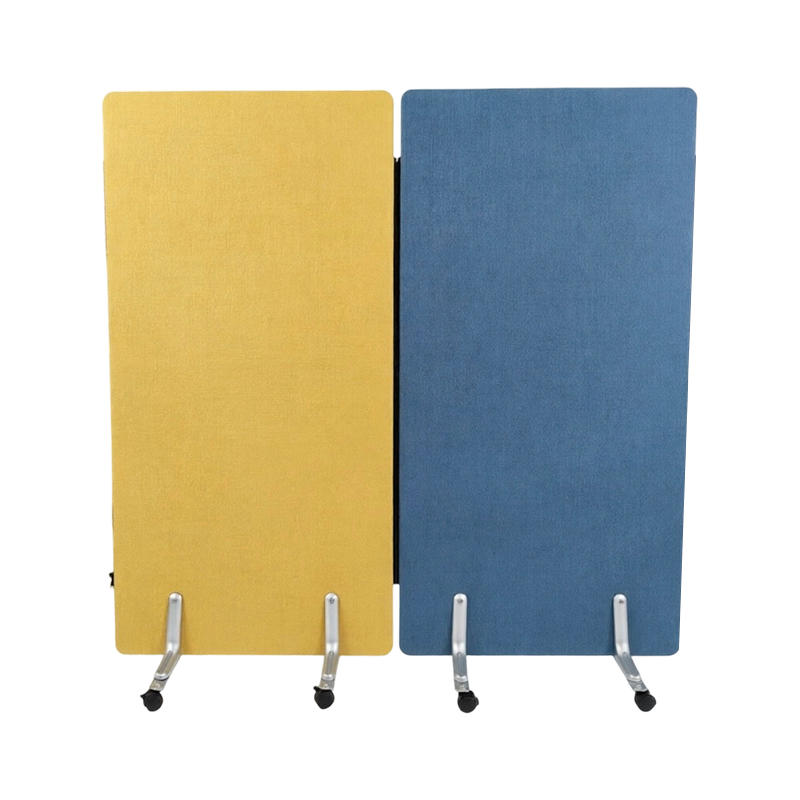 Wholesale Soundproof office partition with casters, zippered office partition SuYayin New Materials Jiangsu Co.,Ltd. Is China Wholesale Soundproof office partition with casters, zippered office partition Suppliers, Fa...View Product →
Practical Limits and How to Work Around Them
One partition will not fix a noisy open floor. Sound in an office arrives from many directions, and much of it travels over screens. You need a combination of ceiling absorption, wall panels, soft flooring, and partitions to bring reverberation time down. Acoustic office partitions are one layer in a larger system.
Positioning matters more than people realize. Freestanding screens should be placed close to the noise source, ideally between the talker and the listener. A narrow gap behind a screen can nullify much of its effect. When a screen is placed near a wall instead of near the people, it absorbs sound from the wrong spot.
Pairing Partitions With Other Treatments
The most measurable improvements happen when partitions are used with ceiling baffles or absorption panels. Ceiling treatment catches sound that travels over the partition and returns from the ceiling. Without it, a single partition creates a quiet shadow directly behind it, but the rest of the room stays as loud as before. This is also why, on a total installed cost, acoustic office partitions vs drywall usually favors the screens: they are cheaper to install and easier to reconfigure while delivering absorption that a hard partition cannot.
Managing Expectations
A partition cannot stop a shouting colleague or a nearby HVAC noise. It will reduce the level of reflected speech and make the room feel calmer. If you need confidential phone calls, a small enclosed booth is a better investment. Understanding this distinction prevents disappointment.
Choosing a Partition That Fits Your Office
Start with the NRC rating and ask for a third-party test report. Then check fire class and formaldehyde emissions, especially for occupied offices. Finally, think about the partition's footprint, stability, and whether it can be moved easily.
A simple checklist works well:
- Confirm the intended noise issue: reflections, direct speech, or visual privacy.
- Match the panel thickness to the problem: 9 mm for basic screening, 25 mm or more for louder rooms.
- Verify NRC and fire certifications from the manufacturer.
- Consider fabric color and finish so the partition fits the room design.
- Compare cost per linear meter, including delivery and installation.
Acoustic treatment is a system, not a single product. Partitions work best when evaluated as part of the entire ceiling, wall, and furniture plan. A high-NRC screen next to hard walls will still leave a room feeling loud. For that reason, spec partitions together with other absorption and ask the supplier for guidance on placement. The right partition can make a measurable difference in how calm and focused an office feels.


