


 English
 Español
 عربى
عربى
 中文简体
中文简体



+86-180 3665 1199
Content
- 1 What Is an Acoustic Writing Board?
- 2 Why Office Acoustics Decide Whether Collaboration Actually Works
- 3 Core Features to Evaluate When Specifying Acoustic Writing Boards
- 4 Acoustic Writing Board vs. Standard Whiteboard
- 5 How to Integrate Acoustic Writing Boards into Collaborative Layouts
- 6 What to Check When Sourcing from a Manufacturer
- 7 Frequently Asked Questions
A six-person meeting room with a glass wall, a hard ceiling and a standard whiteboard is one of the most common acoustic failures in modern office design. The video call echoes off the glazed partition, the ceiling bounces every voice across the table, and the whiteboard, a hard non-porous surface, reflects speech back into the room instead of absorbing it. Open-plan noise pushes conversation volume up, which makes the echo worse. Acoustic writing boards fix the problem at the surface level. They give the room a dry-erase wall that also absorbs sound, so the most-used surface in a meeting room stops reflecting speech and starts cleaning it up.
What Is an Acoustic Writing Board?
An acoustic writing board is a sound-absorbing panel with a writable dry-erase facing, engineered to lower reverberation and speech distraction while functioning as a normal collaboration board in meeting rooms.
The construction starts with a needle-punched polyester fiber core, the same PET felt used in acoustic wall panels, faced with a smooth writeable laminate or a fabric-wrapped membrane. The polyester base provides the absorption; the facing keeps the surface usable with standard whiteboard markers. A properly made board reaches a noise reduction coefficient of 0.85, which places it in the same absorption class as dedicated acoustic panels. That single number separates it from porcelain or glass whiteboards, which reflect nearly all sound back into the room.
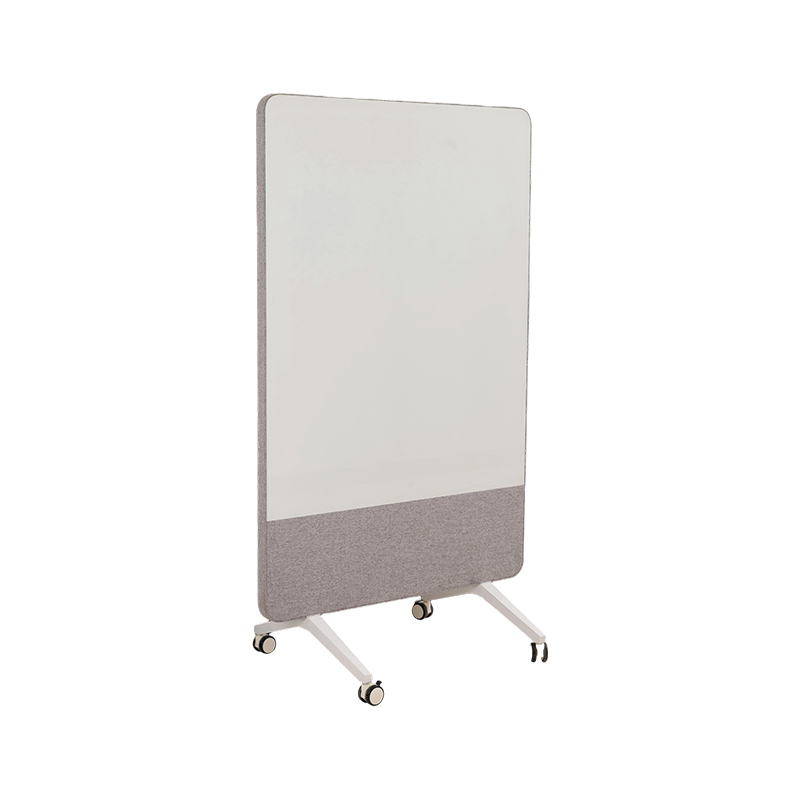
 Fabric-Wrapped Acoustic Whiteboard with Magnetic Glass SurfaceThis board pairs a sound-absorbing PET felt core with a magnetic, writeable glass face, offering group spaces an effective way to reduce echoing noise while keeping notes visible.View Product →
DEF
Acoustic writing board: a sound-absorbing polyester fiber panel with a dry-erase surface, used in meeting rooms and collaboration areas to control echo while providing a writeable planning surface.
Why Office Acoustics Decide Whether Collaboration Actually Works
Poor room acoustics measurably lower the quality of group work, and adding a sound-absorbing writeable surface is one of the fastest corrections an interior team can make.
Meeting rooms fail acoustically for two reasons: reverberation and sound leakage. Reverberation smears speech syllables into one another; leakage carries in conversations from adjacent workstations. Both push people to speak louder, which raises the noise floor further. The result shows up in every meeting metric: remote participants ask for repeats, local speakers rephrase their points, and a fifteen-minute stand-up stretches into a thirty-minute clarification session. Facilities teams that replace reflective walls with absorptive surfaces consistently report fewer speech privacy complaints, which is why acoustics now sit inside the workplace wellbeing conversation rather than only in the AV specification. The evidence connecting acoustic office products to measurable wellbeing outcomes is summarized in this guide to office partitions, productivity and wellbeing.
0.85NRC absorption rating
E0Formaldehyde emission class
Class AASTM E84 fire rating
100%Recyclable PET fiber core
Speech intelligibility drops sharply when reverberation time stays above 0.8 seconds, and a hard reflective whiteboard is one of the surfaces keeping a small meeting room in that range.
Core Features to Evaluate When Specifying Acoustic Writing Boards
Specifiers should evaluate four things before buying: absorption performance, surface durability, fire and emission data, and mounting compatibility. Each one changes how the board performs in real meeting conditions.
NRC Rating and Absorption Performance
Absorption is the board's primary job, and the noise reduction coefficient tells you how much of the incident sound energy the material removes. Look for a minimum NRC of 0.80 in a meeting-room board; 0.85 is the working benchmark for PET felt products. The chart below compares the NRC of acoustic writing boards with common office surfaces.
When a supplier quotes an NRC figure, ask for the test report behind it. The measurement and verification process is explained in this guide to NRC rating verification.
Rule of thumb: if a product page cannot produce an NRC test report, the number you are being given is a marketing claim, not a specification.
Writing Surface Durability and Erasability
A writing board in a busy office is marked, wiped and marked again dozens of times per week. The writable facing must resist ghosting, clean off with standard dry-erase markers and erasers, and keep a matte finish that does not glare under ceiling lighting. Matte surfaces matter more than people expect: glossy whiteboards create hotspots in video call frames, while a low-glare writing surface keeps the remote viewer's image readable.
Fire Safety, Emissions and Recycled Content
Office materials have to satisfy fire regulations, indoor air quality limits and sustainability criteria at the same time. For polyester fiber boards, the relevant claims are flame spread, smoke development, formaldehyde emission and recycled content. The values below represent what a complete specification should require.
| Property | Standard | Typical value |
| Noise reduction coefficient | ASTM C423 | NRC 0.85 |
| Flame spread | ASTM E84 | Class A |
| Fire classification | EN13501-1 | Class B |
| Formaldehyde emission | GB/T 39600 | E0 |
| Recycled content | Internal batch check | Up to 100% PET |
Mounting Systems and Layout Flexibility
A board that only mounts on one wall limits the layout. Look for systems that offer flush wall mounting, mobile frames with casters and modular tracks that let boards slide when the room changes. Mobile units are especially useful in flexible offices where a meeting room doubles as a training space or a quiet focus zone.
Acoustic Writing Board vs. Standard Whiteboard
The decision comes down to what the room needs beyond note-taking. If the space suffers from echo, a standard whiteboard adds to the problem; an acoustic writing board reduces it. The table below compares the two surfaces across the criteria that matter in a meeting room.
| Feature | Standard whiteboard | Acoustic writing board |
| NRC rating | 0.05 | 0.85 |
| Sound behavior | Reflects speech | Absorbs speech |
| Speech privacy | No benefit | Measurable improvement |
| Writeable surface | Glossy enamel | Matte dry-erase |
| Fire certification | Varies by model | ASTM E84 Class A |
| Recycled content | Low | Up to 100% PET |
If a whiteboard reflects light, it reflects sound as well. That is why the quietest meeting rooms use absorptive surfaces for writing.
How to Integrate Acoustic Writing Boards into Collaborative Layouts
Integration follows a simple rule: put the absorbing surfaces on the walls closest to where people talk, and make sure the writing surface is reachable from a seated position.
Mount boards on the two walls nearest the main conversation zone, not behind the presentation screen where camera glare becomes a problem.
Provide at least one writing surface for every four to six seats so participants can write without leaning across the table.
In rooms larger than 25 square meters, pair wall boards with a suspended acoustic baffle to control flutter echo between ceiling and floor.
Use mobile acoustic writing boards on casters in open-plan areas to form temporary huddle zones that reconfigure in minutes.
The highest return on investment comes from rooms used for video calls. Adding one 2.4-meter acoustic writing board to a small huddle room changes the reverberation profile more than three standard acoustic panels mounted randomly.
What to Check When Sourcing from a Manufacturer
Factory-direct sourcing can deliver custom sizes and better pricing, but only when the supplier can prove its test data and hold consistent production quality.
Yayin New Materials Jiangsu Co., Ltd. produces polyester fiber acoustic boards across three factories with a combined floor area above 30,000 square meters, which makes factory-direct supply practical for office projects of almost any scale. Even so, the same due diligence applies to every order.
- Request the NRC test report tied to the specific product batch, not just a value printed on a datasheet.
- Verify the flame spread rating against the standard your local building code requires, for example ASTM E84 or EN13501-1.
- Confirm custom size capability and minimum order quantities before approving the sample.
- Ask about export packing and estimated lead time, because a damaged frame arrives as a project delay.
 Polyester Fiber Acoustic Writing Board with Optional Mobile WheelsThis acoustic panel combines a 100% polyester fiber sound-absorbing body with a glass writing surface, and its customizable finish and rolling option make it a flexible fit for open offices or study areas.View Product →
QA
A reliable manufacturer answers four questions in writing: which standard the NRC was measured against, which batch the fire certificate covers, how E0 emission is verified, and what happens if the finished board does not match the approved sample.
Frequently Asked Questions
Here are the answers to the most common specification questions about acoustic writing boards for collaborative office spaces.
Do acoustic writing boards really reduce echo in small meeting rooms?
Yes. A board with an NRC of 0.85 absorbs most of the sound energy that reaches it, which shortens reverberation time in rooms up to about 25 square meters. The effect is strongest when boards sit on the two walls closest to the people talking.
Can you use standard whiteboard markers on acoustic writing boards?
Yes. Acoustic writing boards accept standard dry-erase markers, and the matte facing is designed for repeated writing and wiping cycles. Ghosting stays low compared with older glossy boards when you use good-quality markers.
Are acoustic writing boards fire-safe for office projects?
Polyester fiber boards from qualified manufacturers carry ASTM E84 Class A and EN13501-1 Class B ratings, which cover most office and institutional requirements. Ask for the certificate that covers the specific production batch.
How do acoustic writing boards differ from regular acoustic panels?
They absorb sound in the same frequency range and reach similar NRC values, but they add a writeable dry-erase surface. When a room needs wall absorption and note-taking, the acoustic writing board delivers both in a single product.
Acoustic writing boards are a practical meeting-room correction, not a luxury addition. They absorb the same speech frequencies that make video calls hard to hear, provide a dependable dry-erase surface, and carry the fire and emission certifications that office projects require. For teams that need a documented NRC, a matte writeable facing, and a supplier able to produce custom sizes, the acoustic writing board is finally a surface that works as hard as the room does.
Specify with confidence: check the NRC report, verify the fire class, confirm the surface cycle rating, and put the boards on the walls where people actually talk.


