


 English
 Español
 عربى
عربى
 中文简体
中文简体


+86-180 3665 1199
Content
- 1 Why Conference Rooms Ruin Speech Clarity
- 2 The NRC Rating: How Much Sound Each Panel Absorbs
- 3 Placement and Coverage: Where Absorption Actually Works
- 4 Material Behavior at Speech Frequencies
- 5 Background Noise and Room Volume: Hidden Budget Drivers
- 6 How to Specify Acoustic Panels for a Conference Room
- 7 Frequently Asked Questions
A 24-square-meter conference room with painted drywall, one glass partition, six chairs around a laminate table, and no soft furnishings has a mid-frequency reverberation time of about 1.2 seconds. That is nearly three times the 0.4-0.6 second window recommended for clear speech. In practice, a presenter speaking at a normal 60 decibel level loses a measurable part of every consonant before the sound reaches the far end of the table, and remote participants hear the same blur through the conference microphone. Acoustic panels fix this room, but only when the NRC rating, panel placement, surface coverage, and material thickness are chosen deliberately.
Why Conference Rooms Ruin Speech Clarity
Speech clarity collapses in a conference room because reflected sound reaches the listener's ear at almost the same moment as the direct sound, smearing syllables and pushing the Speech Transmission Index (STI) below the intelligible range. An STI of 0.75 or higher is excellent, values from 0.60 to 0.74 are good, and anything below 0.45 forces listeners to strain, which is exactly what happens in an untreated room during a hybrid call.
Three physical conditions create the failure. Hard parallel surfaces, including drywall, glass, and a polished floor, reflect mid- and high-frequency speech energy instead of absorbing it. The ceiling, usually the largest untreated surface, acts as a second mirror and bounces voices back down to the table. And the conference microphone picks up both the direct voice and the delayed reflections, which reduces definition for everyone on the far end of a video call.
Reading the Speech Transmission Index
- 0.75-1.00: excellent intelligibility, no effort required
- 0.60-0.74: good, slight listening effort
- 0.45-0.59: fair, straining and repetition common
- Below 0.45: poor, unsuitable for meetings
Reverberation time (RT60) is the seconds required for a sound to decay by 60 decibels after the source stops. The standard target for conference rooms is 0.4-0.6 seconds. When RT60 rises above 0.8 seconds, word recognition in normal conversation drops by roughly 20 percent.
The NRC Rating: How Much Sound Each Panel Absorbs
The single most useful number for comparing conference-room panels is the Noise Reduction Coefficient (NRC), which averages the material's absorption at 250, 500, 1000, and 2000 hertz into one value between 0 and 1. An NRC of 0.85 means the panel absorbs 85 percent of the speech-range sound energy that reaches it, and the remaining 15 percent is reflected back into the room.
NRC is the arithmetic mean of a material's absorption coefficients at 250, 500, 1000, and 2000 Hz. The value is only a marketing number until the supplier provides the original acoustic test certificate.
Typical NRC values for materials found in conference rooms
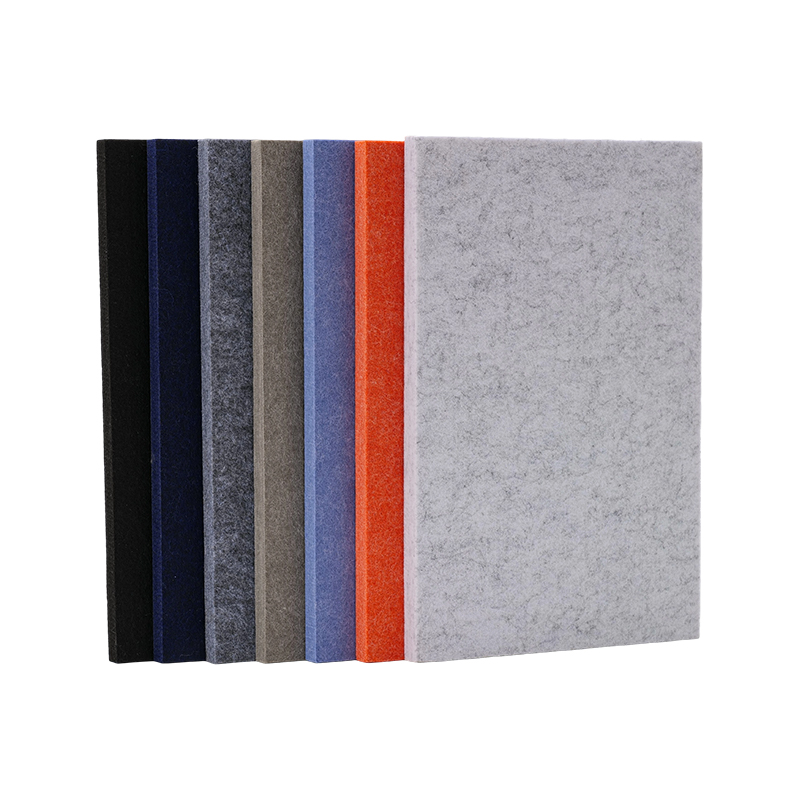
Polyester fiber panels produced with needle-punch technology, such as the recyclable PET boards from Yayin New Materials Jiangsu Co., Ltd. (cnacousticpanels.com), reach published NRC values around 0.85 while resisting humidity and impact. Foam products typically sit between 0.55 and 0.65, and fiberglass panels edge slightly higher but require a facing layer and careful handling. A printed NRC rating is only as useful as the test protocol behind it, so verify acoustic panel NRC ratings against the original absorption report before comparing prices.
Placement and Coverage: Where Absorption Actually Works
Absorption improves speech clarity only when it intercepts the first reflections between the talker and the listener, so the priority positions are the back wall behind seated heads, one side wall facing the table, and the ceiling above the meeting area. Covering a single distant wall, no matter how good the panels are, produces a negligible change in RT60.
Rule of thumb: cover 15-25 percent of the combined wall and ceiling surface area with absorption. For a 20-30 square meter room, this works out to 10-14 square meters of panel area.
Wall-mounted panels
- Intercept reflections at ear height
- Quick retrofit with mechanical fixings
- Best for rooms below 3.2 meter ceilings
- Preserve floor space
Ceiling islands and baffles
- Treat the largest uninterrupted surface
- Effective in rooms above 3 meters high
- Can be combined with lighting
- Need suspension hardware and a clean layout
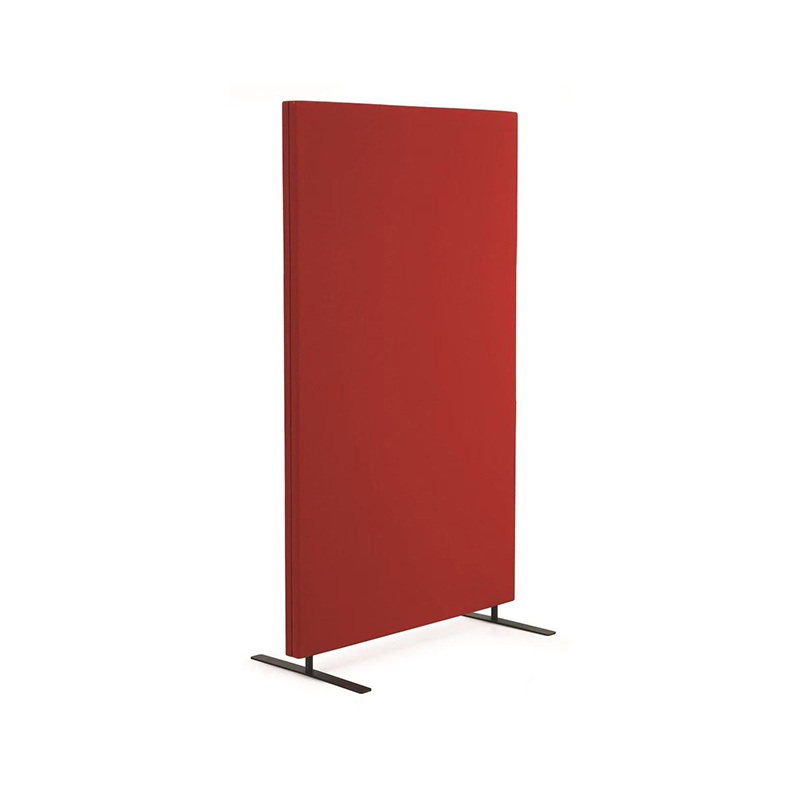
For hybrid meetings, put one or two panels on the back wall so late reflections do not muddy the far-end microphone pickup, and add a ceiling cloud above the table if the ceiling is untreated. When the room doubles as a flexible huddle space, replace part of the wall budget with a freestanding partition that absorbs from both sides. Mounting hardware changes performance too: panels fixed with a 50 mm air cavity absorb roughly 15 percent more at 250 Hz than panels glued flat, so compare installation methods and mounting hardware before finalizing the layout.
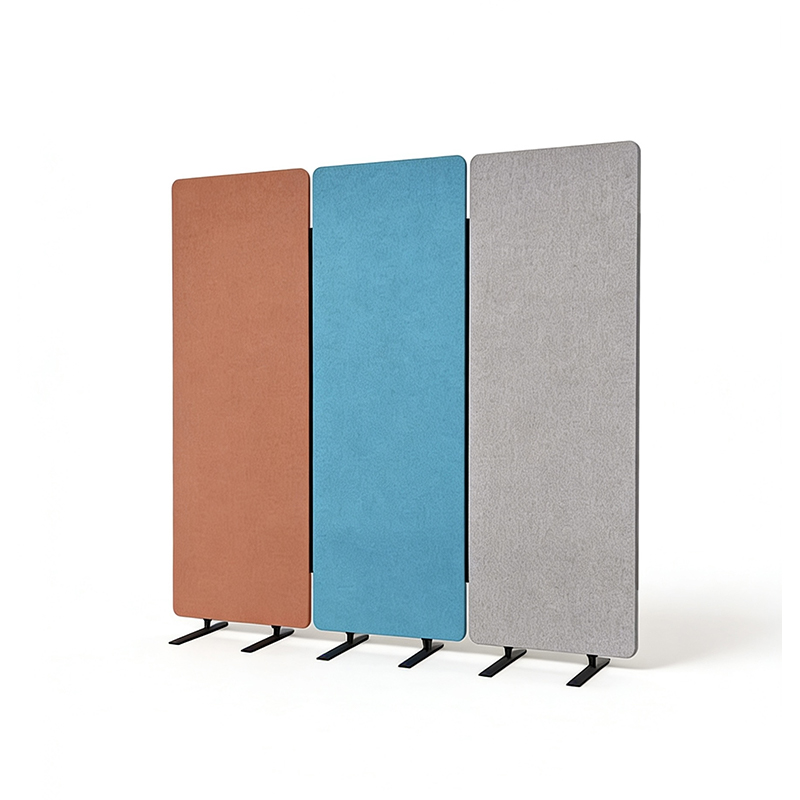 1650×600×28mm Freestanding Acoustic Partition Screen for Open OfficesThis dual-sided floor screen offers a 28mm thick polyester fiber core, ideal for flexible huddle spaces or open-plan layouts where freestanding absorption from both sides is needed.View Product →
Material Behavior at Speech Frequencies
Panel thickness and density decide whether speech frequencies, roughly 250-4000 hertz, are absorbed efficiently or reflected, and the practical sweet spot for a conference room is a 24 mm panel mounted with an air cavity behind it. Thin 9 mm boards absorb high frequencies well but do little for male speech fundamentals; thicker composites cost more without adding useful performance above 24 mm.
| Material | Typical NRC (24 mm) | Fire class | Hands-on notes |
| PET fiber, needle-punched | 0.85 | ASTM E84 A, EN 13501-1 B | Stable in humid rooms, 100 percent recyclable |
| Acoustic foam, 25 mm | 0.55-0.65 | Varies by grade | Degrades over time, absorbs moisture |
| Fiberglass, 25 mm | 0.90-0.95 | Usually A | Needs a fabric facing, irritant during handling |
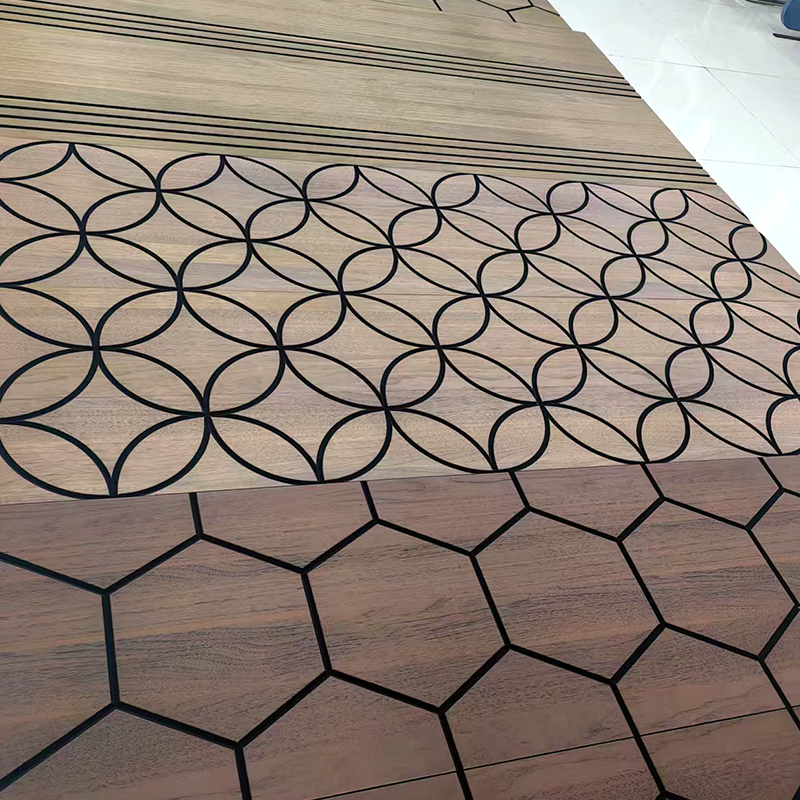
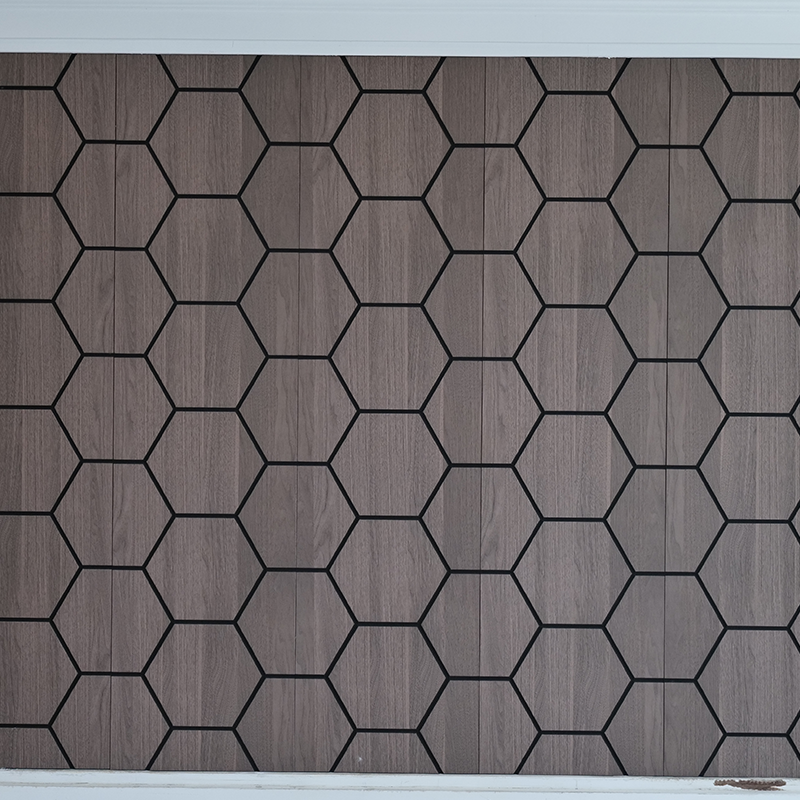
| Wood slat with PET backing | 0.60-0.85 | B or C | Decorative, composite harder to recycle |
Fire and emission performance
Beyond absorption, a meeting room panel must pass the same fire and emission limits as the rest of the fit-out. Recycled PET fiber boards combine an acoustically useful density with fire ratings of ASTM E84 Class A, EN 13501-1 B, and UL 723-2018 A, together with E0-grade formaldehyde emission, and they are manufactured in ISO 9001 certified facilities. That combination is why polyester panels dominate current office and hotel specifications.
0.85Published NRC
24 mmOptimal thickness
AASTM E84 class
E0Formaldehyde grade
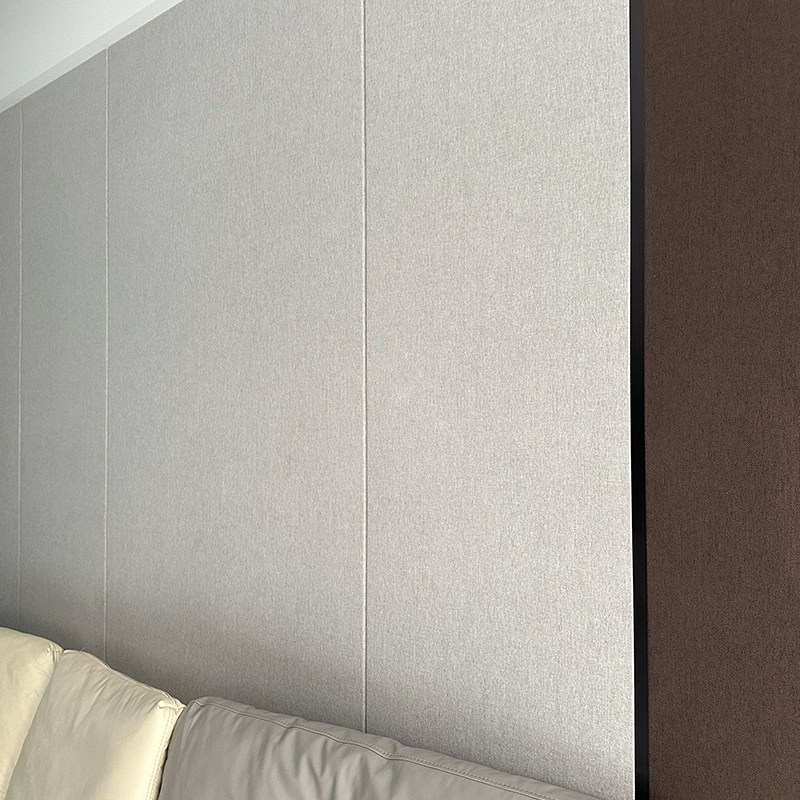 Spesonic Fabric-Wrapped Acoustic Wall Panels for Theaters and Meeting RoomsAvailable in 600×600mm and 1200×1200mm sizes with two density options, these fire-rated polyester panels balance speech clarity and absorption, matching the specified fire and emission limits.View Product →
Background Noise and Room Volume: Hidden Budget Drivers
Room volume sets the total absorption budget: a 40-square-meter boardroom with a 3.2 meter ceiling holds about 128 cubic meters of air and needs 60-70 percent more panel area than a 20-square-meter huddle room to reach the same RT60. Longer tables multiply the problem because the distance between talker and listener grows and reflections take over.
Background noise raises the effective absorption requirement. The accepted upper limit for meeting rooms is near NC-30: above this level, HVAC diffusers and projector fans force people to raise their voices, and intelligibility declines even when the reverberation time is correct. Absorption controls the reverberant field, not transmitted noise. If the conference room shares a light partition with an open office, add mass or a second barrier before spending the entire budget on panels.
How to Specify Acoustic Panels for a Conference Room
Start the specification with the room volume, a target RT60 of 0.5 seconds, and a panel with certified NRC data, then calculate the coverage requirement before comparing finishes and prices.
- Measure length, width, and ceiling height; calculate floor area and volume.
- Estimate the current RT60 with a clap test; if the room sounds dead already, surface-area rules still apply.
- Ask for a test certificate showing NRC at 250, 500, 1000, and 2000 Hz.
- Cover 15-25 percent of combined wall and ceiling area.
- Prioritize the back wall, one side wall, and the ceiling.
- Check fire class, formaldehyde emission, and cleaning requirements.
| Room type | Floor area | Ceiling height | Recommended panel area |
| Huddle room | 10-15 m2 | 2.7-3.0 m | 4-6 m2 |
| Standard meeting room | 20-30 m2 | 2.8-3.2 m | 10-14 m2 |
| Boardroom | 40-60 m2 | 3.0-3.5 m | 18-26 m2 |
To combine absorption with room function, give the front wall behind the display a white acoustic writing board: it catches reflections on its backing layer and becomes a planning surface for the team.
 Magnetic Tempered Glass Acoustic Whiteboard with Fabric WrapCombining a writable, push-pin-friendly surface with sound-absorbing polyester fiber in multiple thicknesses, it turns the front wall into a functional planning tool that also controls reflections.View Product →
Frequently Asked Questions
These are the specification questions buyers ask most often.
How many acoustic panels do I need for a conference room?
For a 20-30 square meter meeting room, plan on 10-14 square meters of total absorption across walls and ceiling. In practice, that means five to eight panels of 0.6 x 1.2 meters plus one or two ceiling islands. Measure RT60 after installation and add panels if values stay above 0.6 seconds.
Do acoustic panels block sound from leaving the room?
No. A 24 mm polyester fiber panel absorbs reflected sound inside the room but adds only marginal transmission loss. If the conversation must remain confidential, pair the absorption with a sealed partition, a solid-core door, and acoustic seals around the frame.
Can a glass-walled conference room be made intelligible?
Yes. Keep absorption on the ceiling and on the solid wall opposite the glazing. Two to four ceiling baffles plus 4-6 square meters of wall panels normally bring RT60 from above 1.0 second down to the 0.5-0.6 second range in a 20 square meter glazed room.
What is the best thickness for conference room panels?
24 mm is the practical sweet spot because it absorbs the full 250-4000 Hz speech band without the cost of thicker composite layers. Use 9 mm panels only when wall depth or budget cannot fit 24 mm, and accept weaker low-frequency performance.
Bottom line: speech clarity in a conference room is decided by four parameters before installation begins: certified NRC performance, reflection-focused placement, 15-25 percent surface coverage, and a material that fits the room volume plus the project fire and emission limits. Yayin New Materials Jiangsu Co., Ltd. covers all four with one polyester fiber panel family, from 9 mm decorative boards to 24 mm NRC 0.85 acoustic panels.


