


 English
 Español
 عربى
عربى
 中文简体
中文简体



+86-180 3665 1199
Content
- 1 NRC 0.75 Is the Floor for Open-Plan Office Absorbers
- 2 Fire Ratings and Formaldehyde Limits Are the Approval Gate
- 3 Recycled PET Fiber Beats Mineral Wool for Most Fit-Outs
- 4 Thickness, Density, and the 40 Percent Coverage Rule
- 5 Wall Panels, Ceiling Baffles, or Freestanding Screens
- 6 Installation Logistics: What Actually Changes the Schedule
- 7 Frequently Asked Questions
A 400-square-meter open-plan office with 2.8-meter ceilings, polished concrete floors, and full-height glass partitions presents a measurable acoustic problem: mid-frequency reverberation that blurs speech into a general noise floor. When the project acoustician measured 0.8 seconds of reverberation in the center of the floor, the spec team realized that furniture alone could not fix the space. The acoustic panel specification became the core decision, and it came down to four numbers: NRC, fire rating, formaldehyde emission, and coverage percentage.
The minimum NRC for commercial office panels is 0.75. The practical benchmark for recycled PET panels is 0.85.
NRC 0.75 Is the Floor for Open-Plan Office Absorbers
The Noise Reduction Coefficient (NRC) is the first number to check when comparing acoustic panels for offices. NRC is a single-number rating that expresses the fraction of sound energy absorbed by a material, averaged over the speech frequencies of 250 Hz, 500 Hz, 1,000 Hz, and 2,000 Hz. An NRC of 0.85 means that 85 percent of the incident sound energy is absorbed rather than reflected.
Most acousticians set NRC 0.75 as the minimum for commercial office applications. Below that threshold, a panel changes the look of a room more than it changes the sound. At 0.85, which is the published rating of high-density polyester fiber panels from the major PET manufacturers, the difference is clearly audible: shorter reverberation, easier conversations, and lower perceived noise in open workstations.
0.75 Minimum NRC for office projects
0.85 Published NRC for high-density PET panels
250-2,000 Hz Speech range covered by the NRC measurement
Never approve a panel based on a marketing datasheet. Request the ASTM C423 or ISO 354 laboratory report and confirm that the tested sample matches the delivered product. Third-party acoustic test data should be part of the tender package, particularly when multiple suppliers are competing on price. The cost of verifying NRC claims before purchase is negligible compared with the cost of replacing panels that do not perform. Review our guide to verified acoustic panel NRC ratings for a step-by-step check.
NRC is an absorption-only metric. It does not measure how much sound a wall blocks; that is the role of STC (Sound Transmission Class). Acoustic panels are absorbers: they make the room quieter inside, but they do not prevent noise from traveling through walls or doors.
Fire Ratings and Formaldehyde Limits Are the Approval Gate
Fire classification is the approval gate for any acoustic panel installed in a commercial office. In the United States, ASTM E84 Class A is the standard requirement, limiting the flame spread index to 25 and the smoke developed index to 450. In the European Union, EN 13501-1 Class B or better is commonly specified. A growing number of interior specs also require UL 723-2018 Class A, and each certification should be verified against the actual product batch.
Indoor air quality is the second approval gate. PET acoustic panels made from recycled polyester fibers should meet E0 formaldehyde emission limits, the same benchmark applied to interior-grade wood panels. An E0 rating means the panel can be installed in occupied office environments without off-gassing concerns.
| ASTM E84 Class A | Flame spread 25 max; smoke developed 450 max | Surface burning characteristics |
| EN 13501-1 Class B | B-s2,d0 or better | Reaction to fire |
| UL 723-2018 Class A | Same limits as ASTM E84 | Surface burning characteristics |
| E0 formaldehyde | Low-emission threshold for interior materials | Indoor air emissions |
Skipping fire certification verification is the most expensive mistake in an office fit-out. A non-compliant panel can fail a building inspection days before move-in, and replacing 600 square meters of wall treatment costs far more than the original panel purchase.
Recycled PET Fiber Beats Mineral Wool for Most Fit-Outs
Recycled PET fiber panels are the default specification for most commercial office projects because they combine absorption performance, clean installation, and end-of-life recyclability in a single product family. PET acoustic panels are manufactured by needle-punching recycled polyester fibers into a rigid felt, which can then be cut, grooved, or printed without losing structural stability.
Recycled PET fiber panels
- NRC up to 0.85 in 9-12 mm thicknesses
- No airborne fiber irritation; comfortable for sensitive occupants
- Moisture-resistant; stable in humid conference rooms
- Lightweight (2.5-4 kg per square meter); easy to handle
- Made from recycled content; recyclable at end of life
Mineral wool panels
- NRC up to 0.90, with slightly better low-frequency absorption
- Requires a protective fabric face; fibers can irritate skin and airways
- Absorbs moisture; prone to sagging if unprotected
- Heavier; needs more rigid mounting frames
- Lower recycled content; disposal costs are higher
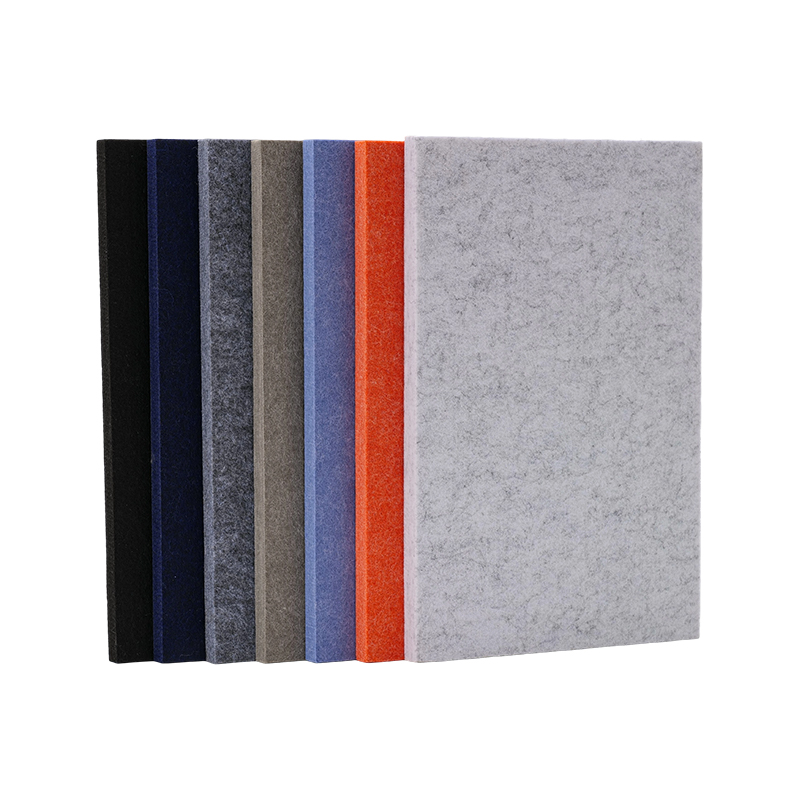
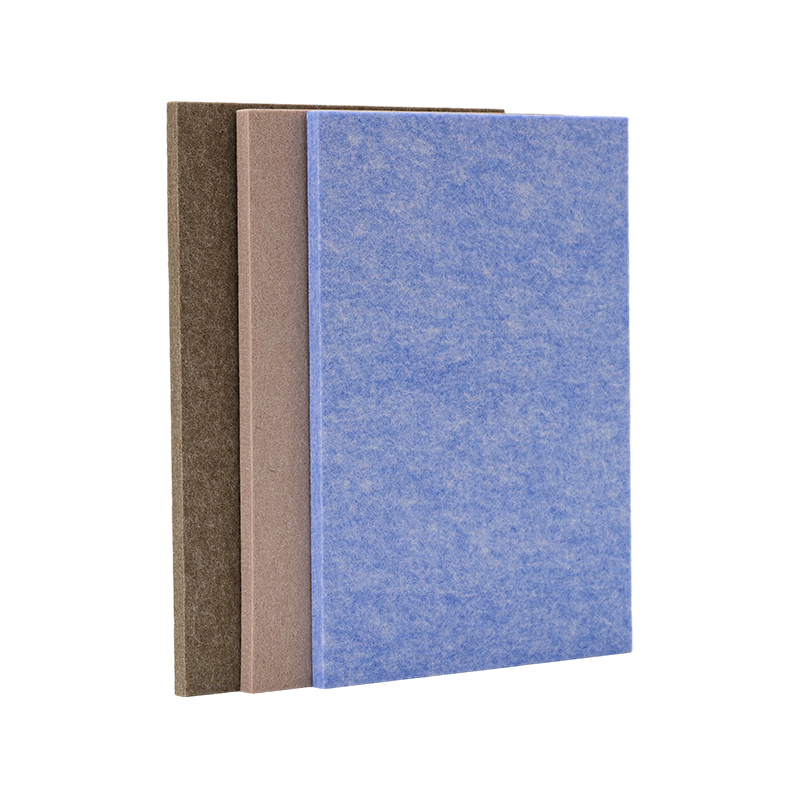 Recycled PET Polyester Fiber Sound-Absorbing BoardThis high-density PET panel from Yayin New Materials offers an NRC of 0.85 and ASTM E84 Class A, simplifying tender verification. It suits office walls and ceilings with clean, formaldehyde-free installation.View Product →
Mineral wool still earns its place in studios and auditoriums where maximum low-frequency absorption justifies the handling and maintenance trade-offs. For office walls, ceilings, and workstation areas, PET panels deliver the performance-to-installation ratio that project teams need. High-density recycled PET panels from manufacturers such as Yayin New Materials Jiangsu Co., Ltd. are commonly supplied with a published NRC of 0.85 and ASTM E84 Class A, which removes two verification steps from the tender process. The absence of airborne fibers also simplifies ventilation planning, because the panels do not need to be sealed off from HVAC air streams.
Thickness, Density, and the 40 Percent Coverage Rule
Panel thickness changes the frequency behavior of the absorber, while total surface coverage changes the room. For a typical office with ceiling heights between 2.7 m and 3.5 m, 9 mm PET panels deliver effective speech-frequency absorption and are sufficient for most open-plan areas. Twelve-millimeter panels extend absorption further into the low-mid range and are the better choice for meeting rooms and executive offices. Twenty-four-millimeter panels are reserved for rooms where noise sources include HVAC equipment or where speech privacy between enclosed rooms is critical.
Density matters less than the marketing sheets suggest. The conventional 2.5-3 kg per square meter range for 9-12 mm PET sheets balances absorption with practical handling. Heavier panels shift the absorption curve slightly downward in frequency, but they do not dramatically raise the NRC at the same coverage percentage.
Coverage is the lever that actually changes the acoustic result. A widely used design rule is to make 40 percent of the available wall surface absorptive, or an equivalent area of ceiling treatment, before expecting a meaningful drop in reverberation time. On a 200 square meter office with 60 square meters of wall, the target is roughly 24 square meters of acoustic panels.
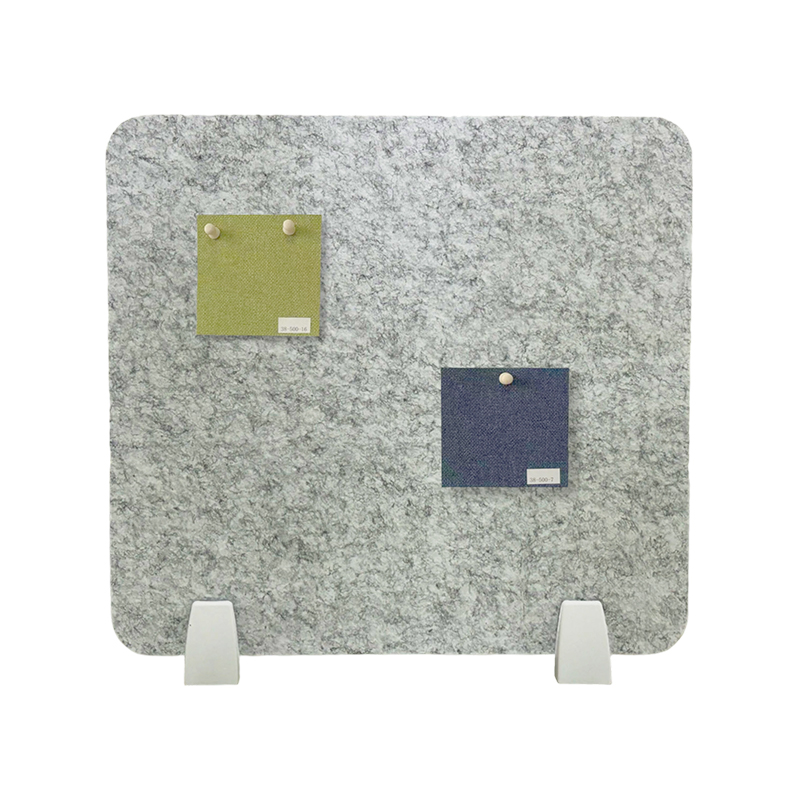 Acoustic Desk Screen for Workstation PrivacyThis polyester fiber desk screen blocks direct speech between adjacent workstations, reducing distraction at its source. Available in L-shaped or U-shaped configurations, it pairs well with ceiling absorbers for open offices.View Product →
Workstation-level treatment multiplies the effect of wall panels. Acoustic desk screens with an NRC of 0.85 and a minimum height of 400 mm block the direct speech path between adjacent workstations, reducing conversation distraction at its source. Screens work best when combined with a ceiling absorber, because sound travels over the top of partitions and would otherwise continue across the floor.
Wall Panels, Ceiling Baffles, or Freestanding Screens
Placement determines whether the same panel delivers a 30 percent or 60 percent improvement in perceived acoustics. The first priority is to cover the reflection points where speech energy hits a hard surface and bounces back toward the listener: the wall behind the speaker, the wall facing a row of desks, and any pillar or glass pane that creates a clear echo path. The second priority is to distribute absorption symmetrically, so the sound field remains balanced rather than dead on one side and live on the other.
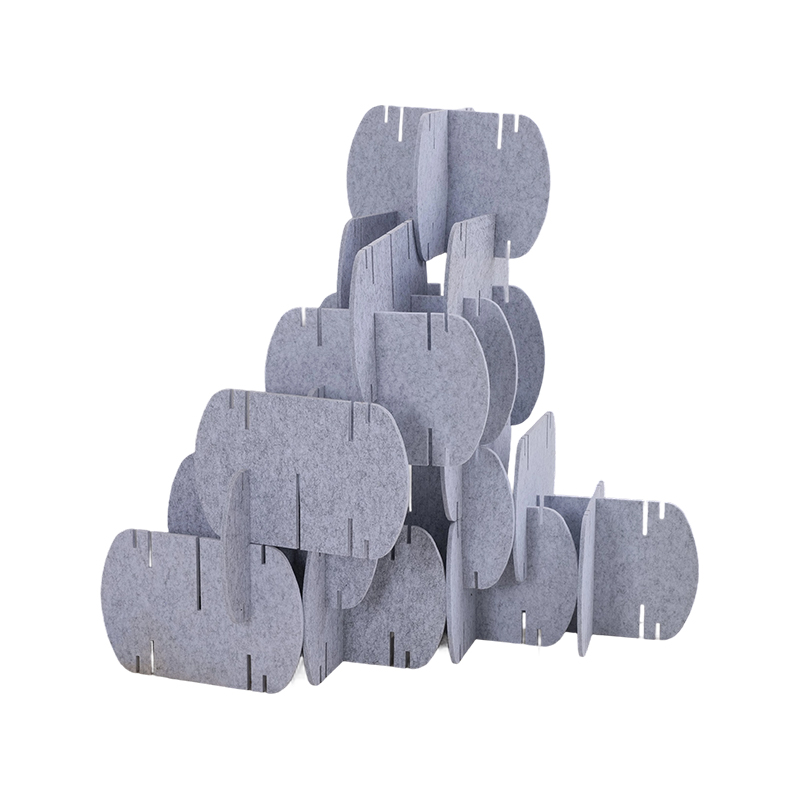
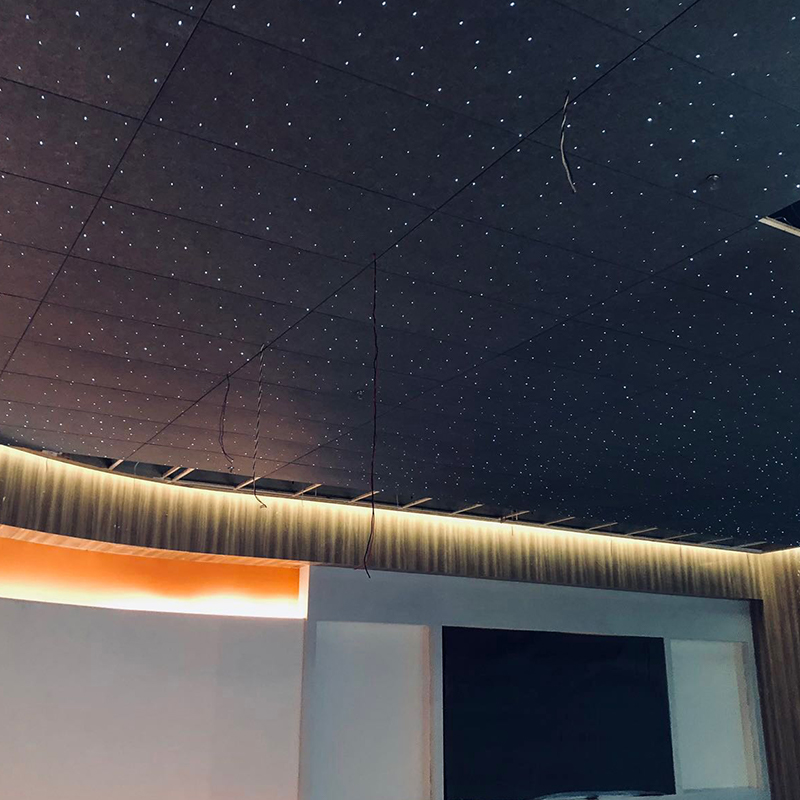
Ceiling panels and baffles are the most effective single intervention in open-plan offices. When the floor plan is a 400 square meter rectangle with a 3 meter ceiling, the ceiling alone can contribute the majority of the required absorption area. Freestanding partitions are the most flexible option for leased or hybrid spaces, because they move with the team and preserve the investment.
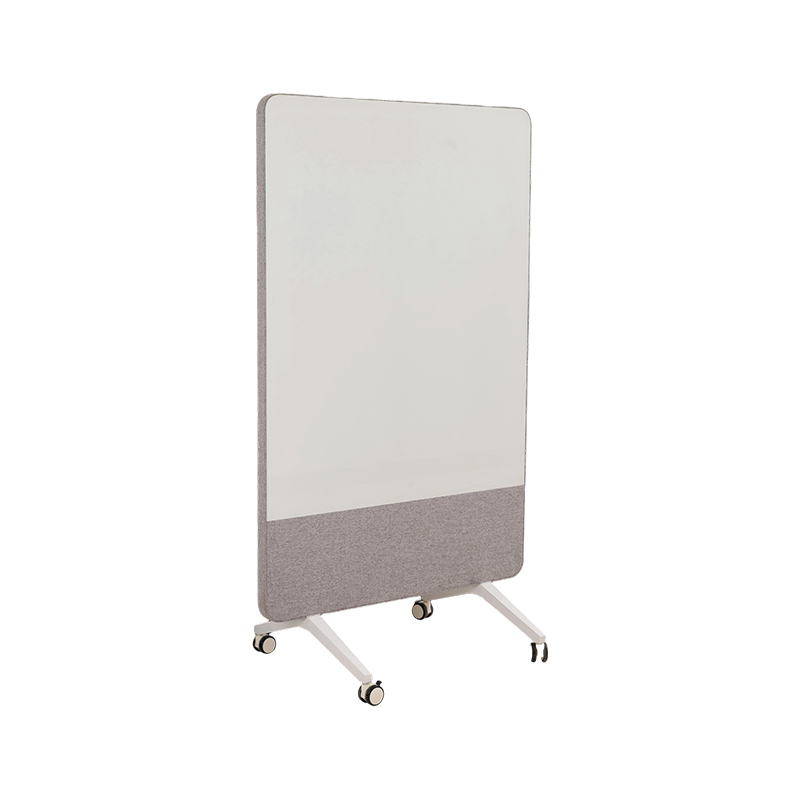
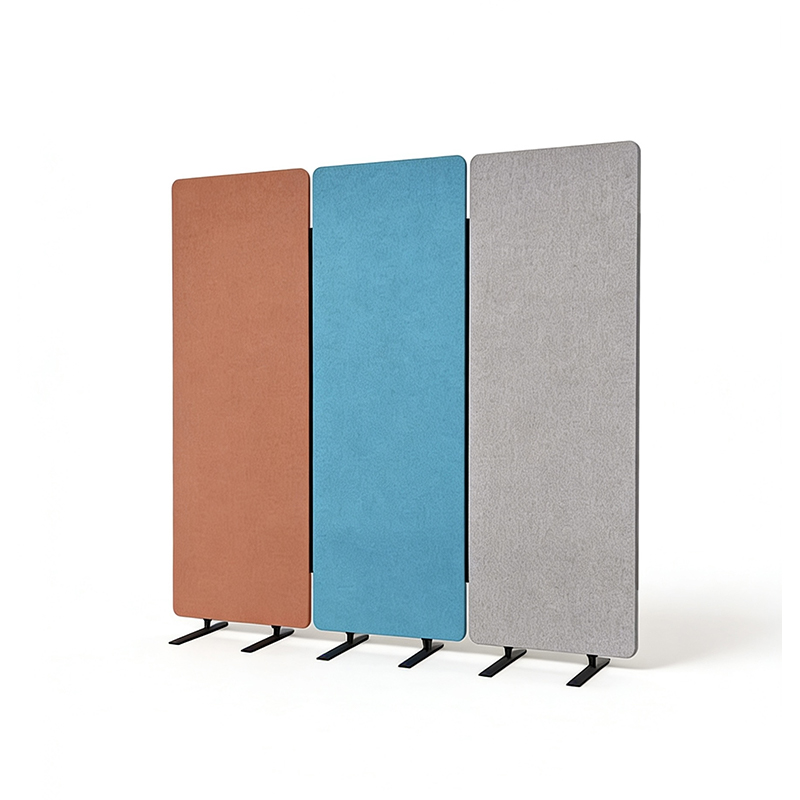 Freestanding Acoustic Partition Screen 1650×600×28mmThis 28mm thickened PET freestanding partition provides sound insulation and noise reduction between spaces. Its standard size and lightweight build allow flexible placement in open offices, training rooms, or reception areas.View Product →
Rule of thumb: cover the 1-2 meter band around ear height first. In a seated office, that means the bottom half of the wall, not the area near the ceiling. Wall panels lose their effectiveness when installed too high, because speech reflections at ear level are the ones that damage intelligibility.
Installation Logistics: What Actually Changes the Schedule
Installation cost routinely rivals material cost, so the specification that reduces installation risk is the one that protects the budget. Lightweight PET panels (2.5-4 kg per square meter) can be installed by a two-person crew using serpentine adhesive, concealed splines, or removable battens. Consistent 9 mm or 12 mm thickness produces clean joints, which matters under the raking light of a modern office.
- Site survey and laser measurement of the target surfaces, confirming the actual panel sizes against the drawings.
- Electrical and data coordination, because outlets, switches, and sensors must be located before the absorbers are mounted.
- Substrate preparation: the wall must be flat, dry, and clean, free of release agents or old adhesives.
- Dry layout on the floor to verify dimensions, mark cut lines, and allocate panels to avoid tone variation in the batch.
- Adhesive application in a serpentine pattern, press and hold, and temporary bracing until the bond cures.
- Edge finishing: seal visible gaps with matching edge paint, trim, or acoustic filler.
Most 200-400 square meter office installations complete in three to five working days. Factory-direct suppliers with standard sizes in stock cut the schedule risk significantly. Custom CNC-cut shapes add two to three weeks of production lead time, so if the design requires custom geometry, the order must be placed before the construction phase begins, not during it. For the full breakdown, compare common acoustic panel installation methods and hardware before choosing the mounting system.
Frequently Asked Questions
What is the difference between NRC and STC for office acoustic panels?
NRC measures how much sound a panel absorbs; STC measures how much sound a wall assembly blocks. Acoustic panels are absorbers, so NRC is the relevant rating. STC is used for partitions, glass walls, and floor-ceiling assemblies.
How many acoustic panels does a 100 square meter office need?
Apply the 40 percent coverage rule to the available wall surface. For a 100 square meter floor area with roughly 30 square meters of usable wall, install about 12 square meters of panels. Then verify the result with a reverberation measurement and add panels near known noise sources such as meeting rooms or communal pantries.
Are 9 mm PET panels enough for an open-plan office?
Yes, for speech-frequency control in most open-plan layouts. Nine-millimeter PET panels with an NRC of 0.75-0.80 absorb the frequencies that carry conversation. Use 12 mm panels when the objective is a more substantial reduction in low-mid-frequency noise or when the room contains mechanical equipment.
How do I verify a supplier's NRC and fire rating claims?
Request the acoustic report (ASTM C423 or ISO 354) and the fire certificate (ASTM E84, EN 13501-1, or UL 723) from the manufacturer. Confirm that the tested thickness, density, and facing match the delivered product. If the supplier cannot produce third-party lab reports, treat the datasheet as a marketing document, not a specification.


