


 English
 Español
 عربى
عربى
 中文简体
中文简体



+86-180 3665 1199
Content
- 1 1. Acoustic Performance and Noise Reduction Coefficient (NRC)
- 2 2. Fire Safety Standards and ASTM E84 Compliance
- 3 3. Health, Air Quality, and Environmental Impact
- 4 Conclusion: The Future of Residential Acoustics
- 4.1 Frequently Asked Questions (FAQ)
- 4.1.1 1. Can I use acoustic PET panels for both sound absorption and soundproofing?
- 4.1.2 2. Is DIY acoustic PET panel installation difficult?
- 4.1.3 3. How do fire rated acoustic PET panels compare to foam in a fire?
- 4.1.4 4. What is the optimal acoustic PET panel thickness for soundproofing a home theater?
- 4.1.5 5. Are these panels truly non-toxic PET acoustic panels for home use?
- 4.2 Industry References
- 4.1 Frequently Asked Questions (FAQ)
In the pursuit of the perfect cinematic experience, acoustic treatment is as vital as the 4K projector or the surround sound system itself. Historically, home theaters relied on mineral wool or open-cell polyurethane foam, but modern engineering has introduced acoustic PET panels as the superior alternative. Yayin New Materials Jiangsu Co., Ltd., with over 30,000 square meters of production capacity across Jiangsu, Zhejiang, and Jiangxi, leads the R&D of carbon-neutral polyester fiber antibacterial sound-absorbing materials. By utilizing needle-punched non-woven technology, we transform recyclable polyester into high-performance acoustic PET panels that are sound-absorbing, flame-retardant, and decorative. This guide explores the technical advantages of PET over legacy materials, focusing on home theater acoustic treatment with PET panels and structural safety.
1. Acoustic Performance and Noise Reduction Coefficient (NRC)
The primary metric for any acoustic material is its ability to eliminate standing waves and flutter echoes. Acoustic PET panels provide a consistent porous structure that effectively dissipates sound energy through friction within the fiber matrix. When comparing PET acoustic panels vs foam for home theater use, PET offers a much higher polyester fiber acoustic panel NRC of up to 0.85, especially in the mid-to-high frequency ranges typical of cinematic dialogue and soundtracks. Unlike traditional fiberglass, which may lose efficiency over time as the fibers settle, durable PET acoustic panels for long-term use maintain their density and absorption characteristics indefinitely. Many enthusiasts also prefer DIY acoustic PET panel installation because the material is lightweight and rigid enough to be mounted without complex framing.
Acoustic Property Comparison
- Friction Dissipation: The needle-punched fibers of PET create a tortuous path for sound waves, converting kinetic energy into thermal energy.
- Density Consistency: PET panels are manufactured with uniform density, ensuring predictable acoustic PET panel thickness for soundproofing across the entire room.
| Material Property | Acoustic Foam | Traditional Fiberglass | Acoustic PET Panels |
| NRC Rating | 0.40 - 0.70 (Varies) | 0.75 - 0.95 | 0.85 - 0.95 (Tested) |
| Durability | Degrades/Crumbles | Fragile/Settles | High/Impact Resistant |
| High-Freq. Control | Moderate | Excellent | Superior (Smooth Profile) |
2. Fire Safety Standards and ASTM E84 Compliance
Safety is paramount in enclosed environments like home theaters. Many traditional foams are highly flammable and release toxic smoke during combustion. In contrast, fire rated acoustic PET panels from Yayin achieve the US standard ASTM E84 Class A, EU standard EN13501-1 Class B, and UL723-2018 Class A. The ASTM E84 Class A acoustic PET panels ensure that the flame spread and smoke development are kept to a minimum. When evaluating fire safety of PET vs fiberglass, fiberglass is naturally non-combustible, but the fabric wraps often used with it are not. PET panels provide a comprehensive safety solution without needing additional chemical coatings that can diminish acoustic PET panel moisture resistance.
Fire Resistance Benchmarks
- ASTM E84 (US): Class A rating ensures Flame Spread Index ≤ 25.
- UL723-2018: Provides rigorous testing for surface burning characteristics.
- EN13501-1 (EU): Class B-s1, d0 indicates low smoke and no flaming droplets.
| Standard | Acoustic Foam | Fiberglass (Unwrapped) | Yayin Acoustic PET Panels |
| Fire Rating | Often Poor (unless treated) | Excellent | Class A / Class B (Certified) |
| Smoke Emission | High/Toxic | Low | Low (Non-Toxic) |
| Safety Classification | Residential only | Commercial grade | Commercial & Home Theater grade |
3. Health, Air Quality, and Environmental Impact
Traditional fiberglass panels can release micro-glass shards during installation or if damaged, causing skin and respiratory irritation. Non-toxic PET acoustic panels for home use eliminate this risk, as they are made from hypoallergenic polyester fibers. For a healthy indoor environment, eco-friendly acoustic PET panels for home theaters must have low VOC emissions. Yayin's panels achieve the E0 level of formaldehyde emission tests, ensuring they are safe for long hours of movie watching. Furthermore, the benefits of recyclable PET acoustic panels align with global carbon-neutral goals. When comparing PET vs traditional soundproofing materials for environmental impact, PET stands out as it is often made from recycled plastic bottles and is itself 100% recyclable at the end of its life.
Indoor Air Quality (IAQ) Analysis
- Formaldehyde Levels: E0 Certification ensures the panel does not off-gas harmful chemicals.
- Anti-microbial Properties: High-performance PET is naturally resistant to mold and bacteria, unlike organic-based foams.
Conclusion: The Future of Residential Acoustics
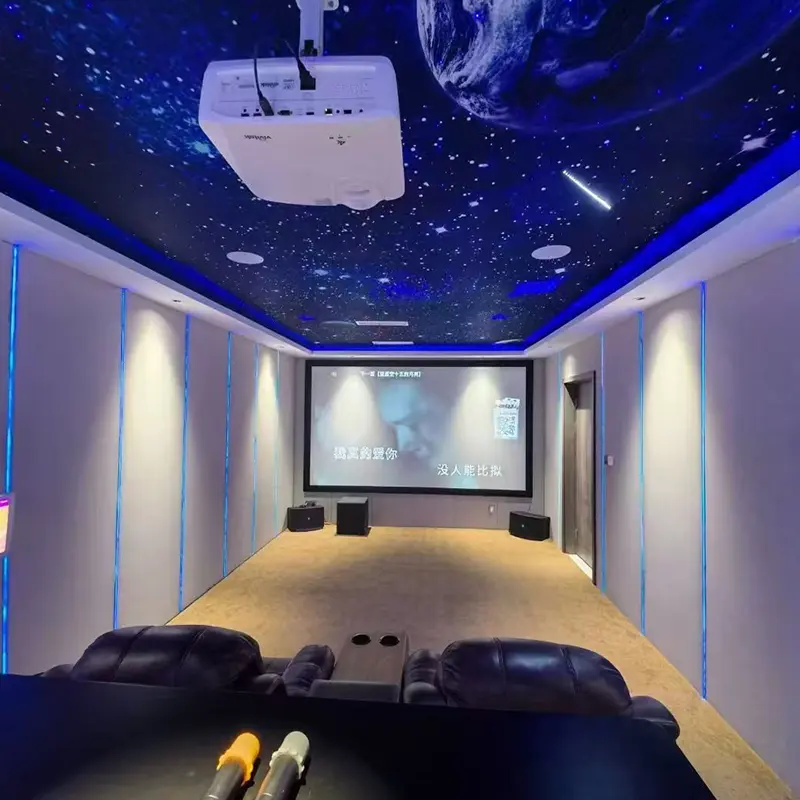
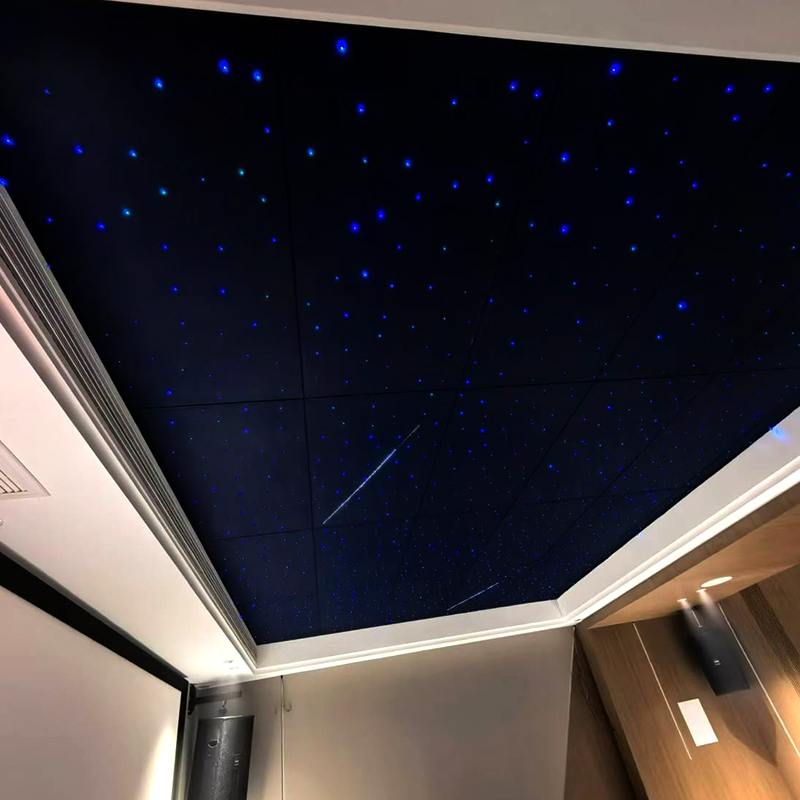
Selecting acoustic PET panels over fiberglass or foam is a decision backed by engineering performance and safety data. With a high NRC of 0.85, Class A fire ratings, and E0 formaldehyde compliance, these panels provide a comprehensive solution for home theater acoustic treatment with PET panels. Yayin New Materials Jiangsu Co., Ltd. remains dedicated to the research and production of carbon-neutral polyester fiber antibacterial sound-absorbing materials. Whether you are interested in a pet starry ceiling for aesthetic appeal or robust wall panels for sound control, our ISO-certified production lines ensure the highest quality for your cinema project.
Frequently Asked Questions (FAQ)
1. Can I use acoustic PET panels for both sound absorption and soundproofing?
Acoustic panels are primarily designed for sound absorption (reducing echoes). While they help with internal room acoustics, "soundproofing" (stopping sound from entering or leaving) usually requires additional high-density mass layers within the wall structure.
2. Is DIY acoustic PET panel installation difficult?
Not at all. PET panels are rigid and skin-friendly (unlike fiberglass), meaning you can cut them to size and mount them with simple adhesives or mechanical fasteners without needing protective gear.
3. How do fire rated acoustic PET panels compare to foam in a fire?
Most acoustic PET panels are self-extinguishing and meet Class A standards. Standard acoustic foam can act as an accelerant unless it is specifically treated with expensive fire retardants.
4. What is the optimal acoustic PET panel thickness for soundproofing a home theater?
For most home theaters, a thickness of 9mm to 12mm is standard. For deeper bass absorption, panels can be "offset" from the wall with an air gap to increase the effective absorption range.
5. Are these panels truly non-toxic PET acoustic panels for home use?
Yes. Yayin panels achieve the E0 level for formaldehyde emission and are free from glass fibers and chemical binders, making them perfectly safe for bedrooms and home theaters.
Industry References
- ASTM E84: Standard Test Method for Surface Burning Characteristics of Building Materials.
- EN 13501-1: Fire classification of construction products and building elements.
- ISO 9001/14001: International Quality and Environmental Management Systems.
- Yayin New Materials Technical Report: "Analysis of NRC in Needle-Punched Polyester Fiber" (2025).


