


 English
 Español
 عربى
عربى
 中文简体
中文简体




+86-180 3665 1199
Content
- 1 1. Acoustic Performance: Sound Diffraction and NRC Analysis
- 2 2. Fire Safety and Material Engineering Standards
- 3 3. Sustainability and Design Flexibility
- 4 Conclusion: The Engineer's Recommendation
- 4.1 Frequently Asked Questions (FAQ)
- 4.1.1 1. What does an NRC of 0.85 actually mean for my office?
- 4.1.2 2. Are recycled polyester acoustic panels for offices as durable as traditional materials?
- 4.1.3 3. How do custom-made acoustic screens for workstations improve privacy?
- 4.1.4 4. Are these screens difficult to install?
- 4.1.5 5. Do Acoustic Desk Screens meet indoor air quality standards?
- 4.2 Industry References
- 4.1 Frequently Asked Questions (FAQ)
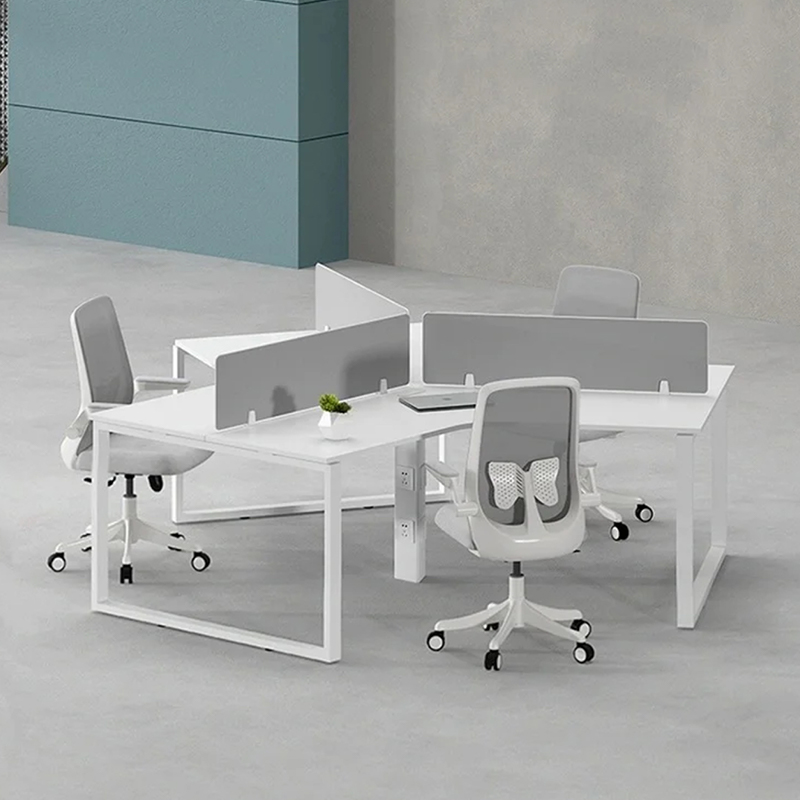
In the modern architectural landscape of open-plan offices, acoustic comfort has become a primary metric for productivity. While standard partitions provide visual privacy, they often fail to address the complex physics of sound diffraction and reflection. Acoustic Desk Screens, specifically those engineered from carbon-neutral polyester fiber, represent a significant leap in environmental acoustics. Yayin New Materials Jiangsu Co., Ltd., with over 30,000 square meters of manufacturing space across three branches, specializes in needle-punched non-woven technology. Our panels achieve a noise reduction coefficient NRC 0.85, effectively absorbing 85% of incident sound energy. This article provides an engineering-grade evaluation of why Acoustic Desk Screens tailored to specific dimensions offer superior performance compared to off-the-shelf standard dividers.
1. Acoustic Performance: Sound Diffraction and NRC Analysis
The effectiveness of an acoustic barrier is determined by its ability to prevent sound from "leaking" over the edges—a phenomenon known as diffraction. When comparing custom vs standard acoustic desk screens, custom units can be designed to match the specific height of the user's seated voice plane. Standard dividers often leave gaps at the desk junction or are too low to intercept the direct sound path of high-frequency speech. Utilizing recycled polyester acoustic panels for offices, custom screens can be manufactured with high-density needle-punching to ensure consistent density across the surface. An acoustic desk divider sound absorption rating is only as good as its coverage; therefore, a custom-sized screen eliminates the "flanking paths" that standard-sized dividers ignore. Furthermore, NRC 0.85 acoustic desk screens provide a measurable reduction in reverberation time (RT60), which is critical for speech intelligibility in dense workspaces.
Acoustic Specification Comparison
- Standard Dividers: Often use generic foam or hollow plastic cores with an NRC below 0.50, leading to significant sound reflection.
- Custom Yayin Screens: Engineered with 100% recyclable polyester fiber reaching an NRC of 0.85 and Class A/B flame retardancy.
| Acoustic Metric | Standard Office Divider | Custom Acoustic Desk Screens |
| Noise Reduction Coefficient (NRC) | 0.30 - 0.50 (Low) | 0.85 (High Performance) |
| Edge Diffraction Control | Poor (Fixed dimensions) | Excellent (Optimized height/width) |
| Flame Retardant Level | Variable | ASTM E84 Class A / EN13501-1 Class B |
2. Fire Safety and Material Engineering Standards
Safety engineering is as vital as acoustic performance. A major benefit of custom-made acoustic screens for workstations is the ability to integrate specialized flame-retardant chemistry during the needle-punched non-woven process. While many standard products lack stringent certifications, Yayin products meet ASTM E84 Class A flame retardant desk screens standards and the EU UL723-2018 Level A. This technical compliance ensures that in the event of a fire, the Acoustic Desk Screens will not contribute to rapid flame spread. Additionally, E0 formaldehyde emission acoustic screens are essential for indoor air quality (IAQ). Standard dividers may use adhesives that off-gas VOCs, whereas our carbon-neutral materials prioritize a healthy working environment. Understanding how to measure office noise reduction involves not just decibel levels, but also verifying that the materials do not degrade the environmental quality of the space.
Material Safety Sequence
- Raw Material Sourcing: Selection of carbon-neutral polyester fibers.
- Needle-Punching: Mechanical interlocking of fibers without chemical binders to ensure E0 formaldehyde emission.
- Heat Treatment: Setting the panels for dimensional stability and flame retardancy.
- Custom Fabrication: Precision cutting to custom sized acoustic desk screens based on architectural drawings.
- EU Fire RatingStandardEN13501-1 Class B
| Safety Standard | Standard Divider Requirement | Yayin Technical Achievement |
| Formaldehyde Emission | E1 or Unrated | E0 (National Standard) |
| US Fire Rating | Basic | ASTM E84 Class A |
3. Sustainability and Design Flexibility
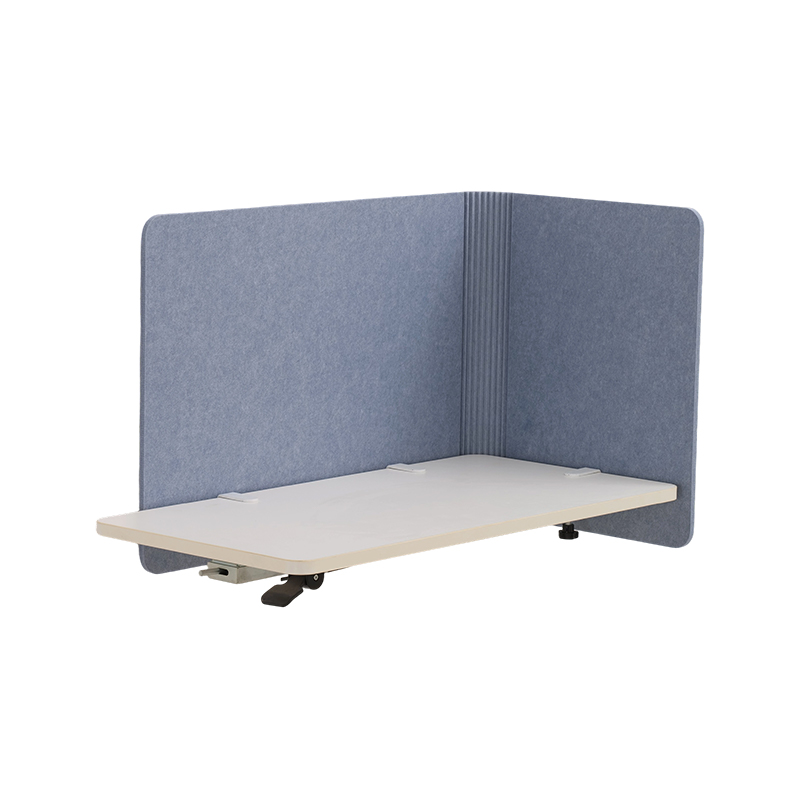
In the transition to a circular economy, the benefits of eco-friendly acoustic desk dividers cannot be overstated. Standard dividers are often composite materials that are difficult to recycle at the end of their lifecycle. However, recyclable polyester materials for office screens allow for a cradle-to-cradle lifecycle. Choosing Acoustic Desk Screens that are carbon-neutral supports corporate sustainability goals while providing effective acoustic desk partitions for privacy. Customization also allows for better integration with acoustic desk screens with desk clamps, ensuring a secure fit that does not damage office furniture. This flexibility ensures that the best acoustic desk screens for open offices are those that adapt to the furniture, rather than forcing the furniture to adapt to the screen.
Conclusion: The Engineer's Recommendation
From an engineering perspective, custom-sized Acoustic Desk Screens are significantly more effective than standard dividers. By optimizing the NRC to 0.85, ensuring E0 emissions, and meeting international fire safety standards (ASTM E84/EN13501), these screens address the acoustic, safety, and environmental needs of a modern office. Yayin New Materials Jiangsu Co., Ltd. remains committed to the research and development of these advanced materials, providing professional solutions that turn open-plan offices into high-performance work environments.
Frequently Asked Questions (FAQ)
1. What does an NRC of 0.85 actually mean for my office?
An NRC (Noise Reduction Coefficient) of 0.85 means that the Acoustic Desk Screens absorb 85% of the sound that hits them, significantly reducing echoes and the "cocktail party effect" in open offices.
2. Are recycled polyester acoustic panels for offices as durable as traditional materials?
Yes. Needle-punched polyester fiber is highly durable, impact-resistant, and does not shed fibers, making it superior to foam-based dividers which can crumble over time.
3. How do custom-made acoustic screens for workstations improve privacy?
Customization allows for specific height adjustments that block the line-of-sight and direct sound path between coworkers, providing both visual and acoustic "territory" in a shared space.
4. Are these screens difficult to install?
Most acoustic desk screens with desk clamps are designed for tool-free installation, allowing them to be easily moved or adjusted as office layouts change.
5. Do Acoustic Desk Screens meet indoor air quality standards?
Our screens meet the E0 formaldehyde emission acoustic screens standard, ensuring they do not release harmful chemicals into the air, which is vital for LEED or WELL certified buildings.
Industry References
- ASTM E84: Standard Test Method for Surface Burning Characteristics of Building Materials.
- EN 13501-1: Fire classification of construction products and building elements.
- ISO 9001 & ISO 14001: Quality and Environmental Management System Standards.
- UL 723: Standard for Test for Surface Burning Characteristics of Building Materials.


