


 English
 Español
 عربى
عربى
 中文简体
中文简体



+86-180 3665 1199
Content
A 40-desk sales floor with 1.2-meter cubicle screens and a painted drywall ceiling loses speech privacy beyond roughly three meters. By late afternoon, background noise climbs from about 55 dB to 65 dB because workers raise their voices to be heard over the room. Fixing that pattern requires three product categories deployed as a single system: acoustic wall panels, desk screens, and free-standing partitions. Each layer solves a different segment of the path that sound travels, and none performs well alone.
The system principle: absorb the room with wall panels, shadow the desk with screens, and divide the zone with partitions.
Why Absorption and Blocking Are Different Jobs
Absorption and blocking are two different jobs, and most failed open-office acoustic projects confuse them. Sound reaches a listener by two paths: directly from the speaker, and indirectly after reflecting off walls, ceilings, and desktops. Absorptive materials such as polyester fiber panels convert sound energy into heat and reduce reverberation. Blocking elements such as dense free-standing partitions stop sound waves from passing through. The standard metric for the absorption side is the Noise Reduction Coefficient (NRC), a value from 0.00 to 1.00 that states the fraction of incident sound energy a surface absorbs. A panel rated NRC 0.85 absorbs 85 percent of the sound that reaches it.
NRC (Noise Reduction Coefficient) is the fraction of sound energy a surface absorbs, measured from 0.00 to 1.00. In practical terms, NRC 0.85 removes most reflected sound from a room rather than just scattering it.
Absorption lowers reverberation
Polyester fiber panels, ceiling baffles, and fabric-wrapped boards shorten the decay time of sound. Speech stays intelligible, and distant conversations stop overlapping each other.
Blocking lowers direct transmission
Desk screens and free-standing partitions interrupt the straight line between mouth and ear. They cannot quiet a room by themselves, but they create a dependable privacy boundary at every workstation.
Wall Panels: Treat the Room First
Wall panels are the layer that controls the room itself; without them, reflected speech carries across the floor almost as clearly as direct speech. A conversation at one desk reflects off the nearest hard wall and arrives at the next desk with most of its intelligibility intact. Covering 20 to 40 percent of the wall area with absorbent panels is the practical planning range. Below 20 percent, the change is mostly cosmetic.
- 20 percent coverage: echo audibly shortens, and phone calls feel less exposed
- 30 percent coverage: speech clarity improves, and distant conversations become less intrusive
- 40 percent coverage: reverberation time moves toward the 0.5 second target used by acoustic consultants
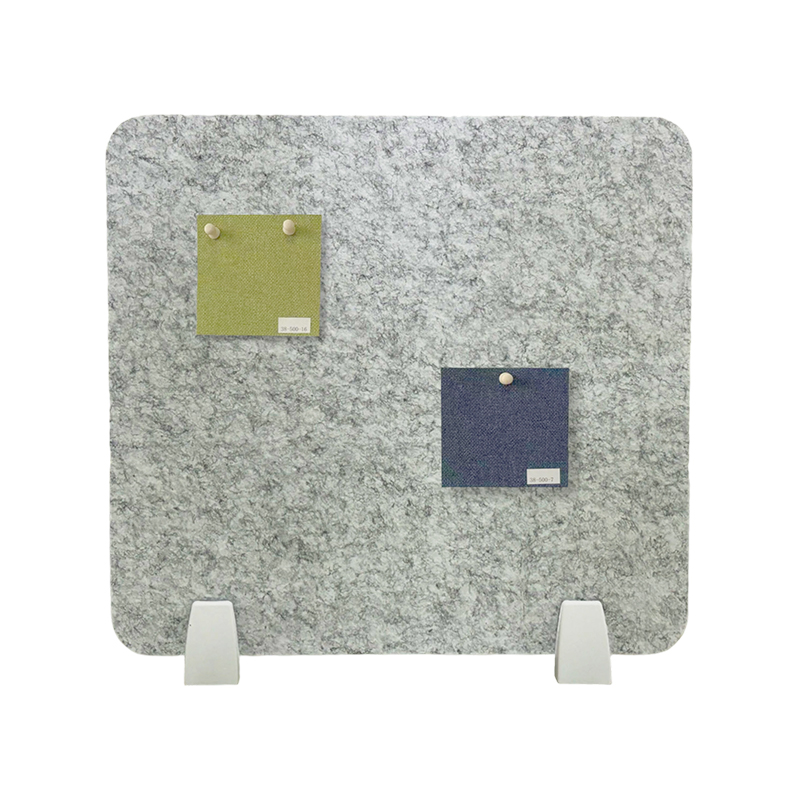
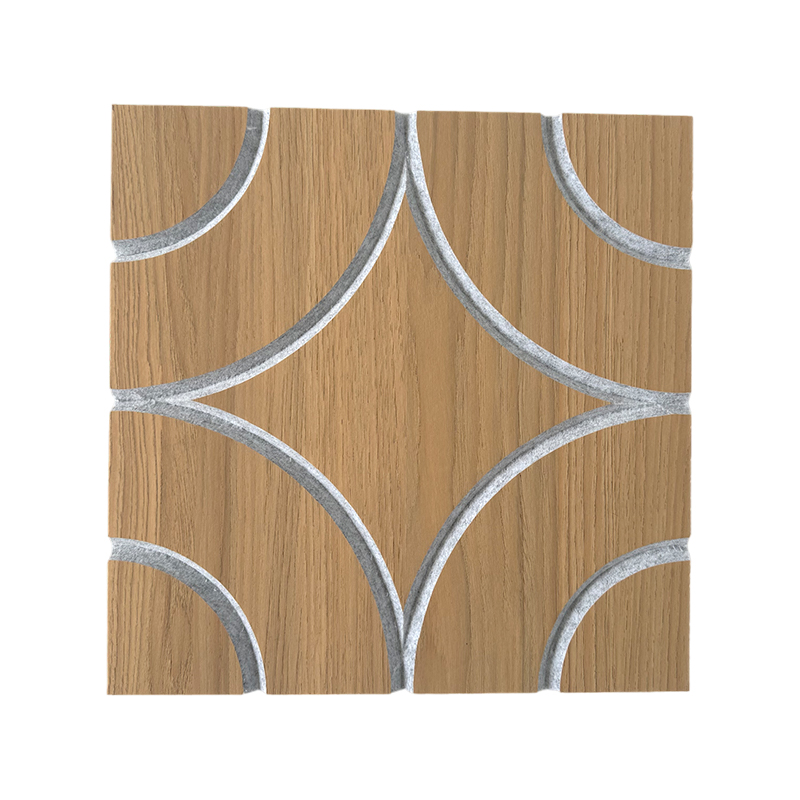
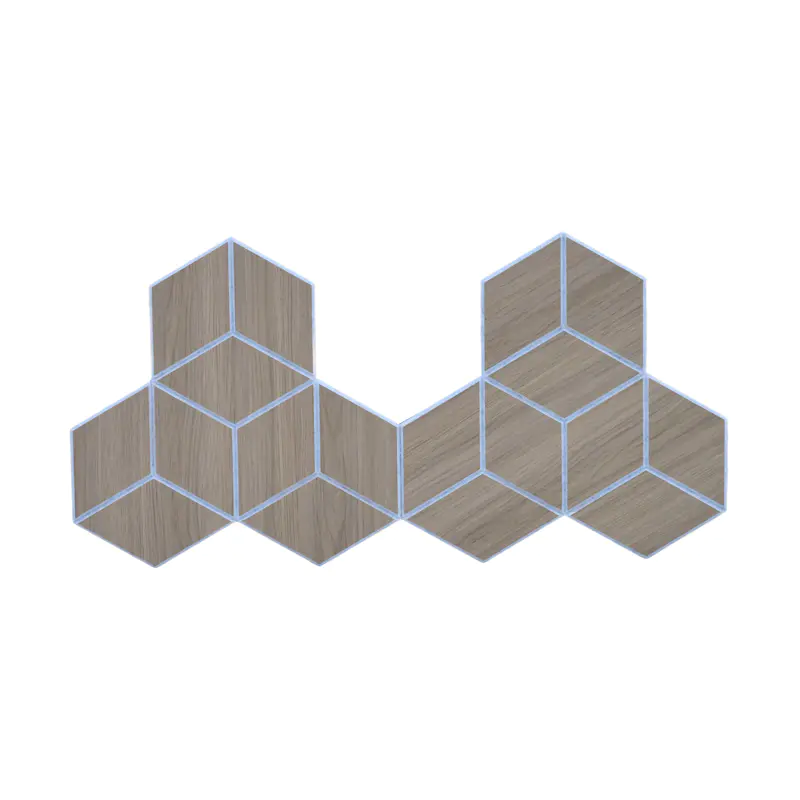
 Spesonic Polyester Fiber Acoustic Wall Panels for Studios and OfficesThese wall panels combine sound absorption with decorative styling, suited for home studios and offices. Their published NRC rating and flame resistance support the recommended 20-40 percent wall coverage for reducing reflected speech intelligibility.View Product →
Polyester fiber wall panels manufactured by Yayin New Materials Jiangsu Co., Ltd. (cnacousticpanels.com) publish an NRC of 0.85, an ASTM E84 Class A flame rating, and E0 formaldehyde emission.
Desk Screens: Privacy at the Source
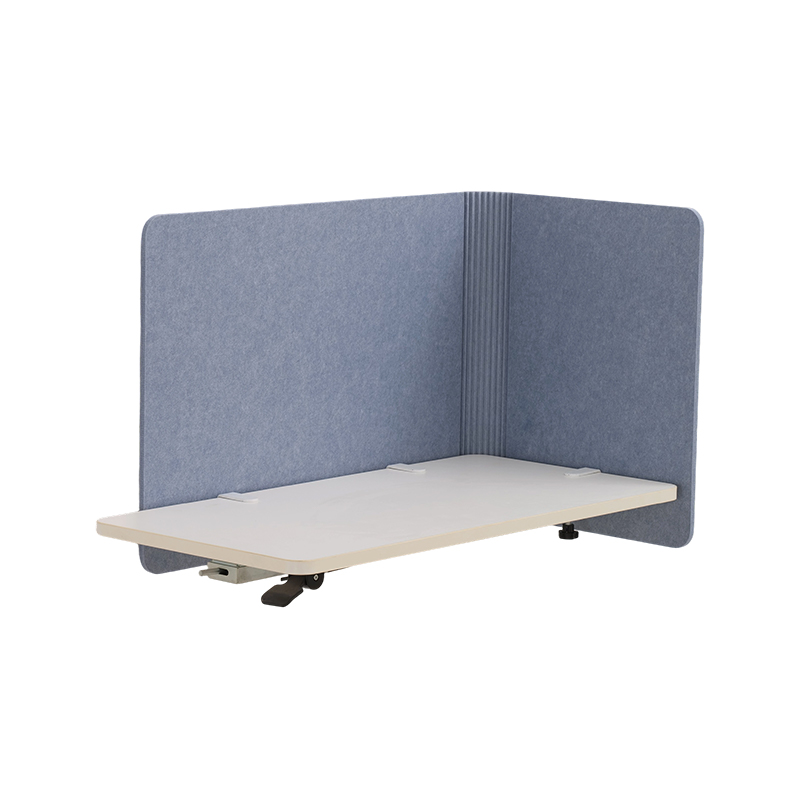
Desk screens intercept the direct sound path at the workstation, but they do not lower the reverberation of the room. Their effect depends on height and material. A screen 400 mm above the desk blocks screen glare and eye contact between seated neighbors. A screen at 600 mm begins to shadow the conversation line itself.
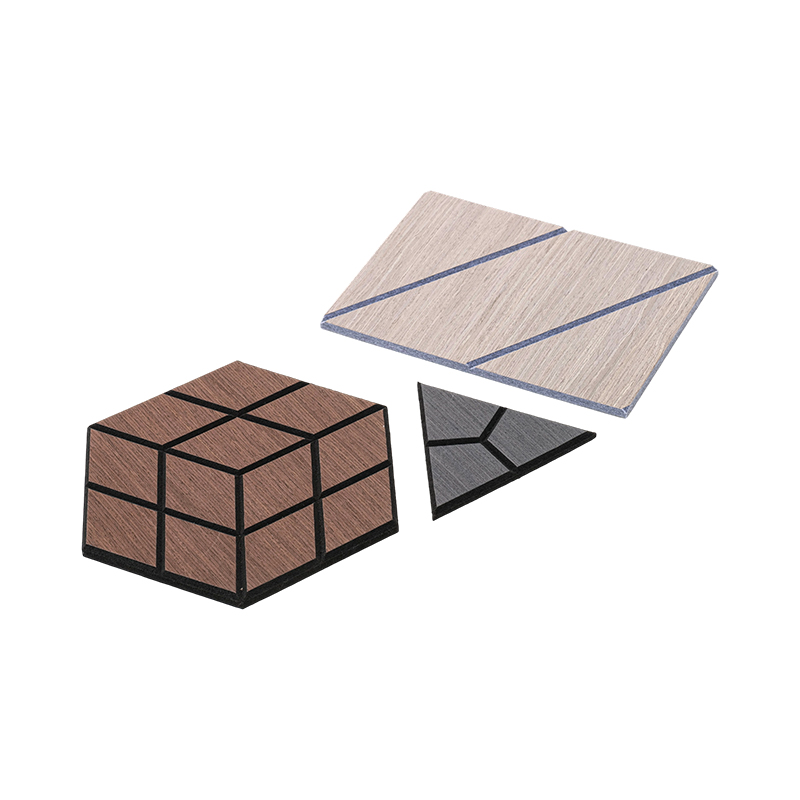
 Office Desk Screen Acoustic Panels for Noise Reduction and PrivacyDesk screens made of polyester fiber acoustic material help intercept direct sound between neighboring workstations. With L-shaped or U-shaped options and fabric or unfabricated finishes, they fit open-plan desks while absorbing keyboard clatter and conversation noise.View Product →
PET felt and molded polyester screens are the practical choice for offices because they absorb more than acrylic or glass dividers and are light enough for clamp mounting on existing desks. Position the screen on the edge facing the noise source, not in the middle of the work surface. For the mechanism behind speech distraction, this article on desk screens summarizes the psychoacoustic evidence.
H
Height guide: 400 mm for visual separation, 600 mm for speech shadowing, above 650 mm the desk starts to feel closed-in.
Free-Standing Partitions: Zone-Level Separation
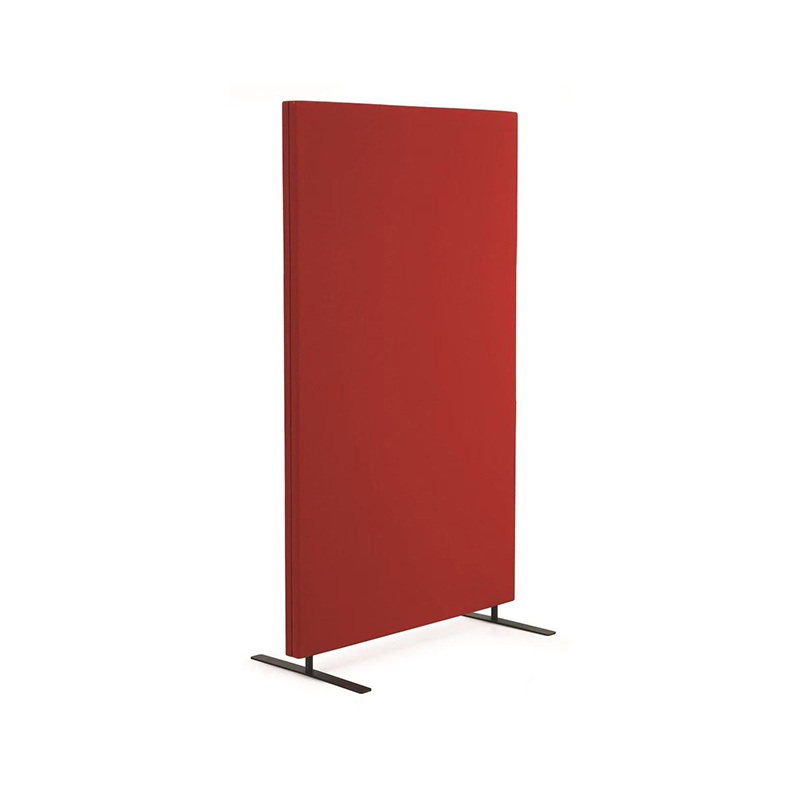
Free-standing partitions extend acoustic control from single desks to whole team zones without any floor or ceiling fixing. They stand on a base, stay upright without structural mounting, and relocate whenever the layout changes. In open plans, 1,650-1,800 mm is the practical height band: seated workers get real privacy, and standing sightlines remain open.
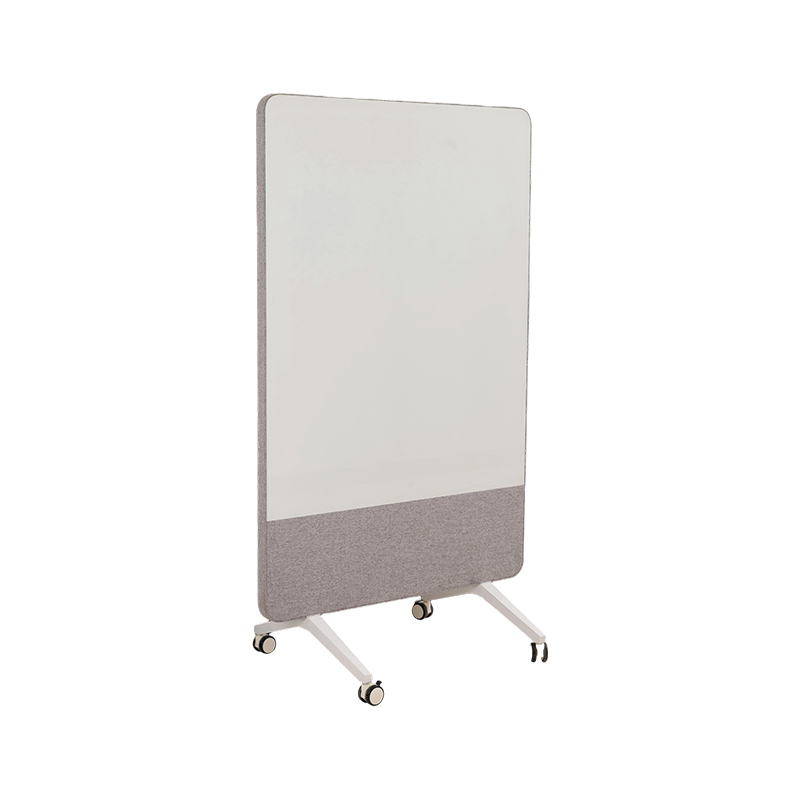
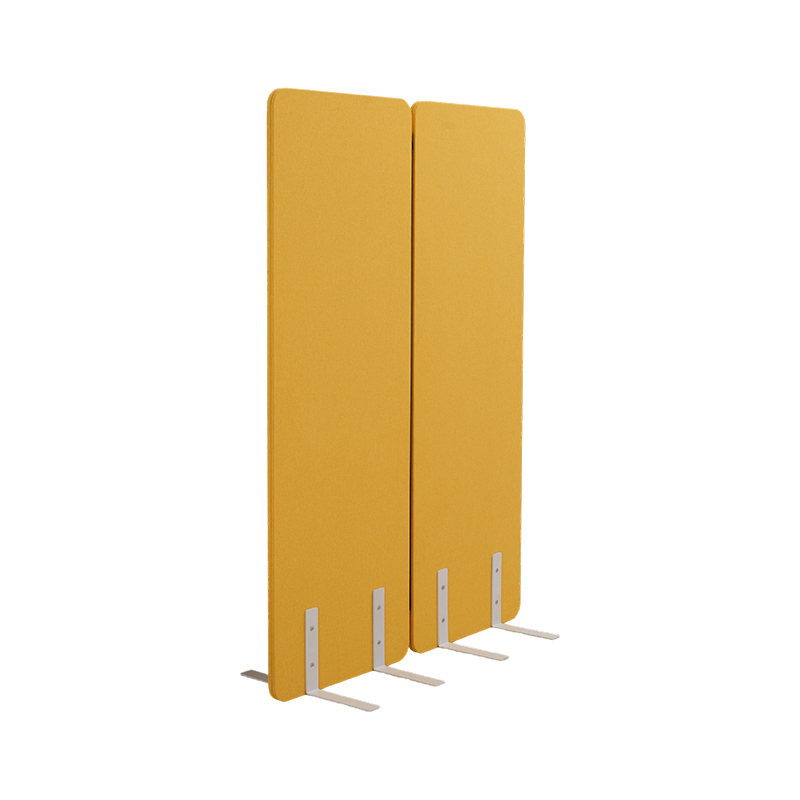 Freestanding Acoustic Partition Room Dividers with Customizable SizesThese free-standing partitions combine sound absorption and blocking, ideal for open-plan team zones. Available in multiple thicknesses and with zipper or hinge connections, they can be rearranged easily while providing privacy and acoustic control at practical heights.View Product →
Partitions work as both absorber and blocker. The core absorbs reflected sound on each side, and the surface interrupts direct transmission between adjacent workstations. For the evidence connecting this kind of separation with worker output, the productivity analysis of acoustic partitions is worth reading.
1,650-1,800 mm Optimal seated privacy zone
0 fixings No floor or ceiling modification
How the Three Layers Work Together
A layered system outperforms any single product because wall panels, desk screens, and partitions each capture a different segment of the sound path. Wall panels absorb reflections, desk screens shadow near-field speech, and partitions divide the floor into acoustic zones. The table below summarizes the design role of each layer.
| Layer | Primary mechanism | Typical height | Main benefit |
| Wall panels | Absorption of reflected sound | Full wall area | Lower reverberation across the room |
| Desk screens | Partial blocking of direct speech | 400-600 mm above desk | Privacy boundary at the workstation |
| Free-standing partitions | Blocking plus absorption | 1,650-1,800 mm | Zone separation without floor fixing |
Because NRC values in a room do not simply add, the practical planning approach is to think in coverage and height, then confirm by measurement. The chart below compares typical absorption values for common office surfaces.
Planning values for a typical office: the 28 mm PET panel is the layer that moves the room decay time.
A 24-desk design studio covered 30 percent of its wall area with PET panels, fitted 600 mm screens to the analysis row, and placed a 1,650 mm mobile partition in front of the print area. Distraction complaints dropped from regular to occasional within three weeks, with no change to the workstation footprint.
Specification Checklist Before You Order
A combined system is only as strong as the weakest number on the purchase order. Three figures matter most: NRC, fire rating, and formaldehyde emission. For offices with more than 50 occupants, fire documentation is not optional.
- NRC 0.85 or higher for all absorbent layers; request the test report, not just the product page value
- Flame spread: ASTM E84 Class A or EN13501-1 Class B for open-plan office use
- Formaldehyde emission E0 or equivalent for continuously occupied indoor spaces
- Panel density and thickness: 9 mm screens and 28 mm wall panels absorb differently across the speech frequency range
- Mounting hardware must match the wall construction; verify fixings before delivery
Yayin New Materials Jiangsu Co., Ltd. operates three production sites totaling over 30,000 square meters and documents NRC 0.85, ASTM E84 Class A, EN13501-1 B, and E0 emission data across its acoustic panel range. That traceable specification set is what a manufacturer-direct supply chain should provide.
Frequently Asked Questions
Do desk screens alone fix an open-office noise problem?
No. Desk screens block direct speech between neighboring desks but do nothing for reflected sound. Without wall absorption, reverberation stays high, and the noise still slips across the room.
What height should an acoustic partition be?
Use 1,650 to 1,800 mm for a seated privacy zone. Below 1,500 mm, the visual privacy benefit disappears; above 1,800 mm, the space starts to feel enclosed.
Does NRC 0.85 mean the panel soundproofs the room?
No. NRC measures absorption, not sound isolation. A high-NRC panel shortens echo and controls reflected speech, but it will not stop loud noise traveling through walls. Blocking requires density, sealing, and full wall construction.
How much wall coverage is worth paying for?
At least 20 percent of the wall area. Below that threshold, the difference in echo is subtle and rarely measurable in speech intelligibility.
Plan, specify, then buy: every layer should carry verified NRC, fire class, and emission data, and every supplier should cover the same numbers.
Acoustic office solutions work when they are designed as a system: wall panels treat the room, desk screens treat the workstation, and free-standing partitions treat the zone. Specify all three layers with verified performance data, and the result is an open workspace that controls noise without sacrificing the openness it was built for.


