


 English
 Español
 عربى
عربى
 中文简体
中文简体




+86-180 3665 1199
Content
Almost every acoustic office partition quote ends with the same question: what is actually inside the panel, and why does one screen cost twice as much as another? The answer is the core material. It decides the sound absorption rating, the fire classification, the weight, the durability, and the price. The materials used in acoustic office partitions fall into four main families: polyester fiber (PET felt), acoustic foam, fiberglass, and mineral wool, usually finished with fabric or a decorative facing. Polyester fiber has become the default for modern office screens, and this guide explains what each material is, how it performs, and where it makes sense.
How Partition Materials Absorb Sound
An acoustic partition does not block sound the way a masonry wall does. It absorbs it. When a sound wave enters a porous material, the air inside the pores compresses and vibrates, and friction converts that acoustic energy into heat. The standard way to measure this is the Noise Reduction Coefficient (NRC), a number from 0 to 1 that represents how much sound energy the material absorbs across speech frequencies. A material with an NRC of 0.85 absorbs about 85 percent of the sound that strikes it and reflects only about 15 percent.
Two practical consequences follow. First, the partition reduces echo and background noise in the zone around it, which makes conversation clearer and less distracting. Second, it does not stop all sound transmission over the top of a low screen, so for real speech privacy you need sufficient height, density, and a ceiling path that prevents sound from passing over. In an open office, a screen with a verified NRC of 0.85 and a height of about 1,700 mm is the standard formula for cutting visual distraction and reducing noise propagation. Our detailed guide to sound-absorbing panel materials explains the test methods behind these numbers and how to read them.
The Main Materials Used in Acoustic Office Partitions
Four material families dominate the acoustic partition market, and most commercial screens combine one of these cores with a fabric or veneer face. Here is what each material actually is and where it performs best.
Polyester Fiber (PET Felt)
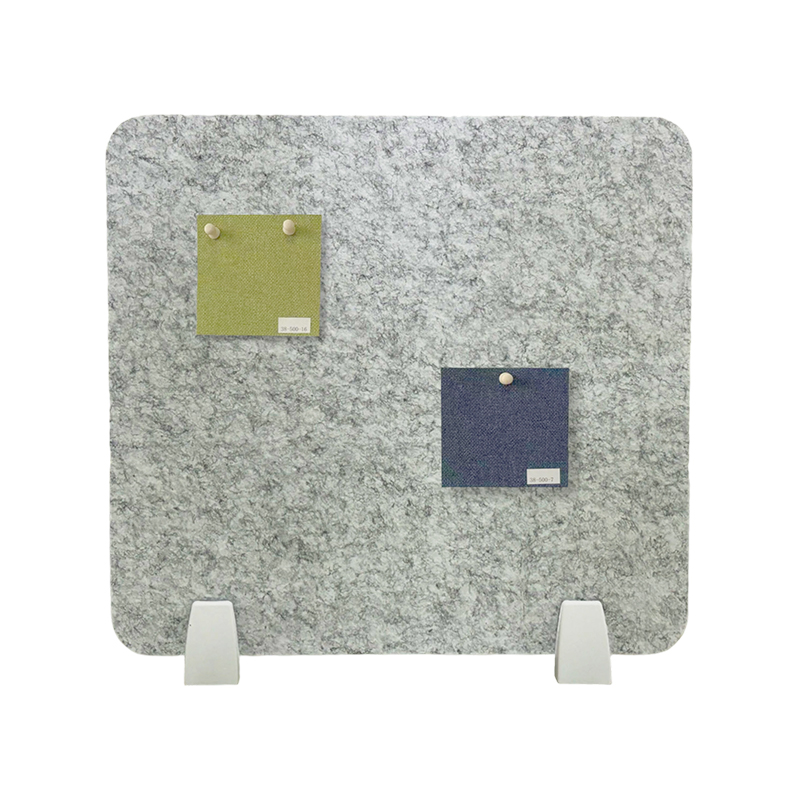
Polyester fiber panels, also called PET felt or recycled PET boards, are produced by needle-punching polyester fibers into a dense nonwoven sheet. PET felt is made largely from recycled PET bottles, can be recycled again after use, and does not release irritating fibers into the air, which makes it a practical choice for occupied offices. A well-made panel reaches an NRC of 0.85 at a common thickness, meets ASTM E84 Class A, EN 13501-1 B, and UL 723-2018 A fire requirements, and keeps formaldehyde emissions at E0 or better.
PET felt is also dimensionally stable across humid and dry seasons, resists moisture better than fiberglass or foam, and can be routed, grooved, or thermoformed without losing strength. That versatility is why PET appears in wall panels, writing boards, and freestanding screens as well as office partitions. For example, our eco-friendly fabric-wrapped acoustic partition panels combine a PET felt core with an upholstered face, which is the configuration most designers specify for office interiors. If you are comparing PET felt with fiberglass or foam, our safety and performance guide for polyester fiber panels covers cutting behavior, density options, and long-term service data.
 Wholesale Eco-friendly Acoustic Panels for Office Partition Room Dividers FabricYayin New Materials Jiangsu Co.,Ltd. Is China Wholesale Eco-friendly Acoustic Panels for Office Partition Room Dividers Fabric Wrapped Co...View Product →
Acoustic Foam (Polyurethane)
Acoustic foam is an open-cell polyurethane material, commonly sold in 12 mm or 24 mm thickness and wrapped in fabric for office use. Foam is lightweight and inexpensive, and it absorbs mid- and high-frequency sounds such as keyboard noise, phone conversations, and paper shuffling. But it has real limitations: it does little for low-frequency rumble, it compresses and degrades after years of impact and constant leaning, and its fire performance depends heavily on chemical additives that can off-gas. Foam makes sense for temporary screens, student workstations, or budget-driven projects. For a permanent partition expected to last ten years, PET felt is the more durable and safer core.
Fiberglass and Mineral Wool
Compressed fiberglass and mineral wool boards have been the workhorses of acoustic construction for decades. Their NRC can reach 0.90 or higher, which makes them excellent absorbers, and they are dense enough to contribute to sound isolation in fixed walls. The drawbacks are practical. Fiberglass irritates the skin and respiratory tract during handling and must be fully sealed inside fabric or film to prevent fibers from entering the occupied space. It also absorbs moisture, which can degrade acoustic performance and support microbial growth. Mineral wool is heavier and needs a stronger frame. These materials still make sense in floor-to-ceiling partitions and meeting pods where maximum absorption is the priority and the core is fully contained. In furniture-scale screens and open-plan workstations, PET felt is steadily replacing them on safety and sustainability grounds.
Fabric-Wrapped and Veneer-Faced Composites
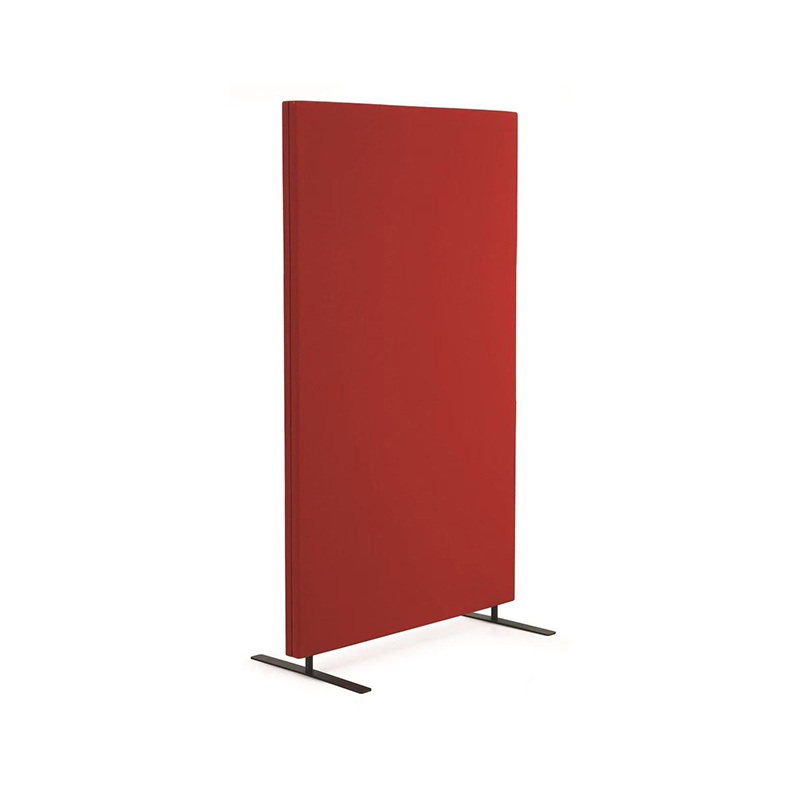
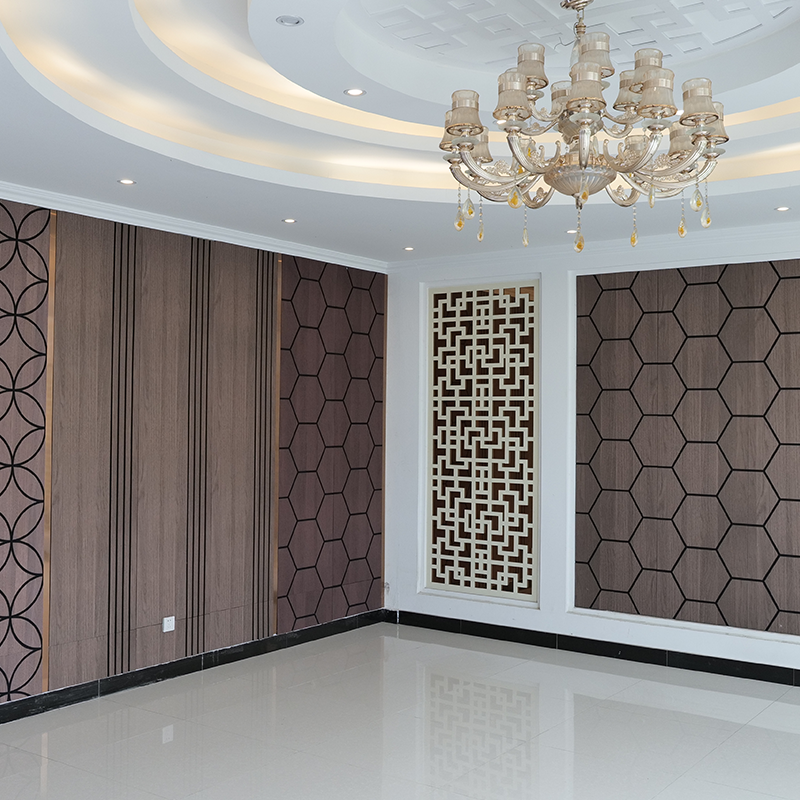
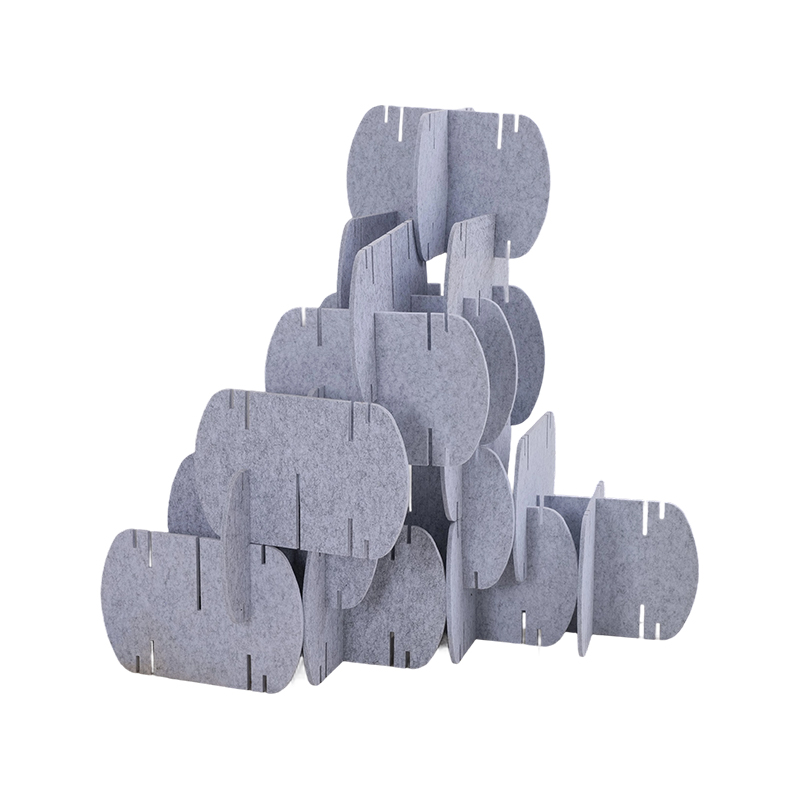
Many partitions are sold as composite assemblies: a core of PET felt, foam, or mineral wool wrapped in fabric, wood veneer, PVC, or printed textile. The facing matters aesthetically, but the acoustic result depends on the core and on whether the facing lets sound pass through. A tightly stretched impermeable PVC film reflects sound even over a good core, while a woven fabric or microperforated film lets sound reach the absorber. Composite products allow partitions to match furniture, branding, and interior style without sacrificing performance. Our freestanding polyester fiber partition screens are a typical example: PET cores in a range of finish options designed for floor-standing use in open offices and reception areas.
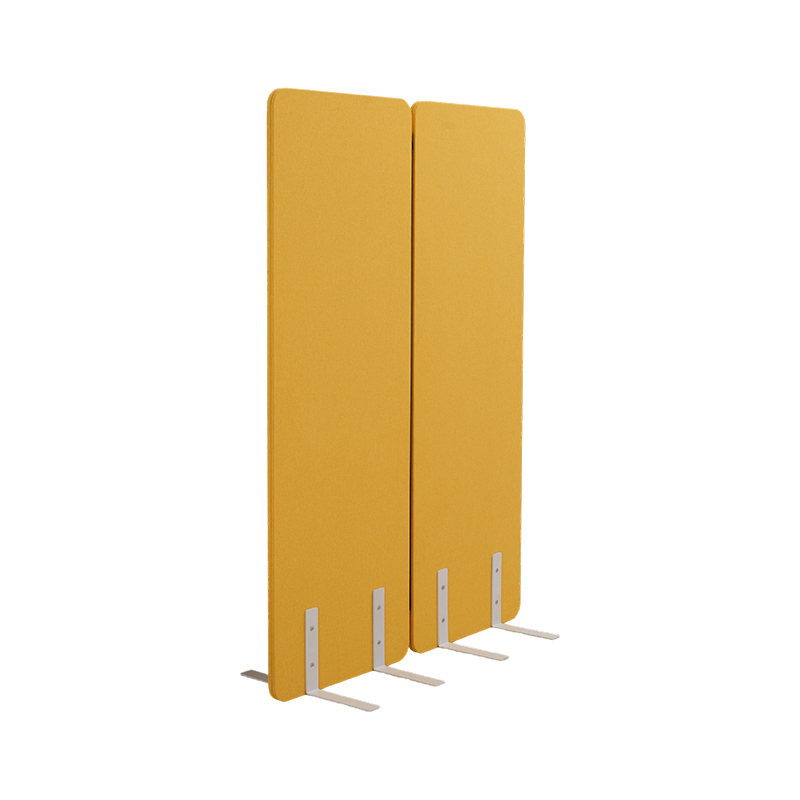 Wholesale Spesonic Freestanding Partition Room Dividers, Acoustic Panels SoundprYayin New Materials Jiangsu Co.,Ltd. Is China Wholesale Spesonic Freestanding Partition Room Dividers, Acoustic Panels Soundproof Privacy...View Product →
Comparing the Materials Side by Side
The table below summarizes the performance ranges you will see in supplier datasheets. Always ask for the specific test report behind the values, because NRC and fire ratings change with thickness, density, and facing.
| Material | Typical NRC | Fire behavior | Moisture and durability | Recyclability | Best application |
|---|---|---|---|---|---|
| PET felt | 0.70-0.85 | Class A (ASTM E84, EN 13501-1 B, UL 723-2018 A) | Excellent; moisture-resistant | High (recycled PET) | Freestanding screens, desk dividers, wall panels |
| Acoustic foam (PU) | 0.50-0.75 | Varies; requires fire-retardant additives | Fair; can compress and degrade | Low | Lightweight portable screens |
| Fiberglass board | 0.80-0.95 | Class A when sealed | Poor if exposed; absorbs moisture | Moderate | Fixed floor-to-ceiling partitions |
| Mineral wool (rockwool) | 0.80-0.90 | Class A | Moderate; heavy | Moderate | Meeting pods and high-performance walls |
| MDF or wood with absorptive core | 0.15-0.35 alone; higher with PET or foam inlay | Depends on facing | Good | Low | Decorative partitions with an acoustic inlay |
Fire Safety and Indoor Air Quality Are Non-Negotiables
Commercial building codes require that partition materials meet verified fire standards, and this is where cheap partitions fail inspection. The most widely accepted thresholds are ASTM E84 Class A in North America, EN 13501-1 B in Europe, and UL 723-2018 A for U.S. projects. All three measure flame spread and smoke development, so a product that carries these marks has been tested, not just described. On the emissions side, E0 is the strict formaldehyde limit that many global projects now request, and some PET products add antibacterial treatment for meeting rooms and offices in healthcare-adjacent buildings.
The procurement risk is simple: an unverified material can delay occupancy, force rework, and create liability. Ask for the third-party test report that names the exact product and thickness you are buying, not a brochure page. Our fire-rating and eco-certification guide for acoustic office partitions explains how to verify these documents and which certificates most building authorities accept.
Choosing the Right Material for Your Office Layout
Match the core material to the way the space is actually used:
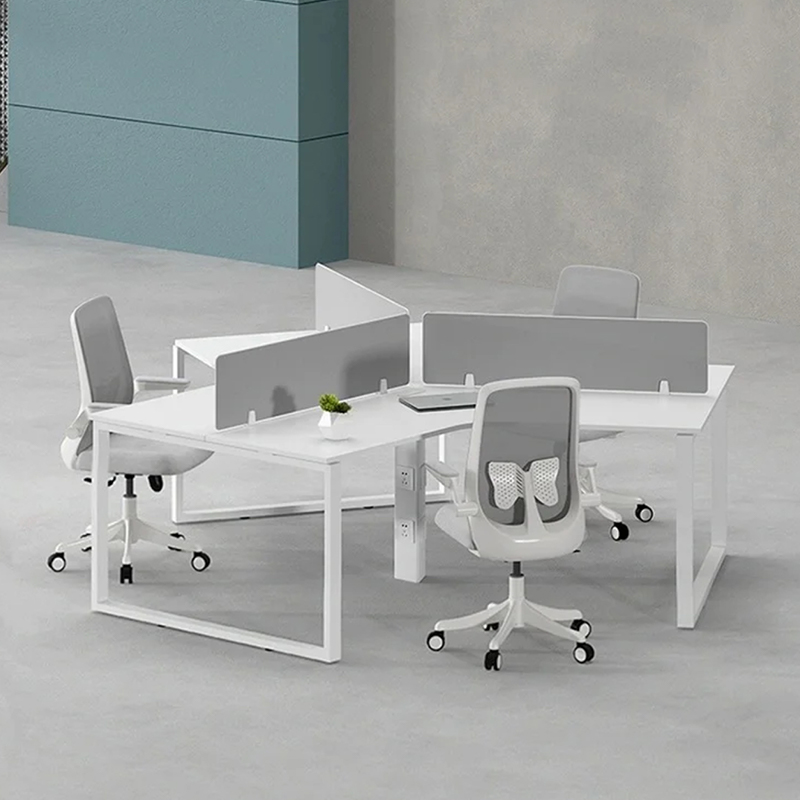
- Open-plan workstations: freestanding screens 1,650 to 1,700 mm high in PET felt or fabric-wrapped PET give the best balance of privacy, absorption, and daylight. Our movable leaf-shape office partitions
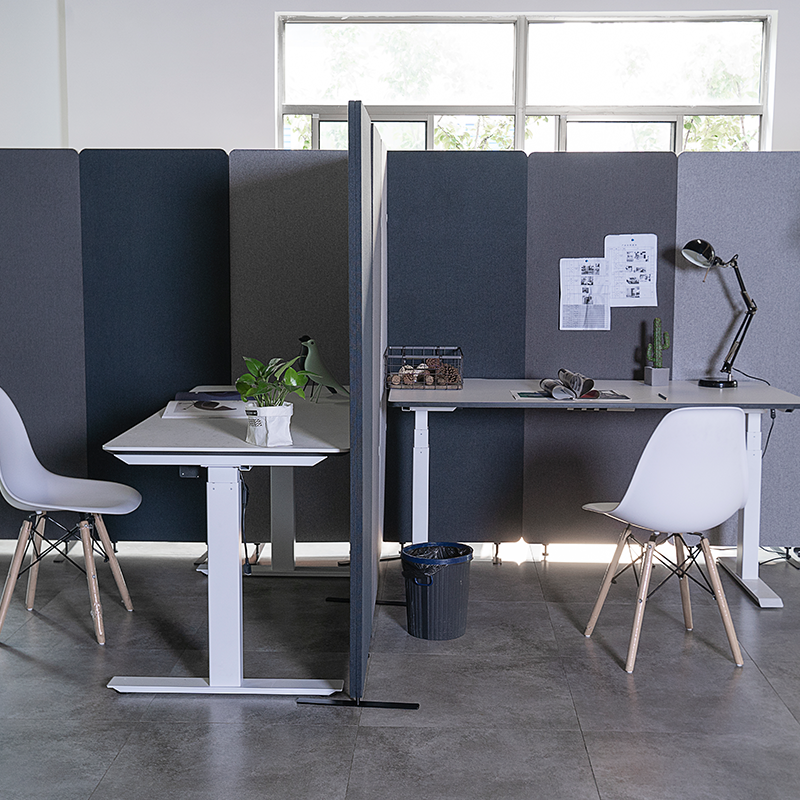 Wholesale Eco-Friendly Office Partitions Movable Leaf Shape Room Dividers High SYayin New Materials Jiangsu Co.,Ltd. Is China Wholesale Eco-Friendly Office Partitions Movable Leaf Shape Room Dividers High Sound Absorp...View Product → are a flexible choice when teams reconfigure frequently.
 - Meeting and focus rooms: floor-to-ceiling partitions with a high-density mineral wool or thick PET core (28 mm or more) provide stronger isolation; the door seal and ceiling gap matter as much as the panel material.
- Hybrid and temporary zones: caster-mounted screens make reconfiguration cheap, and PET felt outperforms foam when screens are moved, leaned on, and cleaned for years.
Before ordering, ask three questions: What NRC value appears on the test certificate and at which frequencies? What is the exact core composition and recycled content? What are the lead time and minimum order quantity for custom heights and colors?
Final Thoughts
The material inside an acoustic office partition decides whether the screen actually reduces noise, passes fire inspection, keeps the air clean, and still looks acceptable after five years. PET felt delivers the strongest overall balance of high NRC, Class A fire ratings, moisture resistance, and recyclability for most office applications. Mineral wool and fiberglass remain the right choice for fixed high-isolation walls, and foam still fits temporary setups. Whichever material you select, insist on documented NRC and fire certificates and buy from a manufacturer that controls the production chain, so the material on the datasheet is the material inside the frame.


