


 English
 Español
 عربى
عربى
 中文简体
中文简体


+86-180 3665 1199
Content
- 1 Why Acoustic Partitions Are Becoming Office Infrastructure
- 2 Trend 1: Modular, Mobile and Reconfigurable Systems
- 3 Trend 2: Recycled PET, Carbon-Neutral Materials and Circular Procurement
- 4 Trend 3: Verified Performance Data and Multi-Standard Compliance
- 5 Trend 4: Multi-Functional Surfaces - Writing Boards, Lighting and Wayfinding
- 6 What This Means for Specifiers and Facility Managers
- 7 Frequently Asked Questions on Acoustic Office Partition Trends
Office fit-out briefs issued in 2026 rarely ask for a partition that only blocks sight lines. They ask for modules that can be rearranged in minutes, meet a stated NRC, carry a fire certificate, and show verified recycled content. Acoustic office partition systems have moved from passive room dividers to active performance infrastructure.
The change is visible in the product categories that now exist: floor-standing screens, desk-mounted panels, zippered room dividers, writing boards, and ceiling baffles all carry acoustic data. This article breaks down the trends that will shape the next generation of acoustic office partition systems.
Read the system, not the sample: the four trends below define how reconfigurable partitions, recycled PET cores, certificate data, and multi-functional surfaces fit into one procurement process.
Why Acoustic Partitions Are Becoming Office Infrastructure
Acoustic office partition systems are no longer optional furniture; they are the primary quick-response acoustic infrastructure in a reconfigurable workplace.
Hybrid schedules mean the same floor can be a collaborative zone at 10 a.m. and a quiet focus zone at 2 p.m. Fixed drywall cannot keep up. A partition system built from polyester fiber acoustic panels, textile-wrapped boards, and mobile screens can be moved, tilted, or zipped into place without contractors. The switch from construction to components changes how facilities teams plan acoustic comfort.
Acoustic office partition system: a freestanding, floor-mounted, or desk-mounted panel assembly designed to absorb sound energy, limit speech distraction, and define workspace boundaries without permanent wall construction.
Demand is also cost-driven. Our cost comparison of acoustic office partitions and drywall shows that movable partition systems avoid demolition, repainting, and re-certification costs every time the floor plan changes. That makes the partition system a capital asset with relocation value instead of a sunk construction cost.
Trend 1: Modular, Mobile and Reconfigurable Systems
Mobility is now a baseline requirement, not a premium option, for acoustic office partitions in any office that changes layouts more than once a year.
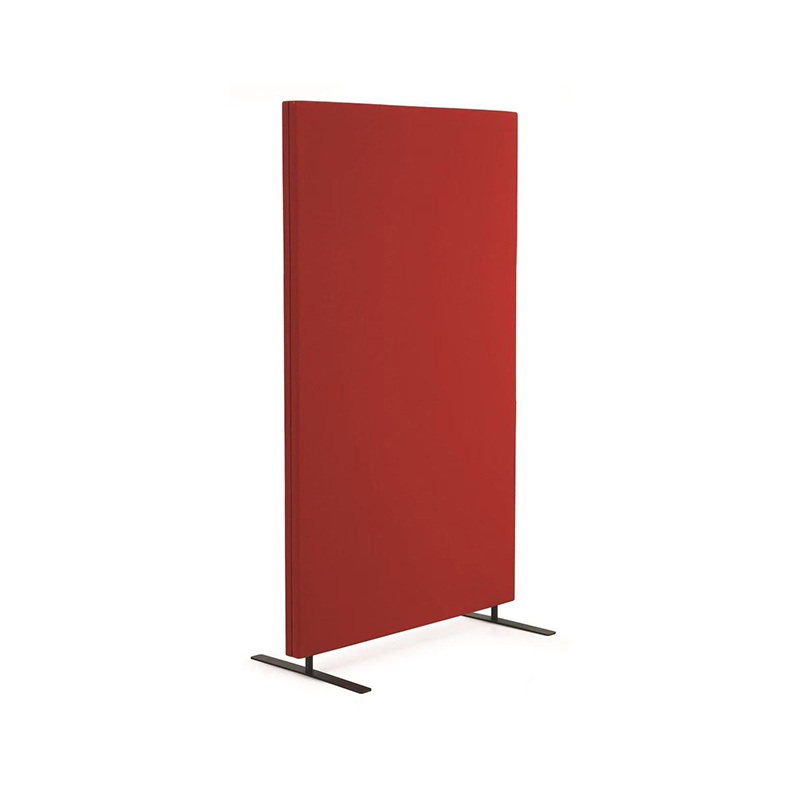
Manufacturers now offer floor-standing screens, units with casters, zippered partitions that turn an open alcove into a private room, and desk-mounted screens that fit into existing workstations. The common thread is that the acoustical surface can travel with the team. For example, a movable zippered acoustic office partition can seal an opening without permanent tracks and can be stored flat when the room is opened up.
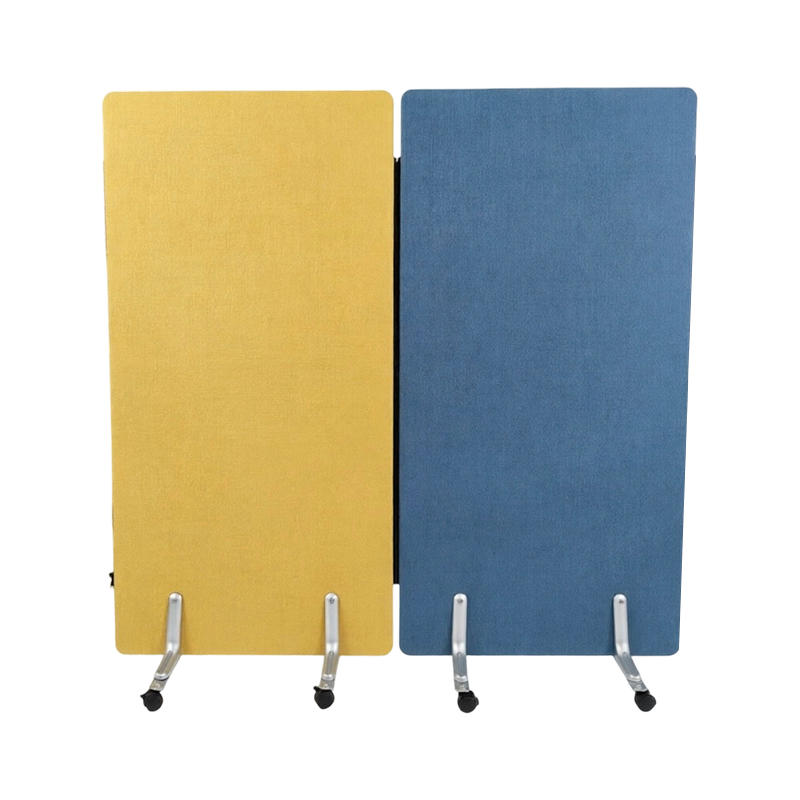 Wholesale Soundproof office partition with casters, zippered office partition SuYayin New Materials Jiangsu Co.,Ltd. Is China Wholesale Soundproof office partition with casters, zippered office partition Suppliers, Fa...View Product →
What mobility changes on a project
The procurement logic changes from buying one product to assembling a kit of parts: freestanding units for open areas, zippered units for meeting rooms, and desktop screens for individual workstations.
Fixed wall approach
- Requires contractor install and demolition
- Blocks sound with mass but adds little absorption
- Becomes waste when the layout changes
Reconfigurable acoustic partition
- Can be moved and re-installed in minutes
- Absorbs speech and reduces reverberation
- Reusable on every future layout
What to specify
Because hybrid occupancy changes weekly, mobile acoustic office partitions improve hybrid-work flexibility by letting acoustic boundaries follow attendance patterns. Specify modules with standard widths, consistent core materials, and tool-free connectors.
Rule of thumb: If a partition takes more than 15 minutes to move, it will not be moved. Mobile and zippered formats keep acoustic control inside the daily workflow rather than locking it to the original layout.
Trend 2: Recycled PET, Carbon-Neutral Materials and Circular Procurement
Sustainability has shifted from brand preference to procurement threshold; if a partition core cannot show recycled content and low formaldehyde emissions, it is dropped from the shortlist.
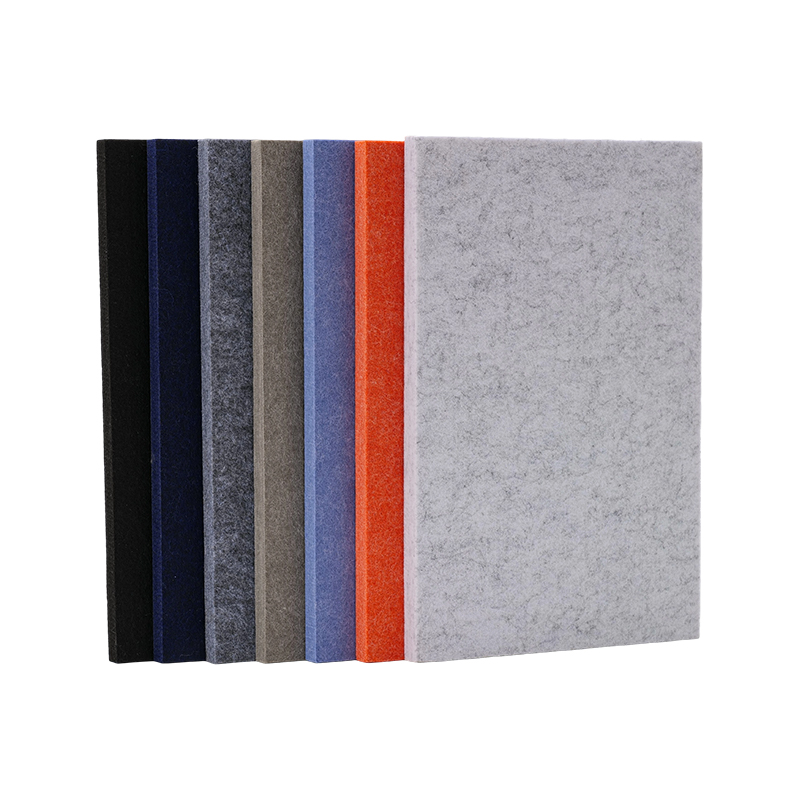
Polyester fiber acoustic panels are made from recycled PET bottles and textile waste. At Yayin New Materials Jiangsu Co., Ltd., the production route uses needle-punched nonwoven technology to turn recovered polyester into boards with a noise reduction coefficient of 0.85. The company runs three factories totaling more than 30,000 square meters of production space. Those boards are not just acoustic elements; they are a carbon-neutral material story that supports LEED and WELL documentation. For meeting areas, fabric-wrapped eco-friendly room dividers combine that recycled PET core with a clean visual finish.
 Wholesale Eco-friendly Acoustic Panels for Office Partition Room Dividers FabricYayin New Materials Jiangsu Co.,Ltd. Is China Wholesale Eco-friendly Acoustic Panels for Office Partition Room Dividers Fabric Wrapped Co...View Product →
- Core: 100% recycled PET felt
- Emission: formaldehyde class E0
- Surface: antibacterial polyester fiber
- End-of-life: reusable for future cut-to-size acoustic panels
NRC 0.85Noise reduction coefficient
ASTM E84 Class AFire rating
E0Formaldehyde emission
100% PETRecycled content
Procurement teams should ask for the same data on every quote. A partition that meets NRC but fails ASTM E84 Class A cannot be installed in many office and school projects.
Trend 3: Verified Performance Data and Multi-Standard Compliance
Acoustic performance claims now have to survive document review; the winning supplier is the one who can hand over an NRC test report, a fire certificate, and emission data in one package.
Open-plan acoustic screens should primarily be judged on NRC, while full-height partitions need sound transmission data as well. NRC tells you how much sound a panel absorbs; STC tells you how much sound a wall blocks. A floor-standing PET felt screen with NRC 0.85 is effective at reducing speech distraction, but it will not isolate a room the way a heavy partition wall does. The spec sheet needs to be read with that distinction in mind.
| ASTM C423 / ISO 354 | Sound absorption (NRC) | NRC 0.70 or higher |
| ASTM E84 | Surface burning characteristics | Class A |
| EN13501-1 | European fire classification | Class B or better |
| UL723-2018 | Smoke and flame spread | Class A |
| E0 emission class | Formaldehyde release | E0 for indoor use |
The chart below maps the published profile of a modern PET felt acoustic partition system across five specification criteria.
Performance profile based on published Yayin PET felt panel specifications.
Documentation is the product: third-party verification matters more when a partition will be used near a fire exit, in a school, or on a floor with a strict indoor air quality specification. Ask for the certificate before the sample, not after.
For a deeper look at the relationship between NRC and speech distraction, read our explainer on acoustic office partitions NRC rating and speech distraction. The metric captures absorption, not transmission, so it must be matched to the open-plan use case.
Trend 4: Multi-Functional Surfaces - Writing Boards, Lighting and Wayfinding
The next generation of acoustic office partition systems pays for itself by combining absorption with writing surfaces, lighting integration, and visual communication functions.
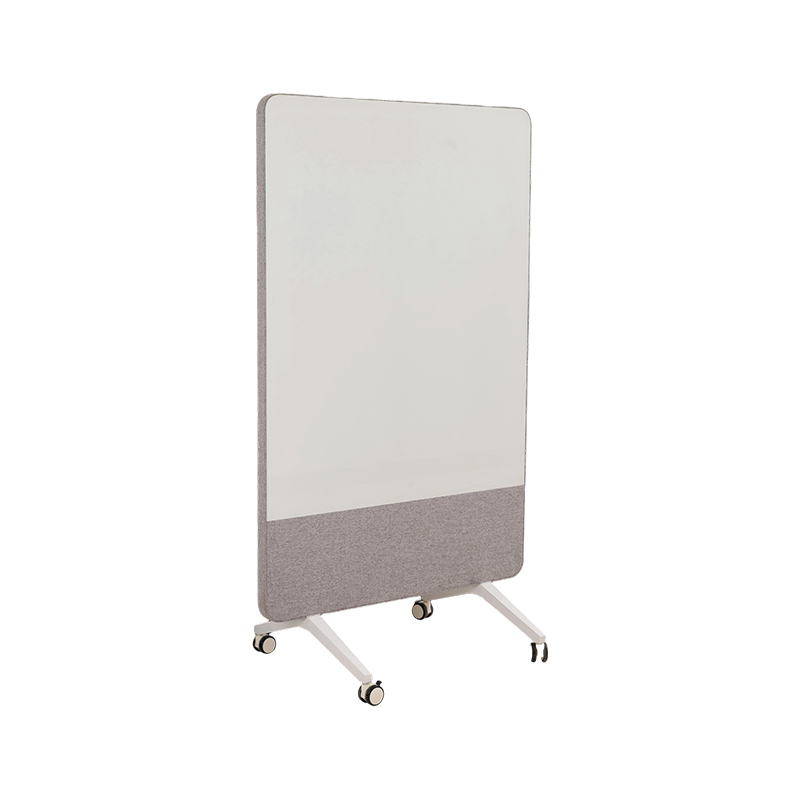
A partition that is only a sound absorber is a single-purpose asset. New systems integrate PET felt writing boards that let a meeting-room wall become a note-taking surface, and ceiling baffles that double as lighting. The most practical example for offices is the acoustic writing board: a wall panel that absorbs speech noise and works as a whiteboard. Our PET acoustic writing board is designed for meeting rooms that need both acoustical absorption and a writable surface.
 Wholesale Modern White Acoustic Writing Board Soundproof Polyester Fiber Panels Yayin New Materials Jiangsu Co.,Ltd. Is China Wholesale Modern White Acoustic Writing Board Soundproof Polyester Fiber Panels for Home Of...View Product →
Where multi-functional partitions matter most
- Meeting rooms: a PET acoustic writing board replaces a whiteboard and adds absorption to the wall.
- Open offices: desk screens with printed or fabric surfaces carry branding and control adjacent speech.
- Hybrid rooms: zippered partitions combine acoustic closure with a writable or magnetic surface.
Design note: A meeting room with a glass wall and acoustic writing board will still need a soft furnishing or acoustic panel on the opposite wall to control reverberation. Multi-function does not replace acoustical balance.
What This Means for Specifiers and Facility Managers
The future of acoustic office partition systems is a system decision, not a product purchase: reconfiguration, sustainability, certified performance, and multi-functionality must be specified together.
- Ask for the NRC test report before approving samples. An NRC of 0.80 or higher is a reliable baseline for open-plan screens.
- Check fire certificates: ASTM E84 Class A or EN13501-1 Class B covers most commercial and education projects.
- Specify recycled PET cores with E0 emission when the project targets LEED, BREEAM, or WELL credits.
- Choose a family of mobile, freestanding, and zippered modules so the floor plan can change without new construction.
- Use writing-surface partitions to remove separate whiteboards and reduce total furniture count.
Bottom line: the acoustic partition system is becoming the building's most flexible acoustical asset. Treat it as a long-term kit of parts, and it will outperform drywall on cost and sustainability from the first reconfiguration.
Frequently Asked Questions on Acoustic Office Partition Trends
What is an acoustic office partition system?
An acoustic office partition system is a panel assembly that absorbs sound, controls speech distraction, and defines work zones without permanent wall construction. It includes freestanding screens, desk-mounted dividers, zippered partitions, and acoustic writing boards.
Do acoustic office partitions block noise or absorb it?
Most open-plan office partitions absorb sound rather than block it. They reduce reverberation and speech distraction. A full-height partition with mass, seals, and high STC is required when the goal is preventing sound from passing through a room boundary.
Which performance certificates matter for acoustic office partitions?
The essential documents are an NRC test report under ASTM C423 or ISO 354, a fire classification under ASTM E84, EN13501-1, or UL723-2018, and a formaldehyde emission rating such as E0. For projects with sustainability goals, recycled content data and VOC emissions reports are also required.
Are PET felt partitions suitable for open-plan offices?
Yes. PET felt partitions with an NRC of 0.85 control speech levels and echo in open-plan workstations, especially when paired with ceiling baffles and desk screens. They are lighter, safer to handle, and easier to recycle than fiberglass-based alternatives.
Still comparing systems? Start with a freestanding PET felt partition that carries NRC 0.85 and an ASTM E84 Class A certificate, then verify the fire and emission documentation before sample approval.


