


 English
 Español
 عربى
عربى
 中文简体
中文简体



+86-180 3665 1199
Content
- 1 1. NRC Rating Determines Whether a Partition Absorbs Speech
- 2 2. Core Density and Thickness Shape the Absorption Curve
- 3 3. Fire Safety and Emission Certifications Set Hard Quality Boundaries
- 4 4. Edge Treatment and Frame Construction Decide Boundary Behaviour
- 5 5. Installation and Flanking Paths Decide Field Performance
- 6 6. Durability and Lifecycle Cost Determine the Real Price
- 7 Frequently Asked Questions About Acoustic Office Partition Quality
A facilities manager once ordered 60 freestanding acoustic office partitions based on catalog photos alone. After installation, speech privacy tests showed a sound reduction of barely 30 percent, because the panels used a thin 9 mm PET felt core with no edge sealing. The partitions looked identical to a higher-performing model at nearly the same price. The difference came down to measurable specifications: NRC rating, core density, fire class, edge treatment and installation details.
This guide defines the factors that actually determine acoustic office partition quality, so procurement and design teams can compare products on verified performance rather than appearance.
1. NRC Rating Determines Whether a Partition Absorbs Speech
The noise reduction coefficient (NRC) is the most decisive quality factor for an acoustic office partition, because it quantifies the fraction of sound energy that a panel absorbs instead of reflecting back into the room. A partition with NRC 0.85 absorbs about 85 percent of incident sound; a decorative panel rated 0.55 absorbs barely more than half.
NRC is averaged across four test frequencies covering the human speech range, which makes it the first number to compare in open offices, meeting rooms and hot-desking areas where conversation is the dominant noise source.
| NRC range | Typical use | Speech privacy effect |
| 0.50 - 0.60 | Decorative panels, general wall covering | Modest absorption; noticeable echo remains |
| 0.65 - 0.75 | Meeting room walls, basic partition screens | Clear reduction in reflected speech |
| 0.80 - 0.90 | Freestanding partitions, desk screens, confidential areas | Strong absorption; speech intelligibility drops sharply |
When comparing products, request the NRC test report rather than trusting titles. Many panels claim to be sound absorbing without publishing a measured coefficient or the test standard. Our guide to NRC ratings and speech distraction in offices explains how to read laboratory data and avoid inflated figures.
NRC 0.85 is the practical ceiling for polyester fibre acoustic partitions, and it is only achieved with full-surface absorption cores of 24 mm or thicker.
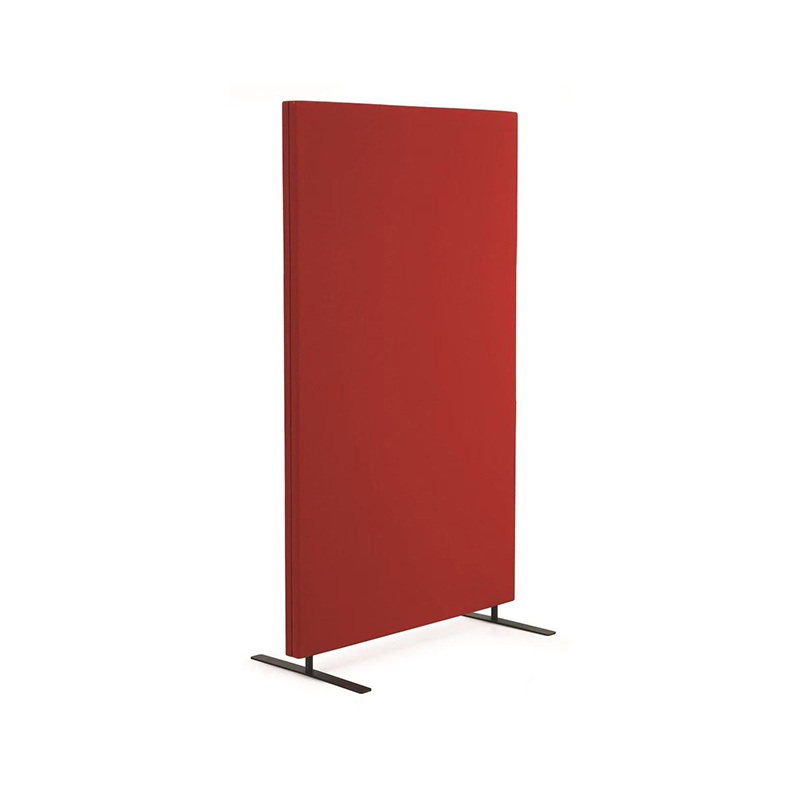
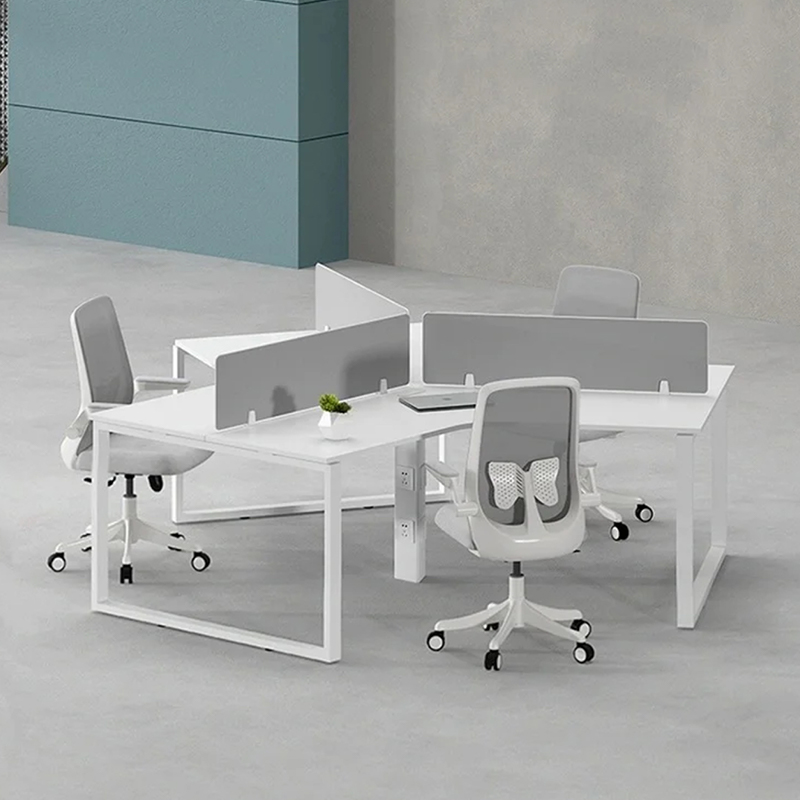
For open-plan layouts, specify partitions with a verified NRC of at least 0.80. The 1650 by 600 mm freestanding polyester partition screen from Yayin New Materials Jiangsu Co., Ltd. combines a 28 mm core with full-face absorption, the construction needed to reach the top of this range.
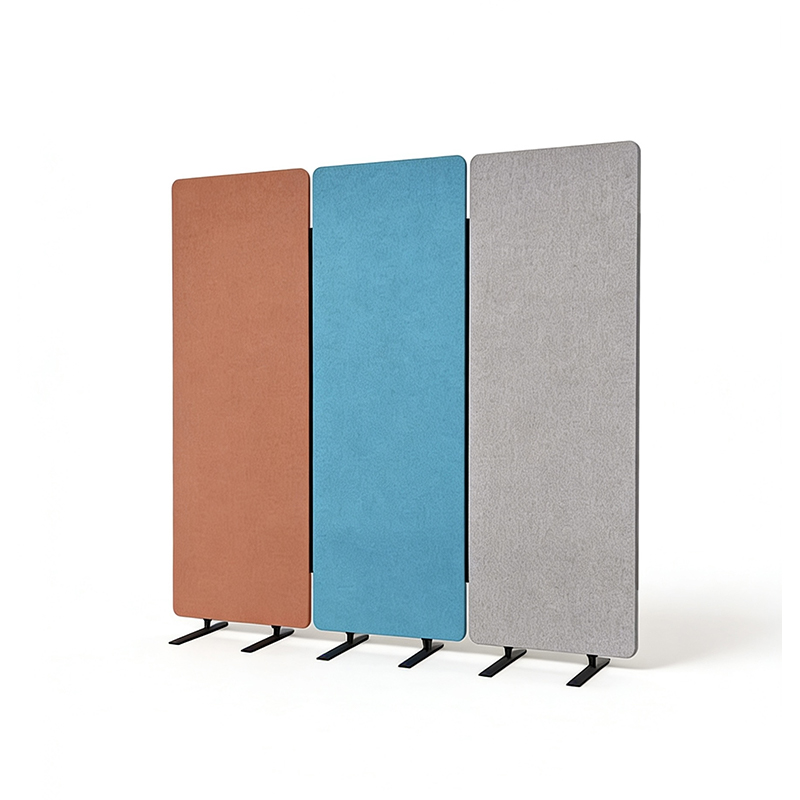 Wholesale 1650×600×28mm Office Acoustic Freestanding Partition Screen Suppliers,Yayin New Materials Jiangsu Co.,Ltd. Is China Wholesale 1650×600×28mm Office Acoustic Freestanding Partition Screen Suppliers, Factory an...View Product →
NRC rating by partition core thickness
2. Core Density and Thickness Shape the Absorption Curve
The density and thickness of the polyester fibre felt core control both the acoustic absorption curve and the structural stability of a partition. A 28 mm panel at roughly 240 to 280 kg per cubic metre absorbs noticeably more mid-frequency speech energy than a 9 mm decorative felt, and it holds its shape in a freestanding frame for years.
28 mm Core thickness
240-280 kg/m3 Density range
100% Recycled PET
Material quality is visible in three measurable areas:
- Recycled content: 100 percent recycled PET felt provides antimicrobial, washable and fully recyclable properties, which is why it dominates specification-grade office partitions.
- Density discipline: felt below 200 kg per cubic metre compresses at the edges and loses absorption in the 500 to 1000 Hz band, exactly where speech intelligibility is highest.
- Needle-punched bonding: the quality of the needling process determines whether the core resists permanent deformation after months of contact with chairs, bags and cleaning equipment.
The absorption curve matters more than the thickness number: a low-density felt panel absorbs poorly at 500 to 1000 Hz even when it is visually thick.
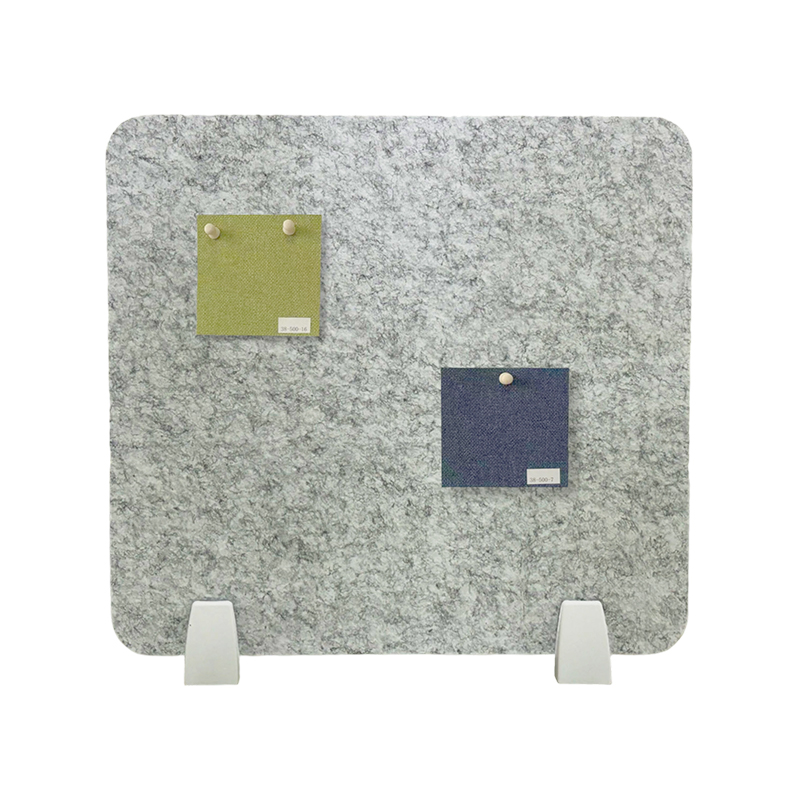
The same needle-punched construction appears in our fabric wrapped acoustic panel room dividers, which add a clean visual surface while keeping the speech-frequency absorption that density provides.
 Wholesale Eco-friendly Acoustic Panels for Office Partition Room Dividers FabricYayin New Materials Jiangsu Co.,Ltd. Is China Wholesale Eco-friendly Acoustic Panels for Office Partition Room Dividers Fabric Wrapped Co...View Product →
3. Fire Safety and Emission Certifications Set Hard Quality Boundaries
Every acoustic partition for commercial installation must meet documented fire and emission standards, and the achieved certification class separates a specification-grade product from a decorative one. Polyester felt does not feed flame at typical densities, but additives, glue lines and surface finishes change behaviour, which is why third-party testing is mandatory.
- ASTM E84 Class A for flame spread and smoke development in the United States
- EN13501-1 B-s1,d0 for European construction product classification
- UL723-2018 Class A for surface burning characteristics
- E0 grade formaldehyde emission, the strictest level in the Chinese national standard
Avoid products that only state fire retardant without naming a standard. The certificate document must show the standard, the achieved class, the issuing laboratory and the date. Our fire rating and eco certification guide for acoustic partitions covers each requirement in further detail.
Fire retardant is a marketing phrase. A certification is a document naming the standard, the achieved class, the laboratory and the test date.
4. Edge Treatment and Frame Construction Decide Boundary Behaviour
Sound enters a partition through its faces, but it escapes through raw cut edges, seams and the gap beneath the screen. Edge treatment and frame rigidity are therefore the second-most-visible differentiators between a quality partition and a display product.
- Sealed seams and covered edges prevent fibre shedding and stop air leaks that bypass the absorbing core.
- Fabric-wrapped panels require continuous wrapping with no exposed staples, folds or loose corners.
- Freestanding units need a base frame stiff enough to keep the panel vertical without bowing or rocking.
- Rounded corners reduce edge damage during relocation and prevent fabric fraying in high-traffic offices.
Edge sealing is a mandatory quality check, not a cosmetic upgrade. An unsealed raw PET edge releases dust and creates a direct path for high-frequency sound, weakening the core absorption.
5. Installation and Flanking Paths Decide Field Performance
Even a high-NRC partition performs poorly when gaps under the panel, between adjacent screens and against walls create flanking paths for sound. In a busy office, the mounting detail is as important as the panel specification.
Fixed Screen Installations
- Weighted base plates and threshold channels close the floor gap completely.
- Screws or clamps to walls and floors prevent movement and keep seals continuous.
- Best for permanent meeting rooms and quiet zones that will not be reconfigured.
Mobile Partitions with Casters
- Reconfiguration takes minutes, which suits hybrid offices that change layout weekly.
- Caster gaps must be closed with brush seals or overlapping floor skirts.
- Zippered side joints link multiple screens into a temporary wall with minimal leakage.
A 10 mm floor gap beneath a freestanding screen can transmit conversational speech almost as clearly as an open gap at low frequencies.
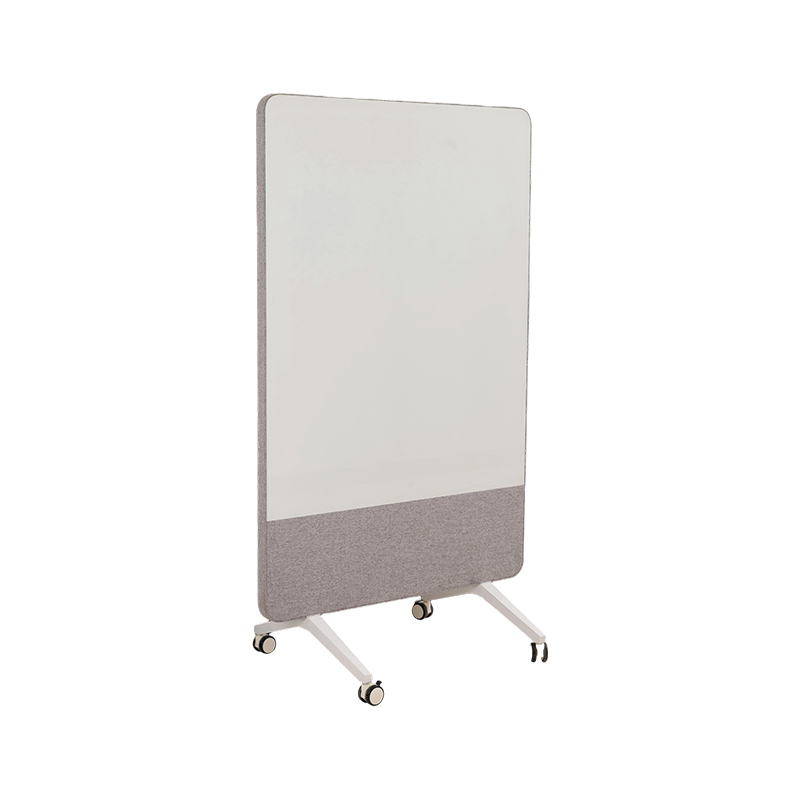
When a mobile unit is the right choice, verify that the caster seal and the inter-panel connector are standard equipment. The soundproof office partition with casters and zippered connector is built so that a row of screens behaves as one continuous barrier rather than several separate panels.
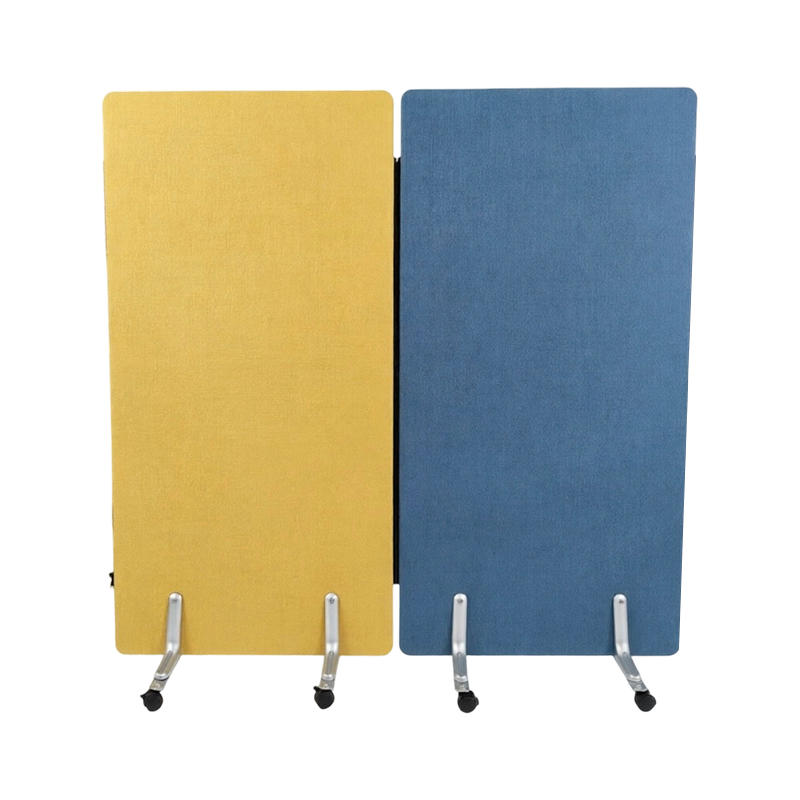 Wholesale Soundproof office partition with casters, zippered office partition SuYayin New Materials Jiangsu Co.,Ltd. Is China Wholesale Soundproof office partition with casters, zippered office partition Suppliers, Fa...View Product →
6. Durability and Lifecycle Cost Determine the Real Price
Quality is a lifecycle property. A partition that maintains its absorption and appearance for five years is cheaper than a lower-spec unit that must be replaced after two years, once installation labour and productivity loss are included.
Surface fabric must resist pilling, stains and edge fraying, and the panel should tolerate steam cleaning without losing shape. PET felt accepts repeated cleaning without delamination, but only when the density and needling quality are sufficient.
The lifecycle view: 60 low-quality partitions replaced after two years cost more than 60 specification-grade panels kept for five, because replacement consumes the purchase price again in labour, downtime and disposal.
Our cost comparison of acoustic office partitions versus drywall construction shows why movable panels beat structural changes whenever reconfiguration is expected within the building's life.
Frequently Asked Questions About Acoustic Office Partition Quality
What NRC rating should an acoustic office partition have?
For speech privacy in open offices and meeting rooms, specify NRC 0.80 or higher with a laboratory test report. Below 0.65, a partition provides decorative damping but not meaningful speech isolation.
Is a thicker partition always better?
Not always, but the 24 to 28 mm core range at 240 to 280 kg per cubic metre delivers the speech-frequency absorption that matters most. Beyond 30 mm, weight and cost rise faster than acoustic benefit.
Do casters reduce acoustic performance?
Yes, unless the caster gap is sealed. A brush seal or floor skirt plus zippered side joints brings a mobile partition close to fixed-screen performance. Without sealing, the floor gap becomes a flanking path.
How do I verify fire and emission certifications?
Ask for the certificate document that names the standard, the achieved class, the laboratory and the date. If the supplier cannot deliver it, treat the claim as unverified.


