


 English
 Español
 عربى
 中文简体





+86-180 3665 1199
Content
- 1 The Functional Difference: Absorption Reduces Reflections, Blocking Stops Transmission
- 2 NRC vs STC: Two Ratings That Cannot Be Converted
- 3 When to Specify Sound Absorbing Panels: Echo, Speech, Reverberation
- 4 When to Specify Soundproofing: Walls, Floors and the Neighbour's Television
- 5 Project Buyer Checklist: Reports, Tolerances and Supply Conditions
- 6 Combined Strategy: Absorb Where the Noise Lives, Block Where It Travels
- 7 Straight Answers to Common Specification Questions
A procurement manager at an architecture firm compares a polyester fiber acoustic panel with a mass-loaded vinyl barrier and sees two products that both claim to "control noise". In service, they do opposite jobs. The absorbing panel changes how long sound keeps bouncing inside a room; the soundproofing barrier changes how much sound moves through a wall. Specifying the wrong one means the client's complaint survives installation and the budget is gone.
Core definition: a sound absorbing panel is a porous, fibrous product that converts airborne sound energy into heat and reduces reflected sound inside a room. A soundproofing panel is a dense, heavy barrier that reduces sound energy travelling from one space to another.
The Functional Difference: Absorption Reduces Reflections, Blocking Stops Transmission
Sound absorbing panels convert airborne sound energy into heat inside a porous fibre matrix, while soundproofing panels add mass and damping to stop vibration moving through a building assembly. The two functions follow different physical laws and are measured with different standards.
Polyester fiber absorbing panels are manufactured by needle-punching recycled PET fiber into a dense felt. When a sound wave enters the open pore structure, friction between air particles and fiber surfaces converts acoustic energy into a small amount of heat. The Noise Reduction Coefficient (NRC), tested under ASTM C423, quantifies the absorbed fraction on a scale from 0.00 to 1.00.
A soundproofing barrier works by transmission loss, which follows the mass law: doubling the surface mass of a panel increases its transmission loss by roughly 6 decibels. Real blocking constructions also use damping layers, decoupled framing and airtight seals, because an unsealed gap can lower a wall's STC rating by 10 points or more.
Sound absorbing panels
Porous PET felt, foam tiles or fabric-wrapped boards that target reverberant energy, rated by NRC, and affect echo and speech clarity inside the room where they are installed.
Soundproofing panels
Mass-loaded vinyl, gypsum layers and sealant systems that target flanking transmission, rated by STC, and affect what a neighbour or an adjoining room hears.
Mass law rule: doubling surface mass adds roughly 6 dB of transmission loss, while a single unsealed gap can erase 10 dB or more from the wall's STC result.
NRC vs STC: Two Ratings That Cannot Be Converted
NRC measures the fraction of incident sound energy that a material absorbs, on a 0.00 to 1.00 scale, while STC measures how many decibels a wall assembly stops from passing through. The two numbers are independent and cannot be converted into each other.
Treating a high-NRC panel as if it blocks noise is the specification error that causes the most rework. A 50-millimeter PET panel with NRC 0.85 does not replace a party wall with STC 50. A gypsum assembly rated STC 55 will bounce conversation around the room if nothing on the interior face absorbs the energy. Read the performance claim, then check which standard produced the number.
| Decision factor | Sound absorbing panels | Soundproofing panels |
| Primary rating | NRC per ASTM C423 | STC per ASTM E90 |
| Physical mechanism | Porous fibre converts sound to heat | Mass, damping and sealing block vibration |
| Effect on echo inside the room | Reduces reverberation and flutter | Limited effect |
| Effect on sound passing through the wall | Adds roughly 3-8 dB in a mounted panel | 30-55 dB in a typical assembly |
| Documents to verify | ASTM C423, ASTM E84, EN13501-1, E0 | ASTM E90, IBC Table 1207.1 assembly report |
| Best-suited spaces | Offices, classrooms, restaurants, theaters | Party walls, plant rooms, studios, hotels |
NRC 0.85
Absorption of a commercial PET fiber panel tested to ASTM C423
STC 50
Code threshold for walls separating dwelling units, IBC Table 1207.1
3-8 dB
Practical transmission contribution of a thick absorber mounted with an air gap
For a deeper breakdown of how absorbing materials are made and rated, read our guide to acoustic panel materials, types and performance metrics.
Representative NRC values from published product data; verify each panel's own ASTM C423 report.
When to Specify Sound Absorbing Panels: Echo, Speech, Reverberation
Select sound absorbing panels when the complaint is echo, poor speech intelligibility or excessive reverberation generated inside the space itself, not noise arriving from outside.
Open-plan offices, classrooms, restaurants and home theaters share the same problem: hard ceilings and walls produce long reverberation times. ANSI S12.60 sets a maximum reverberation time of 0.6 seconds for learning spaces. A 30-square-meter meeting room with a hard ceiling can sit above 1.0 second, so dialogue blurs and people raise their voices.
- Open-plan offices: NRC 0.85 panels reduce speech distraction and improve task focus.
- Classrooms and auditoriums: panels help meet ANSI S12.60 reverberation targets.
- Hotel lobbies and restaurants: panels shorten noise build-up during peak hours.
- Home theaters: the targeted reverberation window is 0.3 to 0.5 seconds.
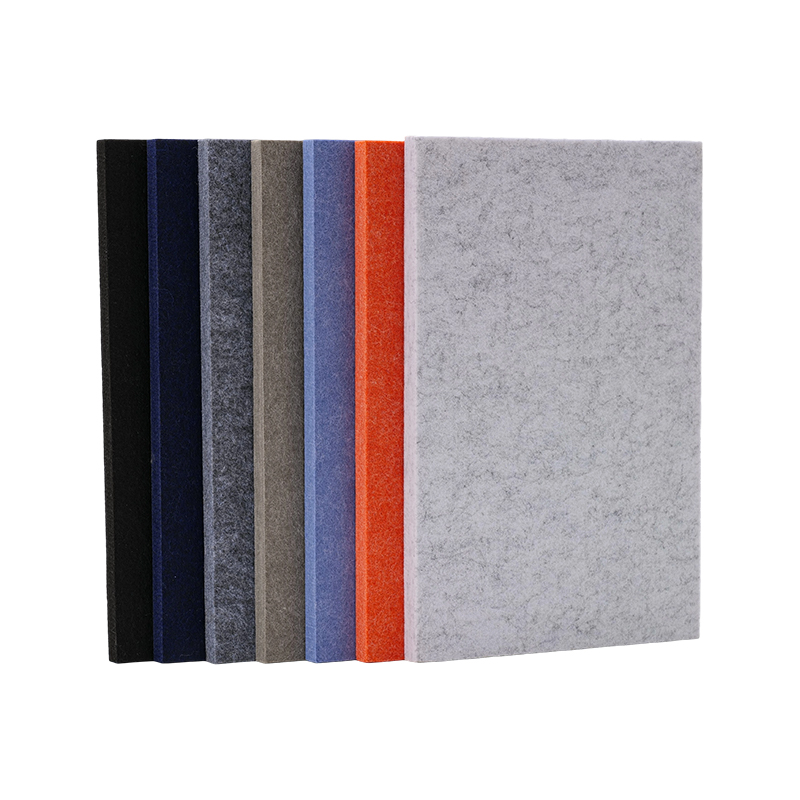
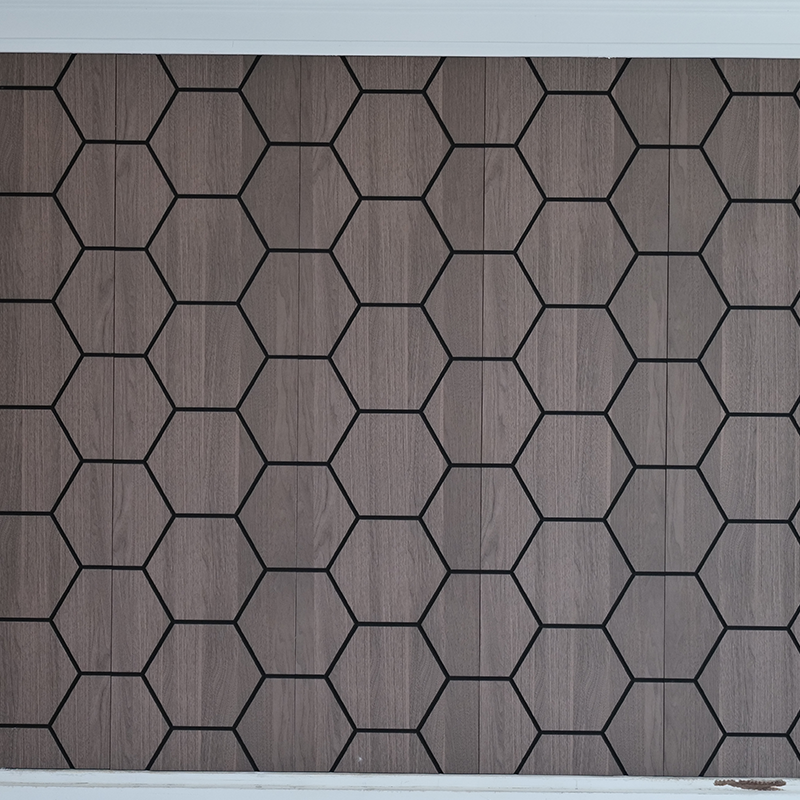
 Spesonic Polyester Fiber Acoustic Wall Panels for Studios and OfficesThese recyclable polyester fiber panels target reverberation in rooms like meeting spaces and home theaters, with low MOQ and customizable sizes for small projects needing effective sound absorption.View Product →
Sabine estimate: in a 30-square-meter room with a 2.8-meter ceiling, covering 40-50% of the wall area with NRC 0.85 panels typically lowers reverberation time from above 1.0 second to under 0.5 seconds.
When to Specify Soundproofing: Walls, Floors and the Neighbour's Television
Choose soundproofing construction when the requirement is to stop speech, music or mechanical noise from moving between rooms or entering from outside.
The reference target comes from building codes. IBC Table 1207.1 requires walls separating dwelling units to achieve STC 50. A standard stud wall with single-layer drywall on each side measures roughly STC 33-35, so meeting the code means adding mass, decoupling and cavity absorption. The same package applies to hotel guestroom separation, mechanical rooms and music practice rooms.
- Add mass to the existing wall: an extra layer of drywall raises the assembly's STC.
- Decouple the framing with resilient channels or staggered studs to break vibration paths.
- Fill the cavity with fibrous insulation to damp resonance between the two faces.
- Seal every penetration: outlets, ducts, pipe sleeves and door perimeters.
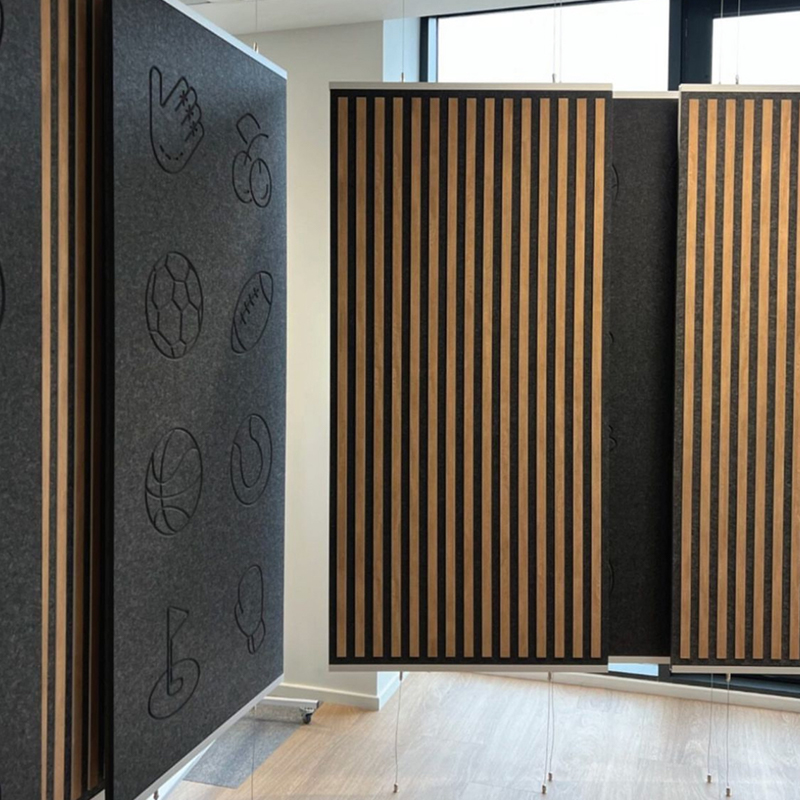
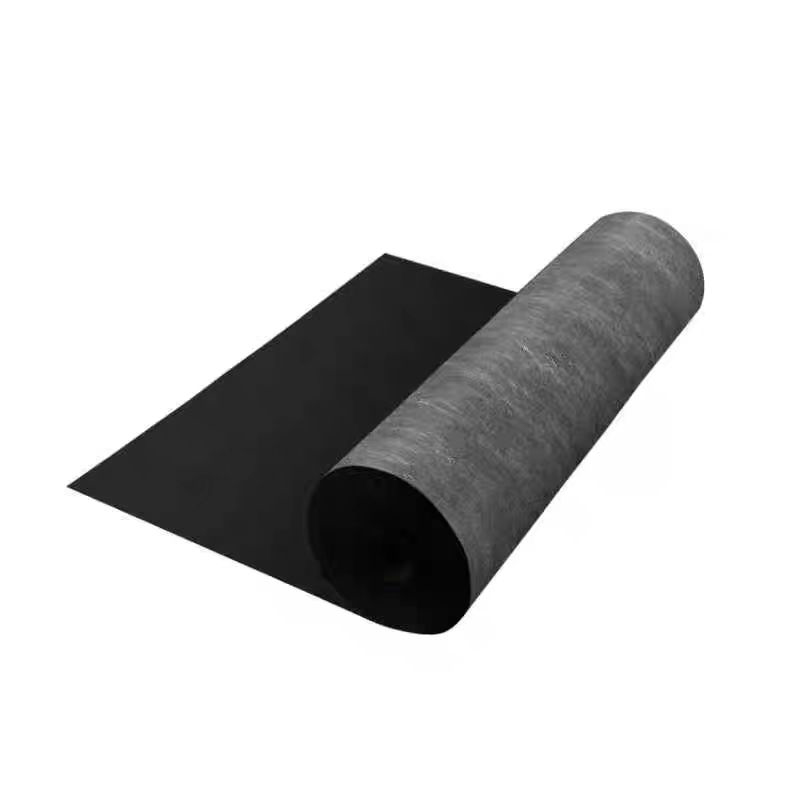 Thin Mass Loaded Vinyl Soundproofing Felt with Polyester PanelsThis rollable soundproofing felt combines MLV and polyester layers to block airborne noise in thin profiles, suitable for walls, floors, and ceilings where space is limited.View Product →
STC 50 is the threshold that IBC Table 1207.1 sets for walls between dwelling units; a standard drywall stud wall delivers only STC 33-35 until mass, decoupling and sealing are added.
Project Buyer Checklist: Reports, Tolerances and Supply Conditions
Compare absorption products by NRC lab report, fire class, formaldehyde grade and density tolerance, and evaluate soundproofing as a complete assembly rather than a single panel.
- Request the ASTM C423 report for every absorbing panel and verify the NRC figure comes from an accredited laboratory.
- Confirm the fire classification: ASTM E84 Class A, EN13501-1 Class B or UL723-2018 Class A, depending on the project jurisdiction.
- Check formaldehyde and VOC grades; specify E0 for schools, offices and other occupied interiors.
- Ask for density and dimension tolerances; PET felt is commonly supplied with a +/-10% density window.
- For soundproofing, request the full assembly STC report including the framing system and fasteners, not a single material number.
- Confirm lead time and custom sizes; a manufacturer such as Yayin New Materials Jiangsu Co., Ltd., with ISO9001 certification, should provide batch records on demand.
For wall and cubicle retrofits, our office soundproofing guide explains how to add blocking layers without rebuilding the entire room.
ISO9001 certification, batch records and an accredited NRC test report are the minimum paper trail for a commercial project specification.
Combined Strategy: Absorb Where the Noise Lives, Block Where It Travels
A room with a noisy neighbour and a long echo needs both an STC-rated assembly and an NRC-rated absorbing layer; one material on its own cannot deliver both.
A home theater is the clearest example. The wall between the theater and a bedroom should reach STC 50 to protect sleep, while the room's reverberation time should sit between 0.3 and 0.5 seconds for film dialogue. The practical package is a decoupled, insulated, fully sealed wall plus NRC 0.85 PET panels covering 30-50% of the interior wall area.
Absorb where the noise lives
Ceiling and wall reflections, speech blur and HVAC rumble are treated with NRC 0.85 panels mounted on the interior faces.
Block where it travels
Party walls, doors, windows and duct penetrations are handled with STC 50-plus assemblies, seals and damped frames.
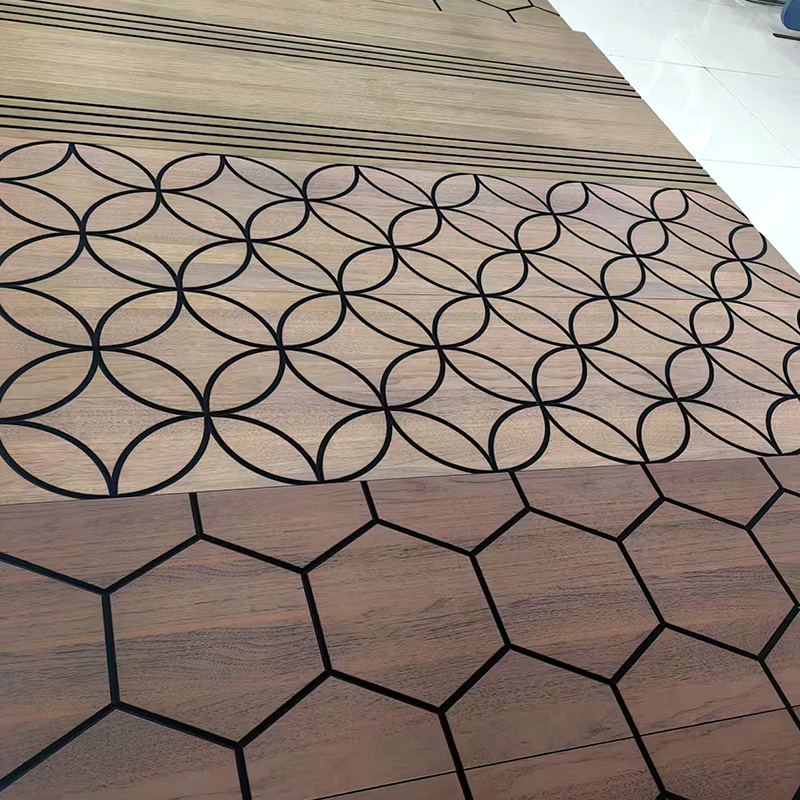
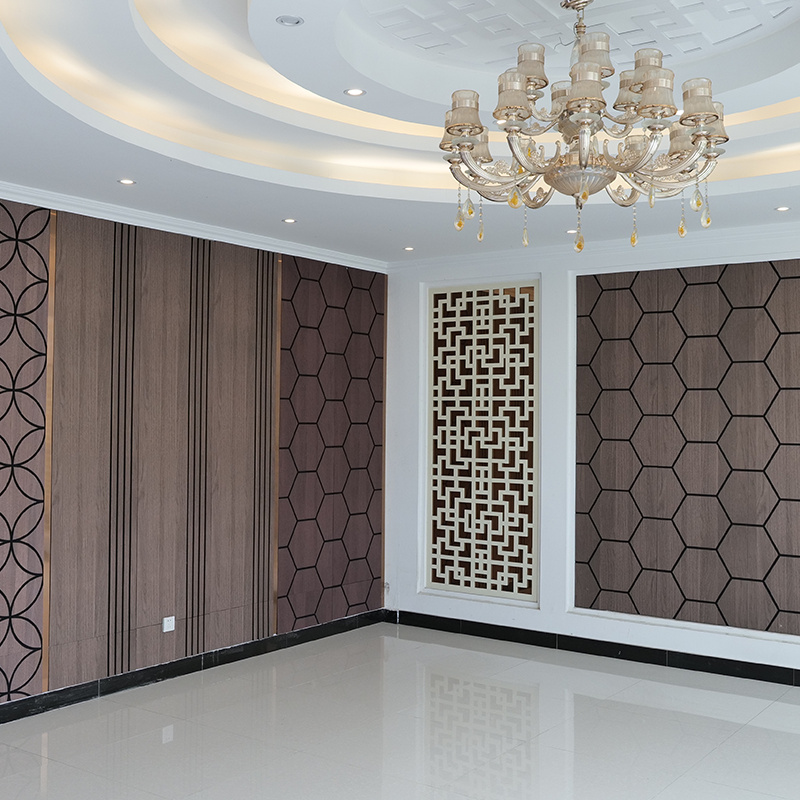
 Customizable Home Theater Acoustic Package with Starry CeilingA modular system for home cinemas that includes sound-absorbing panels, felt, lighting, and steel details, customizable to room dimensions for improved audio and ambiance.View Product →
One material cannot be both a broadband absorber and a mass barrier. If the programme demands both, budget for both.
Straight Answers to Common Specification Questions
The three questions below cover the specification errors that cause the most rework on commercial acoustic projects.
Can sound absorbing panels block noise from the adjoining office?
No. An NRC 0.85 polyester panel absorbs reflected sound in the room where it is installed and contributes roughly 3-8 decibels of practical transmission loss when mounted with an air gap. To stop conversation passing through a wall, specify an assembly rated STC 50 or higher under ASTM E90.
Does a soundproofing panel also absorb sound?
Usually not. Dense barrier materials such as mass-loaded vinyl have NRC values below 0.2 and will increase reverberation if left exposed. For rooms that need both functions, install PET fiber or fabric-wrapped absorbing boards on the interior face and high-mass construction inside the wall cavity.
What laboratory documents should a buyer request from a factory?
Ask for the ASTM C423 NRC report, the ASTM E84 or EN13501-1 fire classification, the E0 formaldehyde emission certificate and the ISO9001 quality system certificate. Confirm the density tolerance, commonly +/-10% for PET felt, and request dimension tolerances for the specified thickness.
Final rule for buyers: absorption panels fix the room, soundproofing panels fix the wall. Specify the metric that matches the complaint.


