


 English
 Español
 عربى
عربى
 中文简体
中文简体





+86-180 3665 1199
Content
- 1 What Are Eco Friendly Acoustic Panels and How Do They Work
- 2 Why Eco Friendly Acoustic Panels Are Preferred
- 3 Where Eco Friendly Acoustic Panels Are Used
- 4 Common Types of Eco Friendly Acoustic Panels
- 5 How Eco Friendly Acoustic Panels Are Manufactured
- 6 Factors to Consider When Choosing Acoustic Panels
- 7 Eco Friendly Acoustic Panels Compared with Other Solutions
- 8 Customization Options
- 9 Where Acoustic Panel Design Is Headed Next
- 10 Conclusion
Architects and interior designers are turning to eco friendly acoustic panels to control noise in offices, schools, healthcare facilities, and hospitality spaces without relying on the petroleum-based foam and dense mineral boards that have long dominated acoustic treatment. Made from recycled PET fiber, wood fiber, or reclaimed textile material, these panels absorb sound as effectively as conventional acoustic products while adding a decorative, design-forward surface finish rather than an industrial-looking add-on.
0.85
Typical NRC rating for mid-thickness panels
60%+
Average recycled material content by panel weight
<1hr
Typical wall-mounted installation time per panel run
What Are Eco Friendly Acoustic Panels and How Do They Work
An eco friendly acoustic panel is a rigid or semi-rigid board made from recycled or renewable fiber material, designed to absorb sound energy rather than reflect it back into a room. Sound waves striking the panel surface pass into the porous fiber structure, where friction between the fibers converts acoustic energy into a small amount of heat instead of letting it bounce back as reverberation or echo.
The porosity and thickness of the fiber core determine how much of the sound spectrum a panel absorbs, which is why panel thickness and density are selected based on the frequency range that needs to be controlled in a given space, from the low rumble of HVAC systems to the higher-frequency chatter of an open office.
Eco Friendly Panels vs Traditional Soundproofing Materials
Conventional acoustic foam absorbs sound well but is petroleum-derived, difficult to recycle, and typically limited to a narrow range of surface finishes. Eco friendly panels made from recycled PET or wood fiber deliver comparable or better absorption performance while using post-consumer or renewable raw material, and they accept a far wider range of decorative surface treatments, letting acoustic treatment double as a visible design element instead of a material to conceal.
Why Eco Friendly Acoustic Panels Are Preferred
Excellent Sound Absorption
High NRC-rated panels reduce reverberation and speech noise significantly in hard-surfaced rooms.
Sustainable Materials
Recycled PET fiber and reclaimed wood fiber reduce the raw material footprint compared with foam or mineral products.
Decorative Finishes
Fabric, wood slat, and molded surface options let panels function as a visible architectural feature.
Lightweight Installation
Low panel weight allows wall or ceiling mounting without the structural reinforcement heavier materials require.
Long-Term Durability
Fiber-based panel cores resist sagging and degradation, holding acoustic performance over years of use.
Where Eco Friendly Acoustic Panels Are Used
Office Buildings
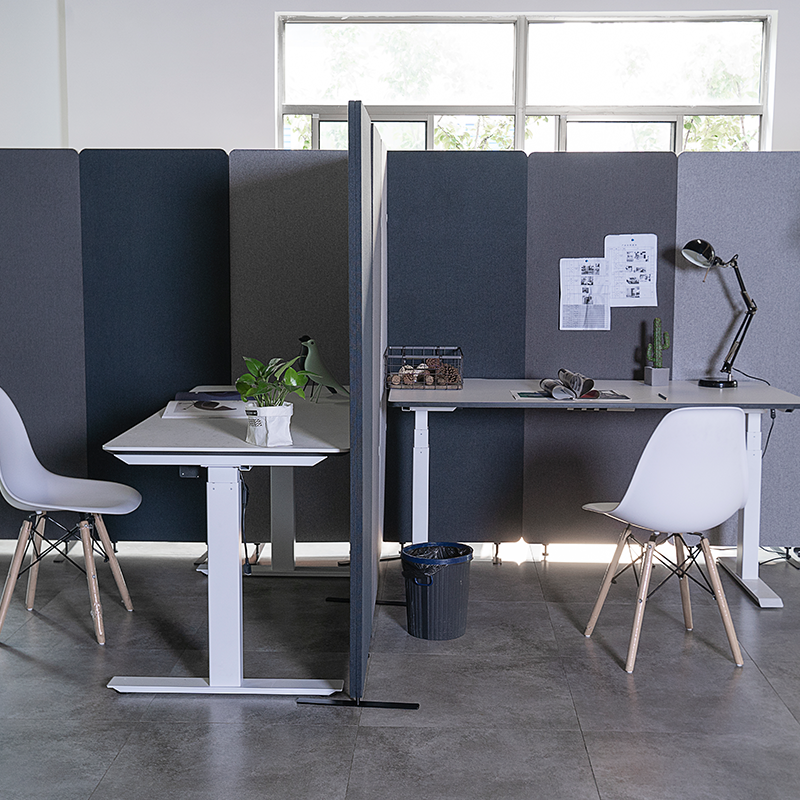
Open-plan offices use wall and ceiling panels to cut speech noise and improve concentration.
Educational Facilities
Classrooms use acoustic treatment to improve speech clarity for both teachers and students.
Hotels and Hospitality
Lobbies and guest corridors use decorative panels to control noise without disrupting interior design.
Residential Interiors
Living rooms and home offices use panels to reduce echo in hard-surfaced, open-concept spaces.
Conference Rooms
Meeting spaces use targeted wall treatment to improve call clarity and reduce cross-room noise bleed.
Recording Studios and Venues
Music and entertainment spaces use higher-density panels tuned to specific frequency absorption targets.
Healthcare Facilities
Hospitals and clinics use acoustic treatment to lower ambient noise in patient-facing areas.
Retail Stores
Shopping environments use ceiling and wall panels to control noise buildup in high-traffic areas.
Common Types of Eco Friendly Acoustic Panels
- PET acoustic panels — made from recycled polyester fiber, available in a wide color and texture range
- Wood fiber acoustic panels — dense wood wool or fiber boards offering strong low-frequency absorption
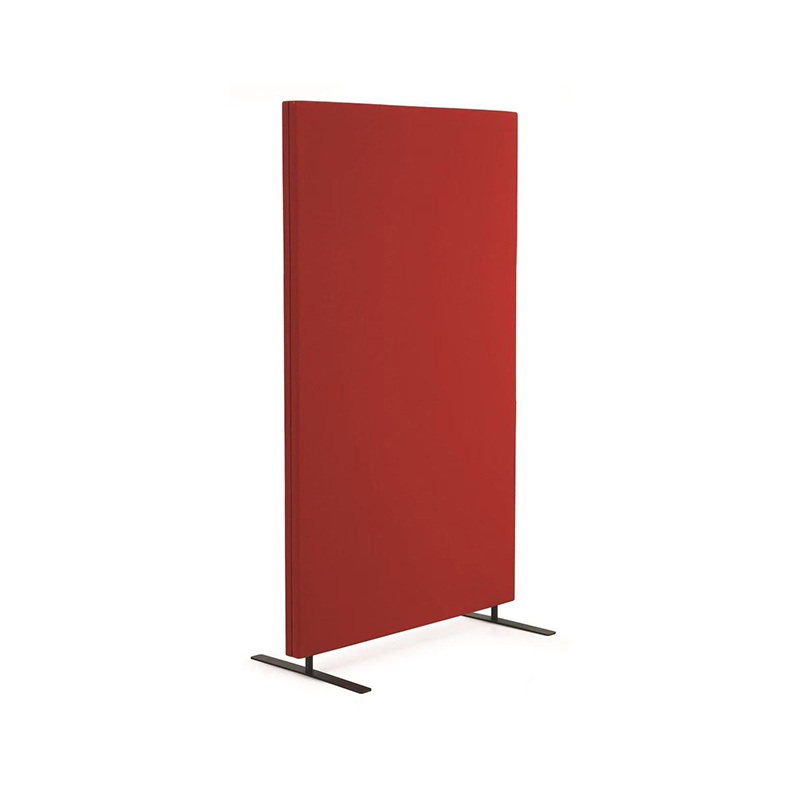
- Fabric wrapped acoustic panels — a fiber core wrapped in decorative fabric for a soft, upholstered look
- Slatted wood acoustic panels — wood slats over an absorptive backing, combining acoustic function with a natural finish
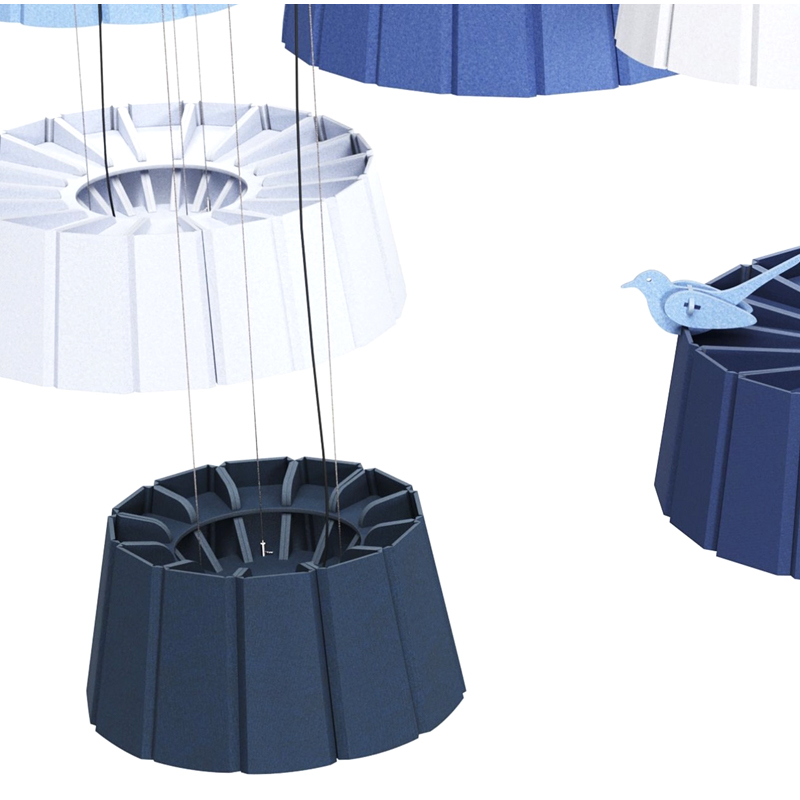
- Ceiling acoustic panels — suspended or surface-mounted panels sized for overhead sound control
How Eco Friendly Acoustic Panels Are Manufactured
1
Raw material selection
2
Panel forming and compression
3
Surface finishing
4
Testing and inspection
Recycled polyester or wood fiber is prepared and blended to the target density before being formed under heat and pressure into rigid or semi-rigid panel boards. Surface finishing follows, whether that means laminating a decorative fabric, applying a wood veneer, or leaving the fiber surface exposed in its natural texture. Finished panels undergo NRC absorption testing and dimensional inspection before packaging.
Factors to Consider When Choosing Acoustic Panels
Sound absorption performance
NRC rating should match the reverberation problem the space actually has.
Material sustainability
Recycled content and end-of-life recyclability vary meaningfully between panel types.
Fire resistance
Commercial and institutional projects typically require a specific fire rating classification.
Design and finish
Color, texture, and shape options should suit the visual design of the finished space.
Installation and maintenance
Wall or ceiling mounting method should match the structural and access conditions of the room.
Eco Friendly Acoustic Panels Compared with Other Solutions
vs Acoustic Foam
Comparable absorption with far greater surface finish variety and better recyclability.
vs Gypsum Acoustic Boards
Lighter weight and easier installation, with less structural reinforcement required.
vs Fabric Wall Systems
Similar decorative flexibility with a more consistent, factory-controlled acoustic rating.
Customization Options
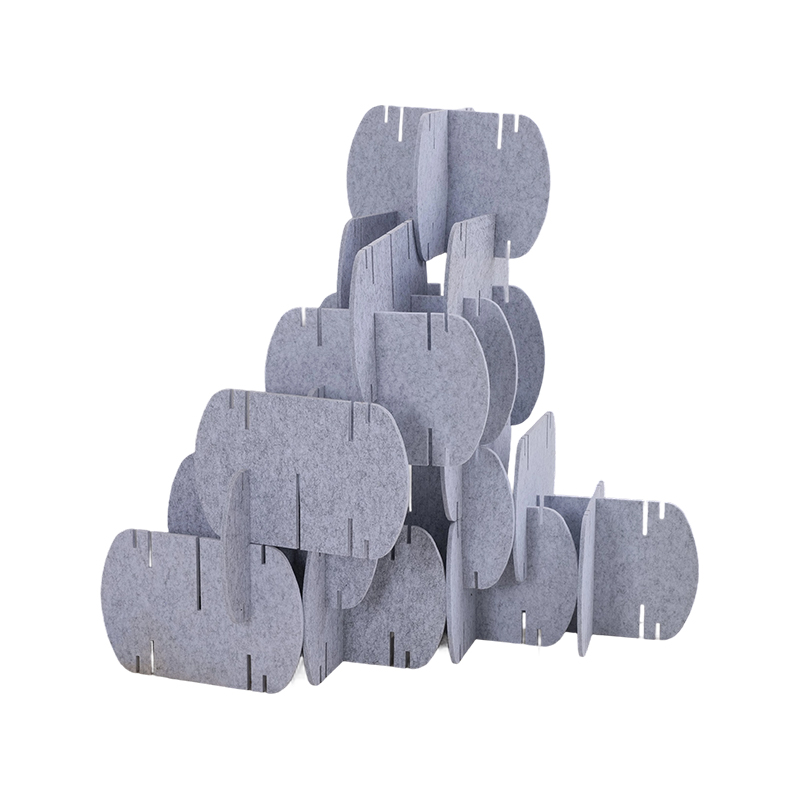
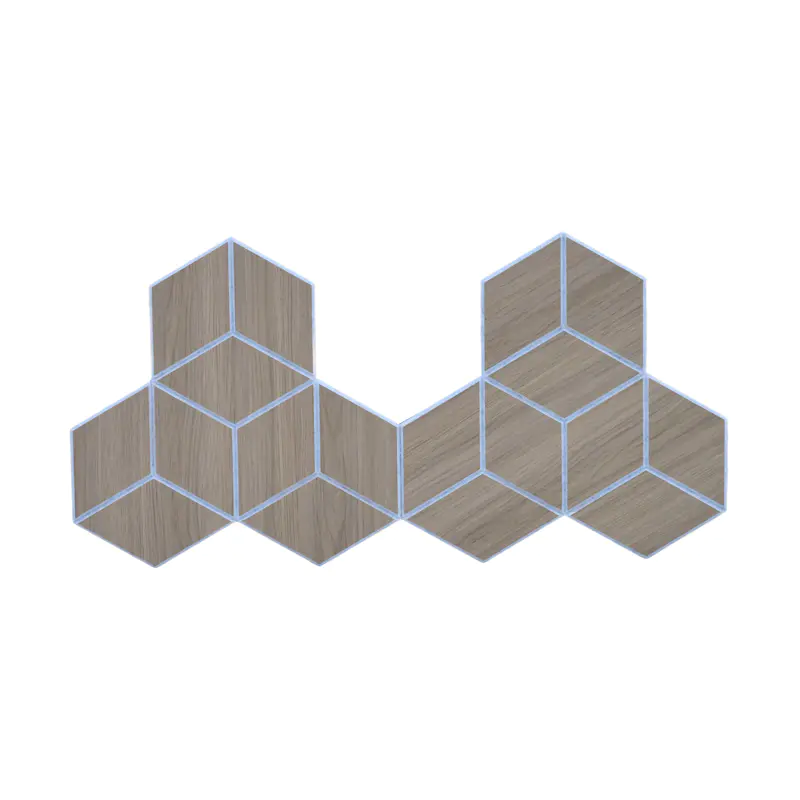
Panel size, thickness, color, surface texture, and acoustic performance can all be specified independently, allowing a single acoustic panel program to serve everything from a quiet residential accent wall to a fully tuned recording studio installation. Custom shapes and modular mounting systems are increasingly requested for projects that want acoustic treatment to double as a distinct architectural feature.
Where Acoustic Panel Design Is Headed Next
Green building certification requirements are pushing more commercial and institutional projects toward recycled-content acoustic materials as a standard specification rather than an optional upgrade. Recycled material use continues to expand across panel types, and manufacturers are increasingly integrating acoustic and decorative function into a single product rather than treating sound control and interior design as separate specifications. Modular, reconfigurable panel systems are also gaining ground in spaces that need acoustic layouts to adapt as room use changes over time.
Conclusion
Eco friendly acoustic panels give architects and designers a way to solve real noise problems in offices, schools, healthcare facilities, and hospitality spaces while meeting sustainability goals that older foam and mineral-based products were never built around. With PET, wood fiber, fabric-wrapped, and slatted wood options available across a wide range of NRC ratings and finishes, eco friendly acoustic panels are becoming the default rather than the alternative choice in modern interior acoustic design.


