


 English
 Español
 عربى
 中文简体






+86-180 3665 1199
Content
- 1 Start With a Room Performance Goal, Not a Price List
- 2 The Five Specification Figures That Control Acoustic Performance
- 3 How to Verify Test Reports and Certifications
- 4 Samples Are Only Valid When They Match the Final Product
- 5 What to Ask a Manufacturer Before You Commit
- 6 Acoustic Performance at a Glance
- 7 Frequently Asked Questions
Five quotations sit on your desk. The first panel claims NRC 0.95, the second NRC 0.88, and the third simply says "high sound absorption." Thicknesses vary from 9 mm to 24 mm. Densities are not stated. One quote includes a fire certificate; another does not. Which do you order?
None of them — not yet. A valuable acoustic panel quotation is the one you can compare against a written performance specification. This guide explains the exact specifications to check before committing to a bulk order, and how to verify that the panel you receive matches what was tested.
Every B2B acoustic panel order should include a specification sheet with thickness, density, NRC, fire class, and emission limit. Without those five numbers, you are comparing marketing claims.
Start With a Room Performance Goal, Not a Price List
Define the room's noise problem before opening a catalog. An office with speech privacy complaints needs a different absorption profile than a home theater or a restaurant. Ask what the space sounds like now: excessive reverberation, poor speech clarity, or noise leaking between rooms? That answer determines the target NRC, panel thickness, and mounting strategy.
The Noise Reduction Coefficient (NRC) is a single-number rating that represents the average fraction of sound energy absorbed by a material across four standard frequencies (250, 500, 1000, and 2000 Hz). An NRC of 0.85 means 85 percent of the incident sound is absorbed in those bands.
A 24 mm panel with NRC 0.85 mounted in front of a 50 mm air gap can behave completely differently from the same panel glued flat to concrete. The mounting condition belongs in the specification.
The Five Specification Figures That Control Acoustic Performance
Five numbers must appear on every B2B acoustic panel RFQ: thickness, density, NRC, fire class, and formaldehyde emission. Each one changes how the panel performs, costs, and is accepted by inspectors.
- Thickness – 9 mm to 24 mm. Low-frequency absorption rises with thickness, but the effect weakens when the mounting gap is small.
- Density – 1,500 to 2,200 gsm. Higher density increases stiffness and mid-frequency absorption, but it adds weight and cost.
- NRC – 0.55 to 0.85. Specify NRC 0.80 or higher for open offices, and NRC 0.85 or higher for conference rooms and theaters.
- Fire class – ASTM E84 Class A or EN 13501-1 Class B/A2 are the most common commercial requirements.
- Formaldehyde emission – E0 (less than or equal to 0.5 mg/L) for indoor projects that need low-VOC compliance.
| Parameter | Suitable Range | Notes |
| Thickness | 9–24 mm | 24 mm for low-frequency emphasis |
| Density | 1,500–2,200 gsm | Higher density for partitions |
| NRC | 0.55–0.85 | Always state the mounting gap |
| Fire class | ASTM E84 Class A | EN 13501-1 B or A2 accepted |
| Formaldehyde | E0 ≤0.5 mg/L | Require report on final product |
Do not compare two quotations by NRC alone. A 9 mm panel with NRC 0.65 is not an alternative to a 24 mm panel with NRC 0.85 when the project needs low-frequency control.
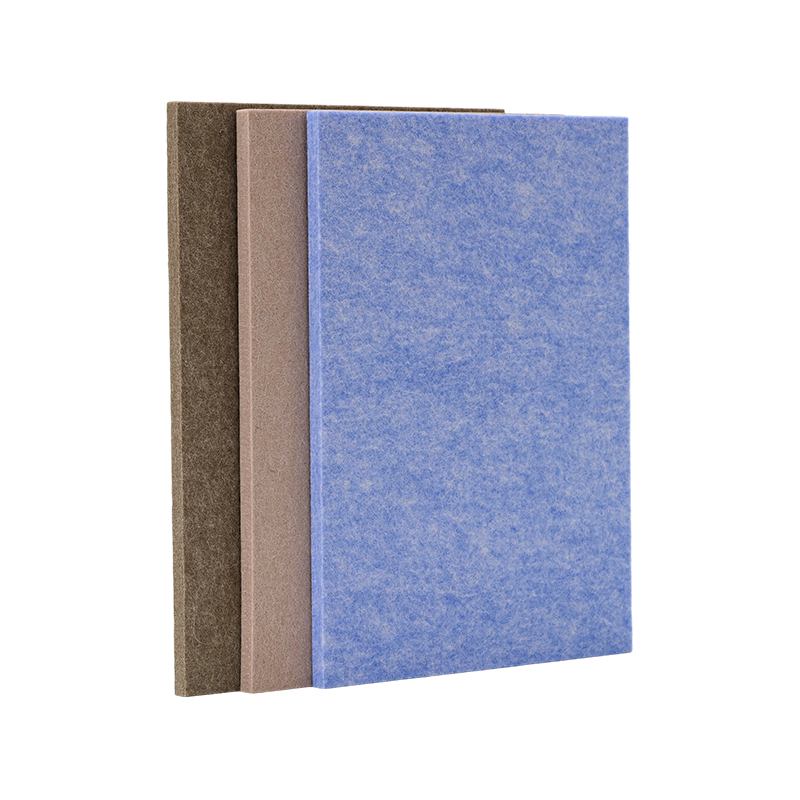 Polyester Fiber Sound-Absorbing Board with 9mm and 12mm Thickness OptionsThis lightweight PET panel offers an affordable solution for mid-high frequency noise control. Its 1220x2420mm size and simple installation reduce labor costs, but note that its thinner profile may not match thicker alternatives for low-frequency absorption.View Product →
How to Verify Test Reports and Certifications
A certification name on a product page is a marketing claim. A full test report with the tested thickness, density, and mounting condition is evidence. For fire safety, ask for the ASTM E84 or EN 13501-1 report and check the product name, thickness, and test sample description.
A Class A rating for a 24 mm panel does not automatically apply to a 9 mm panel. For NRC, request the original absorption test result with the mounting method. If the report was issued for a 24 mm panel with a 50 mm air gap, installing the same panel without a gap changes the result. For a deeper look at how to read absorption measurements, see our guide on verified NRC metrics.
Ask the supplier: "Was the NRC report issued for the exact thickness I am ordering, with the same mounting method?" If the answer is unclear, request the full report.
Samples Are Only Valid When They Match the Final Product
A sample can show surface color and texture, but it cannot prove production consistency unless the same raw material, density, and fire-retardant system are used. Always request samples that match the final specification: same thickness, same backing, same finish.
What the sample shows
Color accuracy, surface texture, edge profile, light reflection.
What production must verify separately
Raw material batch, density tolerance, NRC and fire certificate for the same thickness, dimensional tolerance.
A fabric-wrapped sample that passes visual inspection may perform differently in production if the backing density changes. The sample is a reference for appearance, not a guarantee of acoustic performance.
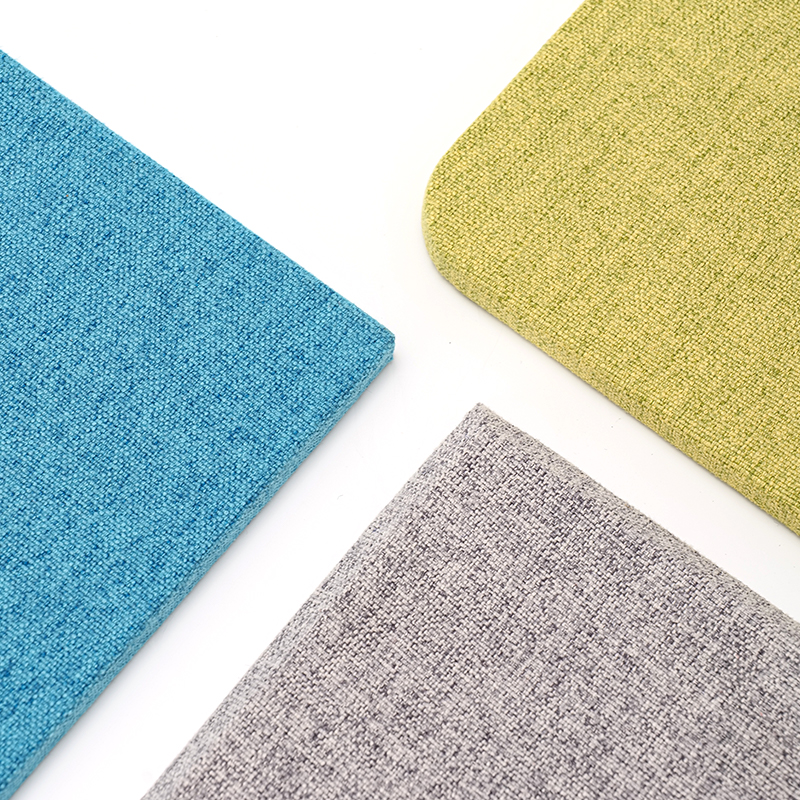 Fabric-Wrapped Acoustic Panels with Customizable Sizes and Fabric ChoicesThis panel combines a polyester fiber core with a fabric or leather covering for a polished finish. With sizes from 600x600mm to 1200x1200mm and options like linen or velvet, it suits conference rooms and hotels while providing noise absorption.View Product →
What to Ask a Manufacturer Before You Commit
The supplier's answers about raw materials, quality control, and packaging reveal more than any brochure. Use the RFQ stage to ask questions that expose real manufacturing discipline, because the cost of a mistake is high once a container or a full pallet order is in production.
- Raw material traceability – can they identify the PET recycled batch in each production run?
- In-process control – what tests happen after needling, cutting, and finishing?
- Tolerances – what is the accepted thickness deviation, ±0.5 mm or ±1 mm?
- Lead time – how many days after deposit confirmation does production finish?
- MOQ and variability – do changes in color or size change the minimum order quantity?
- Packaging – is each pallet wrapped with edge protection to avoid transit damage?
At Yayin New Materials Jiangsu Co., Ltd., we apply this checklist in our production process across our three factories in Jiangsu, Zhejiang, and Jiangxi. Our polyester fiber panels carry an NRC of 0.85 along with ASTM E84 Class A and EN 13501-1 B certifications. You can review our factory background and request a quote directly.
A manufacturer that answers tolerances with a number — not "we control it well" — is ready for a B2B order.
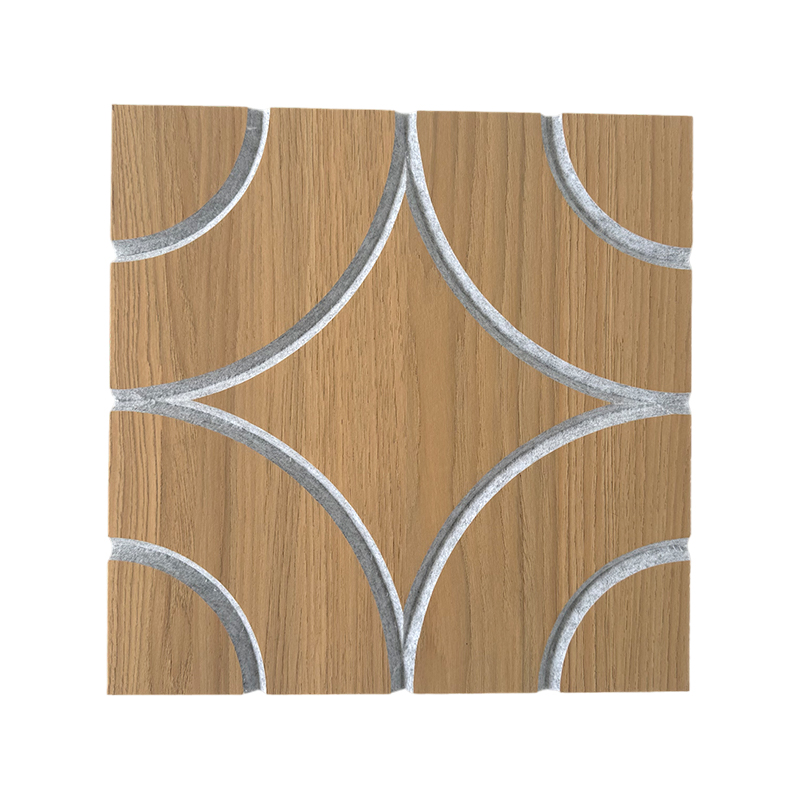
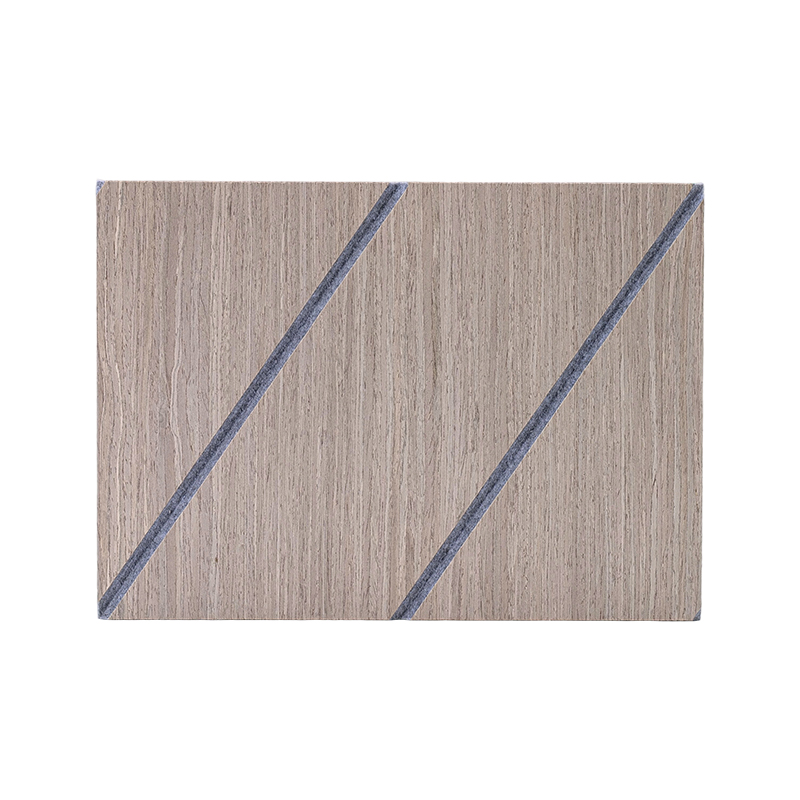 Wood Veneer Acoustic Panel with Grooved Surface and Polyester Fiber BaseThis heat-pressed panel merges real wood veneer with a sound-absorbing polyester core, offering a natural aesthetic for hotels and offices. Available in 10mm or 13mm thicknesses and two density grades, it resists mildew and moisture while remaining fireproof.View Product →
Acoustic Performance at a Glance
With the same 50 mm air gap, panel thickness is the main driver of low-frequency absorption. The chart below shows typical NRC levels for PET felt panels at different thicknesses on a 50 mm air gap. The values are representative ranges used in architectural specification, not a substitute for a project-specific test report.
A 24 mm panel with a 50 mm air gap can reach an NRC of 0.85, while a 9 mm panel on the same mounting typically stops around 0.55.
Frequently Asked Questions
What does an NRC of 0.85 actually mean?
An NRC of 0.85 means the panel absorbs 85 percent of the sound energy in the standard frequency bands; the remaining 15 percent is reflected or transmitted. It is a laboratory number measured under a defined mounting condition, so the same mounting must be replicated in the field.
Are thicker acoustic panels always more effective?
Not automatically. Low-frequency absorption improves with thickness and air gap, but mid- and high-frequency absorption may change only slightly. Thickness must be matched to the room's specific frequency problem.
Which fire rating should a commercial project require?
Most commercial interiors require ASTM E84 Class A or EN 13501-1 Class B. Check the local building code and ask the manufacturer for a fire report covering the exact product configuration you plan to order.
How do I compare quotes from different suppliers?
Convert every quotation to a standard baseline: same thickness, density, NRC, fire class, panel size, and mounting condition. Then compare price per square meter and lead time. Without a baseline, a lower price is a false comparison.
Write the full specification on the purchase order: thickness, density, NRC with mounting, fire class, and emission class. This prevents silent substitution during production.


